For any inquires on backlink exchange or partnerships please contact thecodex@gmail.com
The Wiki Forums are up! Check them here!
There is an official chat room on the wiki! I'm always AFK here so pull by to say hi!
If you would like to join the discord, please read this page.
Mortal Kombat

|
"Mature Content" |
| This character or verse has mature themes and concepts, thus those of young age are ill-advised to look through these. |

| “ | MORTAL KOMBAT! | „ |
Background
Mortal Kombat (often abbreviated as MK) is a well-known fighting game franchise originally developed by Midway. The series gained recognition for its use of digitized character sprites, setting it apart from the traditional hand-drawn style of other games at the time. It became particularly famous for its intense violence and signature Fatality finishing moves, which played a key role in the creation of the ESRB video game rating system. The success of the games has led to various forms of related media, including films, television shows, and comic books.
The original Mortal Kombat was created as a response to the success of Capcom's Street Fighter II, featuring simpler controls and digitized graphics to differentiate itself. Although the concept, storyline, and gameplay ideas were conceived as early as 1989, the game did not release in arcades until 1992. The game's graphic violence drew significant attention and controversy, with some suggesting it was included primarily to provoke public outcry and gain publicity. Despite—or perhaps because of—this, Mortal Kombat achieved widespread recognition for its distinctive blend of realism and brutality.
The series became known for its straightforward control scheme and unique special moves. Another hallmark of the franchise was its consistent use of the letter 'k' in place of 'c' in words like "combat," contributing to its stylized identity.
Midway released five sequels to the original Mortal Kombat, each installment becoming increasingly graphic and surreal. Mortal Kombat 4 marked the series' transition into 3D by replacing digitized actors with polygon-based models. Mortal Kombat: Deadly Alliance bypassed arcades entirely, launching directly on home consoles due to the declining U.S. arcade market. The next entry, Mortal Kombat: Deception, debuted in 2004 on PlayStation 2 and Xbox, and later on GameCube. It retained the combat system of Deadly Alliance while introducing new gameplay modes, including a puzzle game, a chess-inspired mode, and an RPG-style Konquest mode. It also added self-executed finishing moves called Hara-Kiris. The PSP version, titled Mortal Kombat: Unchained, followed, with Mortal Kombat: Armageddon concluding the sixth generation by including nearly every character in the series up to that point.
The franchise transitioned to next-gen consoles with Mortal Kombat vs. DC Universe, a non-canon crossover that introduced new mechanics such as Freefall Kombat, Klose Kombat, and Test Your Might segments. On April 19, 2011, NetherRealm Studios released a rebooted entry titled simply Mortal Kombat, retelling the events of the first three games with significant changes. It returned the series to 2D-style gameplay.
In April 2015, Mortal Kombat X launched on eighth-generation consoles, introducing character variation styles that allowed three different movesets per fighter.
Later titles expanded the series’ lineup of finishing moves, including Animalities, Brutalities, Friendships, and Babalities. The latter two were created as humorous, non-lethal alternatives to the traditional Fatality and were partly a response to public and governmental criticism of video game violence. Though divisive, these comedic finishers were eventually phased out as the series returned to a darker, more violent tone starting with Mortal Kombat 4.
The series also became known for its heavy use of palette-swapped characters, particularly among its ninja roster. These visually similar characters—comprising eight male ninjas, four female assassins, and three cybernetic variants—led to criticism of visual redundancy. This practice, later mocked by fans as "ninja syndrome," became a common point of discussion in fighting game communities regarding overused design shortcuts.
Continuity
Each title in the Mortal Kombat series includes a unique ending for every playable character. Due to frequent contradictions between these endings, only one or a select few are considered canon in the series' ongoing storyline. The official outcomes are typically not revealed until the release of the next installment, leading fans to speculate about which conclusions will carry forward into future games.
While most games in the series follow a general pattern of the protagonists defeating evil, there are notable exceptions. Mortal Kombat: Deception revealed that the heroes had failed to stop Shang Tsung and Quan Chi from reviving the Dragon King's army. Similarly, the 2011 reboot confirmed that Shao Kahn emerged victorious following the events of Mortal Kombat: Armageddon.
The pure exception to all of this, is Mortal Kombat 1, where every character ending continues a one-off story about said character and is considered canon.
General Information
Official Date: October 1992
Company: Midway Games (original), Warner Bros. Games / NetherRealm Studios (current)
Creator: Ed Boon & John Tobias
Genre: Fighting, Action, Adventure (with RPG elements in later entries)
Cosmology: Multiverse (The Mortal Kombat multiverse spans endless different possibilities of universes[1])
Number of
- Games: 25
- Movies: 4 (Mortal Kombat, Mortal Kombat Annihilation, 2021 Mortal Kombat Film, Mortal Kombat: The Journey Begins)
- TV Series: 2 (Mortal Kombat: Defenders of the Realm & Mortla Kombat: Conquest)
- Trading Card Games: 1 (Mortal Kombat Kard Game)
Status: Ongoing
Sales: Over 5 billion
Reception: Well Received (Mortal Kombat is one of the highest-grossing medias of all time, being well loved for it's bloody approach to combat and introduction of the famous fatality system)
Power of the Verse
The Mortal Kombat verse has a cast of characters that are all superhuman in strength and speed, some of which being Gods holding cosmic items of power. Along with this the series holds many abilities such as: Fire Manipulation, Teleportation, Electricity Manipulation, Acid Manipulation, Chi Manipulation, Soul Manipulation, Blood Manipulation, Space-Time Manipulation, Portal Manipulation, Magic, etcetera.
Knowledgeable Members
Profiles with Versus Threads Added
Characters
EarthRealmers
| ||
|---|---|---|

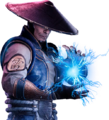
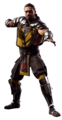
NetherRealmers
| ||
|---|---|---|

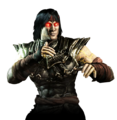
Titans
| ||
|---|---|---|
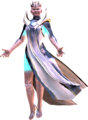
Zaterreans
| ||
|---|---|---|
Others
| ||
|---|---|---|
References
- ↑ Mortal Kombat 1 Story

