For any inquires on backlink exchange or partnerships please contact thecodex@gmail.com
The Wiki Forums are up! Check them here!
There is an official chat room on the wiki! I'm always AFK here so pull by to say hi!
If you would like to join the discord, please read this page.
Mario

|
"Under Construction!" |
| This article or section will be subject to revision in the near future. The current statistics or information does not fully reflect our views. |
Mario is the central character and protagonist of the long-running and highly successful Mario franchise. He was created by Japanese video game designer Shigeru Miyamoto and serves as Nintendo's primary mascot. Mario made his debut as the protagonist of the 1981 arcade game Donkey Kong, where he was originally known as "Jumpman." Beginning with Super Mario Bros., his signature abilities have included jumping and stomping on enemies to defeat them, as well as using various power-ups like the Super Mushroom, Fire Flower, and Super Star to gain new abilities.
In most games, Mario is depicted as a silent character with little defined personality, which Nintendo has stated allows him to fit into a wide variety of genres and roles. The main exception to this is Fortune Street, where he speaks in full sentences. His typical role is that of a hero on a quest to rescue Princess Peach from his arch-nemesis, Bowser, though he has also appeared in numerous other activities, including racing and sports, often alongside his younger twin brother, Luigi, and other characters.
Mario is visually defined by his red hat, thick mustache, cheerful demeanor, Italian accent, reliance on power-ups, and exceptional jumping ability.
| Mario Mario | ||||||||||||||||||||||||||||||||||||||||||||||||||||||||||||||||||||||||||||||||||||||||||||||||||||||||||||||||||||||||||||||||||||||||||||||||||||||||||||||||||||||||||||||||||||||
|---|---|---|---|---|---|---|---|---|---|---|---|---|---|---|---|---|---|---|---|---|---|---|---|---|---|---|---|---|---|---|---|---|---|---|---|---|---|---|---|---|---|---|---|---|---|---|---|---|---|---|---|---|---|---|---|---|---|---|---|---|---|---|---|---|---|---|---|---|---|---|---|---|---|---|---|---|---|---|---|---|---|---|---|---|---|---|---|---|---|---|---|---|---|---|---|---|---|---|---|---|---|---|---|---|---|---|---|---|---|---|---|---|---|---|---|---|---|---|---|---|---|---|---|---|---|---|---|---|---|---|---|---|---|---|---|---|---|---|---|---|---|---|---|---|---|---|---|---|---|---|---|---|---|---|---|---|---|---|---|---|---|---|---|---|---|---|---|---|---|---|---|---|---|---|---|---|---|---|---|---|---|---|


.png)


.png)


                                 _-_Super_Mario_3D_World.png)      
| ||||||||||||||||||||||||||||||||||||||||||||||||||||||||||||||||||||||||||||||||||||||||||||||||||||||||||||||||||||||||||||||||||||||||||||||||||||||||||||||||||||||||||||||||||||||
| Articles About Mario Mario | ||||||||||||||||||||||||||||||||||||||||||||||||||||||||||||||||||||||||||||||||||||||||||||||||||||||||||||||||||||||||||||||||||||||||||||||||||||||||||||||||||||||||||||||||||||||
| Mainline Continuity - Anime Film - Amada Series - Super Mario Brothers 1993 Movie - Super Smash Bros. - Illumination - Hotel Mario | ||||||||||||||||||||||||||||||||||||||||||||||||||||||||||||||||||||||||||||||||||||||||||||||||||||||||||||||||||||||||||||||||||||||||||||||||||||||||||||||||||||||||||||||||||||||
| Origin | ||||||||||||||||||||||||||||||||||||||||||||||||||||||||||||||||||||||||||||||||||||||||||||||||||||||||||||||||||||||||||||||||||||||||||||||||||||||||||||||||||||||||||||||||||||||
| Origin | Super Mario Bros. | |||||||||||||||||||||||||||||||||||||||||||||||||||||||||||||||||||||||||||||||||||||||||||||||||||||||||||||||||||||||||||||||||||||||||||||||||||||||||||||||||||||||||||||||||||||
| Characteristics | ||||||||||||||||||||||||||||||||||||||||||||||||||||||||||||||||||||||||||||||||||||||||||||||||||||||||||||||||||||||||||||||||||||||||||||||||||||||||||||||||||||||||||||||||||||||
| Species | Homo-nintendonus | |||||||||||||||||||||||||||||||||||||||||||||||||||||||||||||||||||||||||||||||||||||||||||||||||||||||||||||||||||||||||||||||||||||||||||||||||||||||||||||||||||||||||||||||||||||
| Gender | Male | |||||||||||||||||||||||||||||||||||||||||||||||||||||||||||||||||||||||||||||||||||||||||||||||||||||||||||||||||||||||||||||||||||||||||||||||||||||||||||||||||||||||||||||||||||||
| Age | Early 30's | |||||||||||||||||||||||||||||||||||||||||||||||||||||||||||||||||||||||||||||||||||||||||||||||||||||||||||||||||||||||||||||||||||||||||||||||||||||||||||||||||||||||||||||||||||||
| Status | Alive | |||||||||||||||||||||||||||||||||||||||||||||||||||||||||||||||||||||||||||||||||||||||||||||||||||||||||||||||||||||||||||||||||||||||||||||||||||||||||||||||||||||||||||||||||||||
| Alignment | Neutral Good | |||||||||||||||||||||||||||||||||||||||||||||||||||||||||||||||||||||||||||||||||||||||||||||||||||||||||||||||||||||||||||||||||||||||||||||||||||||||||||||||||||||||||||||||||||||
| Occupation | Plumber, Former Construction Worker | |||||||||||||||||||||||||||||||||||||||||||||||||||||||||||||||||||||||||||||||||||||||||||||||||||||||||||||||||||||||||||||||||||||||||||||||||||||||||||||||||||||||||||||||||||||

Background
| This dropdown contains the synopsis of Mario’s story. Read at your own risk as you may be spoiled otherwise! |
|---|
|
Game & Watch series In Mario Bros., which is not related to the arcade game of the same name, Mario teams up with Luigi for the first time. The two must work together to load pallets of bottles onto a delivery truck using conveyor belts to pass packages between them. Dropping a pallet results in their boss yelling at them, and dropping three pallets ends the game. In Game & Watch Gallery 3 and Game & Watch Gallery 4, Wario takes on the role of the boss, while Bowser periodically reverses the direction of the conveyor belts. The bottles are also replaced with cakes in these versions. In Mario's Cement Factory, Mario is tasked with moving cement from hoppers into trucks via conveyor belts. Each hopper can hold a maximum of three loads. If a hopper overflows, cement may fall onto a worker below, causing Mario to lose a life. Mario moves between floors using an elevator, but if he steps off when the elevator is not there, he falls and loses a life. Staying on the elevator for too long can also result in being crushed or reaching the bottom, both of which cost a life. Safe zones are available to avoid these dangers. In the Game & Watch Gallery 4 remake, Yoshi and Toad appear as background characters, and Boo may interfere with the work. Falling from the elevator in this version results in a miss rather than an immediate game over. In Mario's Bombs Away, Mario must safely transport bombs while avoiding oil spills and torches that can cause them to explode. The Game & Watch version of Super Mario Bros. follows the same basic structure as the NES original, though it is shorter and more simplified. Mario the Juggler is a Game & Watch game based on the very first Game & Watch title, Ball, featuring Mario in the juggling role. In the Modern mode of the Game & Watch Gallery remakes, Mario takes on roles previously held by other characters. In some cases, he appears as a non playable character. For example, in the Fire game, he and Luigi work together to rescue Toads, Yoshis, and Donkey Kong Jrs. from a burning building. In the Chef game, Peach must coordinate with Mario and Luigi to feed Yoshi. Mario and Luigi toss the food, and Peach catches it in her pan. Mario Bros. Saturday Supercade "The Great Ape Escape" "Greenhouse Gorilla" Golf Family BASIC
VS. Wrecking Crew / Wrecking Crew In the NES version Wrecking Crew, Mario faces Foreman Spike instead of Luigi. He can now trap enemies in dead-end drums to defeat them. He can also obtain the Golden Hammer, which destroys any wall with a single swing. Unlike the Japan-only sequel Wrecking Crew '98, these earlier games have no real plot. Wrecking Crew '98 Unlike the earlier games, Mario can now hinder opponents by dropping panels on them. To clear a stage, he must either destroy blocks or line up three consecutive panels vertically or horizontally. If he aligns four or more panels, he can drop them on his opponent. Clearing the field rewards him with a Mushroom, which boosts his offensive combos against enemies.
Super Mario Bros. Mario's role and abilities remain largely consistent across most entries, with Super Mario Bros. 2 being a notable exception. While new power-ups and moves are introduced, the core formula stays intact, and Mario's appearance and personality remain consistent. His eye color, mustache, hairstyle, cap shape, and facial structure are all derived from his Super Mario Bros. design. Super Mario Bros.: The Lost Levels Super Mario Bros. 2 / Super Mario Advance Unlike other characters, Mario is balanced with no special abilities in this game and its sequel. Gameplay differs significantly from other Mario titles: enemies cannot be stomped, and Mario can pick up and throw them. This mechanic reappears in the Game Boy version of Donkey Kong and the Mario vs. Donkey Kong series. BS Super Mario USA Super Mario Bros. 3 / Super Mario Advance 4: Super Mario Bros. 3 Super Mario Land Super Mario World / Super Mario World: Super Mario Advance 2 Super Mario Land 2: 6 Golden Coins Super Mario 64 / Super Mario 64 DS In the DS remake, Mario is unlockable and joins Luigi and Wario. Yoshi frees him from Goomboss, and Mario is required to rescue Luigi and open the Big Star Doors. He has balanced stats and special abilities like balloon floating with the Power Flower and the Feather, which grants unique moves. He is the only character who can Wall Jump. Super Mario Sunshine The game replaces many traditional moves with F.L.U.D.D.'s abilities, including spraying water, hovering, turbo speed, and rocketing. In secret levels, F.L.U.D.D. is taken away, leaving Mario with only basic moves. Losing his cap causes sun damage. New Super Mario Bros. Super Mario Galaxy New Super Mario Bros. Wii Super Mario Galaxy 2 Super Mario 3D Land New Super Mario Bros. 2 New Super Mario Bros. U / New Super Luigi U / New Super Mario Bros. U Deluxe Super Mario 3D World / Super Mario 3D World + Bowser's Fury Super Mario Maker / Super Mario Maker for Nintendo 3DS Super Mario Run Super Mario Odyssey Super Mario Maker 2 Super Mario Bros. 35
MIn the first puzzle game, Mario works as Dr. Mario at the Mushroom Kingdom Hospital alongside Nurse Toadstool (Princess Peach) to fight viruses—Fever, Chill, and Weird—by dropping Megavitamins to destroy them. Dr. Mario 64 adds a story: during a flu outbreak, Dr. Mario uses Megavitamins to heal citizens, but Wario steals them to profit. Mad Scienstein takes the vitamins, and after Dr. Mario defeats Wario, they pursue him, defeating Wario Land 3 enemies. The villain Rudy is cured. Depending on the player's choices, Wario becomes Vampire Wario or Mario becomes Metal Mario. Dr. Mario Online Rx and Dr. Mario Express feature similar gameplay, with the former adding a Virus Buster minigame. In Dr. Mario World, Dr. Mario hunts viruses to save infected characters after an outbreak in the Mushroom Kingdom, with other Mario characters joining as playable.
Super Mario-kun Super Mario Adventures
Yoshi Yoshi's Cookie Yoshi's Safari
Mario has been a playable character in every Mario Kart game, starting with Super Mario Kart. He is consistently a middleweight with balanced stats. Many courses are named after him, such as Mario Circuit. Super Mario Kart Mario Kart 64 Mario Kart: Super Circuit Mario Kart: Double Dash!! Mario Kart DS Mario Kart Wii Mario Kart 7 Mario Kart 8 / Mario Kart 8 Deluxe Mario Kart Arcade GP series Mario Kart Tour Mario Paint Mario & Wario Wario Land: Super Mario Land 3 Mario's Picross series Mario Clash Mario Party series
Donkey Kong The Game & Watch adaptation of Donkey Kong follows a similar premise to the arcade version. However, the gameplay differs in that Mario must activate a lever to make a hook appear. If he grabs onto the hook, one of the pegs holding the platform in place is removed, and Mario is transported back to the starting point of the level. Failing to grab the hook causes Mario to fall and lose a life. The objective is to remove all the pegs, which results in Donkey Kong's defeat. Donkey Kong Jr. The opening sequence of the arcade version also features two identical Marios carrying Donkey Kong off together. Donkey Kong II Donkey Kong Circus Donkey Kong Hockey Donkey Kong (Game Boy) Mario can perform a handstand, which protects him from falling objects. From this position, he can also execute a handstand jump. The game also introduces a backflip and wires that Mario can spin on and jump from to launch himself high into the air. Another key part of his moveset, borrowed from Super Mario Bros. 2, is the ability to pick up enemies and objects and throw them overhead. This is also one of the few Mario games where Mario can take fall damage and lose a life from a high drop. In most stages, Mario must find a key and bring it to a locked door in order to advance to the next level. While holding the key, he gains an extra hit point, but taking damage causes him to drop it. He also uses hammers, similar to the original game, and can build temporary ladders and platforms to get past obstacles. Some stages feature boss fights against Donkey Kong Jr. and Donkey Kong. In the final level, Mario chases Donkey Kong and Donkey Kong Jr. to the top of a tower, where he traps Junior in a cage, defeats a giant version of Donkey Kong, and saves Pauline. However, the credits show Mario and Donkey Kong apparently reconciled, as they appear together in a photo along with Donkey Kong Jr. and Pauline in Rocky Valley. The game's ending shows Mario holding Donkey Kong above his head while Junior stands to the left, and the background shows what appears to be the start of World 1-1 from Super Mario Bros. This serves as a foreshadowing of both Donkey Kong Jr. and Super Mario Bros. Many of Mario's moves and mechanics from this game were carried over into its semi sequel, Mario vs. Donkey Kong. Donkey Kong (Coloring and Activity Books) Donkey Kong Country 2: Diddy's Kong Quest Donkey Kong 64
Mario Tennis Series Mario Golf series Mario Golf (Game Boy Color) Mobile Golf Mario Golf: Toadstool Tour Mario Golf: Advance Tour Mario Golf: World Tour Mario Golf: Super Rush
Luigi's Mansion Luigi's Mansion: Dark Moon Luigi's Mansion 3
WarioWare series
Mario vs. Donkey Kong Mario vs. Donkey Kong 2: March of the Minis Mario vs. Donkey Kong: Minis March Again! Mario vs. Donkey Kong: Mini-Land Mayhem! Mario and Donkey Kong: Minis on the Move Mario vs. Donkey Kong: Tipping Stars
Super Mario RPG: Legend of the Seven Stars
Paper Mario Paper Mario: The Thousand-Year Door Super Paper Mario Paper Mario: Sticker Star Paper Mario: Color Splash Paper Mario: The Origami King
Mario & Luigi: Superstar Saga Mario & Luigi: Partners in Time Mario & Luigi: Bowser's Inside Story Mario & Luigi: Dream Team Mario & Luigi: Paper Jam |
Name Meaning
Mario's surname has been a subject of some debate over the years. In the live action segments of The Super Mario Bros. Super Show!, specifically in the episodes "Dance" and "Treasure of the Sierra Brooklyn," his full name is given as Mario Mario. This usage became more widely recognized after the live action Super Mario Bros. film, and it has appeared in other media as well. For example, the Prima strategy guide for Mario Party 2 includes his name as Mario Mario in a note section, and the guide for Mario & Luigi: Superstar Saga also lists his full name the same way in its character roster. The original arcade flyers for Donkey Kong, Donkey Kong Jr., and Mario Bros. also use this full name.
At San Diego Comic Con in 2012, Charles Martinet, the voice of Mario, was asked what Mario's last name was. He responded playfully: "What's my last name? Ah, that's a very good question! ...That's right! It's a Mario. My name a Mario Mario. Of course, my brother name, a Luigi Mario. And of course, my mama's a Mama Mia Mario; my papa Papa Pio Mario. Of course, my grandmama Grandmama Mia Mario, and my grandpapa Grandpa—et cetera, et cetera. Yeah, first name Mario, last name a Mario. Yahoo!"
However, Nintendo of America had previously stated that Mario and Luigi do not have last names, a claim later reiterated by Nintendo president Satoru Iwata. Shigeru Miyamoto also once said that Mario and Luigi have no last names, comparing them to Mickey Mouse in that regard. He later walked back that statement and confirmed at the Super Mario Bros. 30th Anniversary festival in September 2015 that Mario's and Luigi's last names are indeed "Mario."
Appearance
General Description: Mario is a stocky young man with a large round face, a big round nose, clear and slightly tanned skin, and a black mustache. He wears a trademark cap, a long-sleeved red shirt, blue overalls with two yellow buttons, brown shoes, and white gloves. His age has been approximated to be around 24 to 26 years old, though he was originally imagined as middle-aged.
Facial Features: He has chocolate brown hair (sometimes depicted as black in the DiC cartoons) with three locks on the front above his forehead, four back locks covering the back of his neck, and a small sprout-like tuft on the top of his head. A black mustache is worn on his upper lip. His neck is very short and rarely visible in artwork or gameplay outside the Super Smash Bros. series.
Clothing/Outfit:
- Standard Outfit: A long-sleeved red shirt (short-sleeved in Super Mario Sunshine), tucked under a pair of white gloves with a noticeable collar at the neck. Blue overalls with yellow buttons are layered over the shirt. Light brown work shoes are worn on his feet.
- Super Mario Odyssey: Over 40 outfits available, ranging from recolors resembling Luigi, Wario, or Waluigi to unique outfits such as a pirate, astronaut, knight, musician, or polka dot boxers. Cappy replaces his default cap.
Hat: A red cap with a red "M" insignia. The cap is sometimes mandatory (Super Mario 64, Super Mario Sunshine) but treated as a mere accessory in other games.
Variations by Game Era:
- Donkey Kong: Lankier appearance with a more realistic red nose and cleft chin. Some promotional art for Donkey Kong Jr. retains this design, while other portrayals show a stouter appearance with a round nose.
- Mario Bros.: Stubbier design with minor changes from Donkey Kong Jr.
- Super Mario Bros. Onward: Current design established.
- Super Mario 64: Darker blue overalls, bigger eyes, slightly darker skin, rounder ears, longer overall straps, less rounded cap. Hair appears reddish instead of chocolate brown.
- Luigi's Mansion and Later: Longer limbs, increased height, clearer and slightly tanned skin tone, brighter colors, added detail in shoes, eyes, and cap emblem. Since Super Mario 3D World, irises have been slightly thicker.
Stylistic Variations:
- Paper Mario Series: Black dots for eyes, no eyebrows, shorter stature. Since The Thousand-Year Door, more simplistic body with legless feet, rounder face, full outline around arms. Since Sticker Star, a white outline around entire body.
- Mario & Luigi Series: Black eyes instead of blue.
Super Smash Bros. Series:
- Nintendo 64: Derived from Super Mario 64 with a slimmer appearance.
- Melee: Tanned complexion, more detailed hair and clothing, back pockets and denim textures on overalls.
- Brawl: Darker color scheme, more realistic detailing on hair and clothing, back pockets return.
- 3DS / Wii U: Slimmer and more vibrant design, much less detailing.
- Ultimate: Mostly the same with subdued color scheme and simple detailing.
Costumes in Super Smash Bros.:
- Reversed red and blue (red overalls, blue cap and undershirt)
- Tiger-orange overalls, green cap and undershirt
- Brown overalls and cap, white undershirt (Foreman Spike-inspired)
- Purple overalls, yellow undershirt and cap (Wario-inspired)
- Fire Mario (red overalls, white cap and undershirt) * replaced in Ultimate
- Pink undershirt, cyan overalls and cap (Japanese Mario Bros. box art)
- Dark indigo overalls, purple undershirt and cap (Waluigi-inspired)
- Red-and-white striped overalls and cap, blue undershirt with white stars (NES Open Tournament Golf) * replaced in Ultimate
- Builder and Wedding outfits (Ultimate, replacing Fire Mario and Wario costumes)
Physical Traits: Mario is consistently portrayed as short, though his precise height varies. A life-size figure listing gives 150 cm (4 ft 11 in). Crossover artwork with Sonic shows him at similar height. Some media show him as much shorter than realistic humans, others show him closer to human height. He has no specified height in official materials.
Alternate Forms/Disguises:
- Power-up forms: Fire Mario, Tanooki Mario, Propeller Mario, Flying Squirrel Mario, Cat Mario (recolors or full body coverings)
- Costume Mario (Super Mario Maker): Various forms via Mystery Mushroom, including pumpkin Halloween costume with pumpkin head and purple cape
- Various spin-off outfits: Dr. Mario, NES Open Tournament Golf, Mario's Picross, Mario Strikers games, Mario & Sonic at the Olympic Games Tokyo 2020
Personality
- Kind, Cheerful, Playful, Courageous, and Headstrong: Mario is kind, cheerful, playful, courageous, and headstrong. He is also eager and cocky on certain occasions.
- Simple Biography: Nintendo producers keep Mario's biography simple to make the character versatile and reusable in many games and situations. He is depicted as an Italian plumber from Brooklyn who stands for what is right and loves Italian food.
- Good Sportsmanship: Mario shows good sportsmanship, complimenting opponents in titles like Mario Kart 8 and Fortune Street, and smiling if he loses in Super Smash Bros. Ultimate. In other spin-offs, he is sad after a loss, sometimes sobbing.
- Loves Animals and Music: Mario loves animals, especially unusual ones. He also enjoys music, particularly opera and new-wave Europop. Game art and gameplay depict him playing various instruments.
- Overbearing Toward Luigi: Mario has an overbearing attitude toward Luigi, displayed in cutscenes in Mario Power Tennis and Super Mario-kun. This could be his outgoing "big brother" personality interacting with Luigi's more introverted nature.
- Impulsive and Aggressive: Mario is more impulsive and aggressive than Luigi, willing to enter dangerous situations alone. Mallow physically restrained him from brawling in Super Mario RPG.
- Vulgar and Aggressive in Some Media: Mario has shown aggressive or vulgar tendencies in a lighthearted manner, such as holding a gun to intimidate Bowser in Super Mario Momotarō. In Super Mario-kun, he is short-tempered, yells at friends, farts to taunt opponents, urinates on Yoshi, and cross-dresses. In a Satellaview virtual magazine, these tendencies are exaggerated, showing him smoking, abusing friends, stomping on Toad and Peach, and killing Toad with a gun.
- Fixation on Food: Mario has a fixation with food, especially Italian food. In the DiC cartoons, he is almost constantly hungry. In Super Mario 64, he came to the castle because Peach was baking him a cake. He dreams of pasta in Super Mario 64, Super Mario Odyssey, and the Game Over screen of Mario vs. Donkey Kong. In Super Mario Sunshine, he daydreams about seafood. Other characters have criticized his diet.
- Semi-Silent Protagonist: Mario rarely speaks, with dialogue limited to grunts and yells. When he does speak, he speaks English with a heavy Italian accent, often referring to himself in the third person. His voice is soft and high-pitched with Charles Martinet, but gruff with a Brooklyn accent in other games and cartoons.
- Full Speech in Some Titles: Mario speaks fully in Mario vs. Donkey Kong, Super Mario Galaxy, Itadaki Street DS, and Fortune Street. In Super Mario RPG, he is completely silent, communicating through pantomime. In Paper Mario, he communicates through nodding and gestures. In Mario & Luigi, he speaks in unintelligible gibberish.
General Information
Name: Mario Mario
Nicknames: Jumpman, The Great Gonzales
Origin: Super Mario Bros.
Gender: Male
Handedness: Ambidextrous (Mario in different pieces of art has consistently used either his left hand or right hand, in baseball games Mario is shown throwing with his right hand while catching with his left[1], along with using his right hand for tennis games[2], though in games like Mario + Rabbids Sparks of Hope he dual wields[3])
Age: Early 30's (Mario has been fighting Bowser for 30 years. He's been shown to fight Bowser as early as being an infant)
Classification: Star Child, Hero of Light
Species: Homo-nintendonus
Occupation: Plumber, Former Construction Worker
Status: Alive
Alignment: Varies on roles (Mario and his friends are noted to be akin to a troupe of actors, taking on different roles depending on the game[4], thus depending on the role, Mario can take more antagonistic roles or more heroic. Some examples come from games like Donkey Kong Jr. where he plays a more antagonistic role). Normally Neutral Good (Has been deemed pure of heart by the Star Temple gate. Mario will always prefer to do the right thing and has mainly been the hero. During his early years as a child, he would battle against Bowser to save Princess Peach and the entire Mushroom Kingdom. As time goes on, he saved the other kings from various kingdoms, saved people from the likes of Donkey Kong, stopped an alien invasion, rescued Princess Daisy, and various others. He's become a doctor to save many people of deadly diseases, including showing remorse and helping villains. He'll help people who have minor requests and tasks without needing a reward. Mario would commonly show care for Luigi and help him whenever he's in distress. Mario's heroism is so great that it spreads across different planets, galaxies, and even universes. Mario's destined as a Hero of Light that is trusted to save the multiverse when in danger. Mario has no issues with teaming up with those that hate him when it means stopping a bigger threat. He is okay with forgiving villains if they show remorse and have truly stopped their ways)
Codex Statistics
Tier: Varies-A. Far Higher with Power-Ups. Even Higher with Power of the Stars and Pure Hearts
Cardinality: Varies
Dimensionality: 3-D to 2-D (Can swap via Flip), 1-D via Slim
Attack Potency: Varies: Absurdity (Mario and his friends are noted to be akin to a troupe of actors, taking on different roles depending on the game[5], with his gimmick being attributed to the same as Mickey Mouse, with their strength and skills even being shown to vary with it being shown with Mario being unable to take on Wario in his pixelated form due to the Wario using a different physiology to make him be unable to interact requiring him to turn to a similar physiology to beat him. Mario has been able to casually destroy castles on multiple occasions. Comparable to Bowser and the Koopalings, who can survive being crushed by their own castle. Comparable to Yoshi, who can defeat Baby Bowser as he's bigger than his castle. In games like Super Mario RPG: Legends of the Seven Stars he has shown to be superior to Exor, who destroyed Star Road). Far Higher with Power-Ups (Many of Mario's general items increase his strength. Several of them can one-shot Bowser. Several items multiply Mario's strength, such as Kersti, who claims increase Mario's striking power by a thousand. Is equipped with Power Stars, in which a single one can greatly increase Mario's power and strength, up to 10x per star. A Rainbow Star can one-shot a Power Star user. Power Stars allow regular enemies to pose as full boss battle threats to Mario). Even Higher with Pure Hearts (The Pure Hearts are far beyond anything preformed in Super Paper Mario) and the Power of the Stars (The Power of the Stars is the overall star power of Peach's castle with 70 of them being able to defeat Bowser amplified by a Jumbo Star)
Durability: Varies: Absurdity (Can survive attacks comparable to him, such as Luigi, Toad, and Toadette), Far Higher with Power-Ups. Even Higher with Pure Hearts and Power of the Stars
Striking Strength: Varies: Absurdity. Far Higher with Power Ups. Even Higher with Pure Hearts and Power of the Stars
Lifting Strength: Varies: Absurdity (Can lift up an entire castle and kick it with ease. Can pull back a Chain Chomp made out of gold. Stronger than Power Star users, which can move stars and send them flying. Can escape the inside of a black hole and resist its pull), Far Higher with Power-Ups. Even Higher with Pure Hearts and Power of the Stars
Travel Speed: Varies: Absurdity (Can consistently outrun Bullet Bills and cannon balls on foot. Can outrun lasers being shot at him), Far Higher with Power-Ups. Even Higher with Pure Hearts and Power of the Stars
Attack Speed: Varies: Absurdity (Can stomp on Bullet Bills and cannonballs), Far Higher with Power-Ups. Even Higher with Pure Hearts and Power of the Stars
Reaction Speed: Varies: Absurdity (Can dodge and react to Bullet Bills and cannonballs. Can dodge lasers from Hoohooros), Far Higher with Power-Ups
Stamina: Superhuman (Can travel from multiple countries to galaxies without signs of exhaustion. Completed The Pit 100 Trials of Rogueport, Flipside, Flopside while defeating Bonetail, Shadoo, and Wracktail in a sitting. Should scale to Bowser, whom can travel to various locations, spanning multiple days, possibly weeks, with no rest), Limitless with Pure Hearts (His stamina is tied to his love)
Range: Varies from Standard Melee to Tens of Meters to Stellar. Varies from Standard Melee to Universal to Multiversal+ with Equipment
Intelligence: Supergenius Intelligence (He's been a highly skilled doctor as early as an infant, curing diseases and life threatening viruses. He created his own medicine that cured a patient a scientist himself could not. Mario's own hat is a custom-made fall out shelter. During his visit to Pi'illo Island, he's been able to discover what their best scientists that have been studying the island and its mystery for years. Mario's able to create his own robots built for combat, and owns a toy company, said toys can also function for combat. Could navigate and complete the Forest of Illusion where it was stated Mario would need to use his brain to solve the most perplexing puzzles)
Knowledge: Grandmaster level (Mario has many different skills in sports, such as basketball, soccer, tennis, golf, baseball, bike rider, football, hockey, dodgeball, rifleman, and driver. He has a variety of jobs with different levels of skill. Such as a carpenter, construction/demolition worker, plumber, soldier, brewery worker, cement factory worker, artist, referee, archaeologist, chef, animal trainer, pilot, and submarine captain. Mario has been fighting for 30 years and has faced a large variety of enemies with thousands of years of experience, facing many different fighting styles in hand to hand combat, magic, or technology. He can adapt to many types of scenarios that change out of nowhere, such as Prankster Comets changing the rules of a Galaxy. Mario's been able to learn many types of skills and weapons to use, being able to easily be taught. His own skill blew away Jinx, a dojo sensei, and made Mario the master of the dojo, switching his training to learn Mario's moves. He also defeated The Master, Mushroom Kingdom's best dojo fighter, and gave Mario a diploma to prove he's bested him. He's also learnt magic and brew powerful items such as Power Stars, or turn people into frogs. Mario's skill comes to a point where he can complete several challenges such as Daredevil Galaxies, The Perfect Run, The Impossible Pack, Tubular, and more where he will die if hit even once. Mario's power and skill is trusted enough to where he is one of the Four Heroes of Light that is meant to save the universe whenever it is in danger)
- Superhuman Physical Characteristics
- Genius Intelligence
- Human Achievements (Mario has a variety of occupations and skills. These include a carpenter, construction/demolition worker, plumber, soldier, brewery worker, cement factory worker, artist, referee, archaeologist, chef, animal trainer, pilot, submarine captain, rifleman, and doctor. He’s also a professional in sports, such as basketball, soccer, tennis, golf, baseball, bike riding, football, hockey, dodgeball, and driving. Can play a variety of instruments, and can conduct bands, can play basketball with Bob-ombs as the ball. Skilled at shooting in basketball. Skilled in soccer. Skilled at volleyball)
- Parkour & Acrobatics (Mario has displayed many times of being acrobatic. Such as being able to preform many flips and poses mid-air, as well as various moves with a partner. Can jump and dodge from mid-air. Can jump from several stories to the sky. Can perform superhuman leaps, and gain extra air time by repeatedly fluttering their feat)
- Fighter's Intuition (Mario is capable of surpassing Jinx, a dojo sensei, and made Mario the sensei of the dojo while also incorporating his techniques into his own training. Mario's strength impressed The Master and credited him as the strongest in his dojo. Able to fight a hoard of enemies with hand to hand combat.[6] Even when as a baby, Mario was able to learn and adapt to his adult counterpart against a variety of enemies. He can hold his baby counterpart for an entire adventure on his back as he fights. Can utilize his jumps and kicks for combat[7])
- Martial Arts
- Grappling Arts: Can sumo wrestle against others.
- Weapon Mastery (Mario can use a variety of weapons for combat through either being taught or leaning on his own)
- Hammer Mastery: He's profiecient on using hammers well enough to not only hit enemies with, but also throw and catch in the air. Equipped with giant mallets to get the opponent in the Bowser suit. Has a giant hammer to easily break the brick blocks. Can use a giant mallet to swing at their opponents.
- Sword Mastery: He can duel against someone using a sword. Can fight Bowser to a standstill in a sword fight. Able to stab flying fruit with a rapier
- Firearm Mastery: Has used blasters against several foes as they're hiding against walls. Can use the Super Scope to fire at enemies while riding Yoshi. Can use guns to shoot several balloons floating in the sky.
- Crossbow Mastery: Can use a crossbow to shoot at targets.
- Boomerang Mastery: Can use boomerangs in combat.
- Unique Weaponry: Can kick Koopa shells in the air and kick them back at enemies as a projectile. Has contstructed robots to use against Donkey Kong Jr..
- Stealth Mastery (Snuck away from a sleeping Chain Chomp while needing to race against three other people. Disguised himself as a statue from Dodo and remained untouched as he was about to interact with him. Hid himself from three Snifits as they were opening the same curtains)
- Fourth Wall Breaking (Mario can talk to the player. Mario is aware that he is in a manga.[8] Scared the people watching his game[9])
- Vehicular Mastery
- Animals: Mario can ride animals such as Yoshi on several adventures while fighting enemies and platforming. He can also command Yoshi as he also rides on dolphins. Can ride on Plessie as he's fighting Fury Bowser, dodging his attacks during the ride. Can command Dorrie on where to go. Can race against others in a horse race.
- Land Vehicles: Can drive in go-carts against others in dangerous tracks while also preforming tricks in the air. Capable of also riding on bikes while completing the track as fast as he can. Can ride on a minecart while also flashing a light to Luigi so he can navigate around. Can drive in mini go-karts, can ride in a bob-sled down an icy slide. Can move around and fire at opponents in their tanks. Can ride around in their own mini-go karts. Can ride around in go karts. Can drive around in cars with spikes in the front. Can ride a bobsled down an ice slide. Can ride around in a shell-like vehicle down a tube. Can ride down a race track in a boat. Can ride around in various vehicles. Can pilot a plane has he's shooting down enemies.
- Air Vehicles: Can fight Bowser Jr. in the Koopa Clown Car, spinning and pushing him to an electric field. Can fly and spin around in a flying machine across the clouds. Can drive around in a jet for a race. Can fly in a bee-shaped flying contraption and maneuver around large sunflowers.
- Seaborne Vehicles: Can use a submarine while also fighting against several enemies. Can ride around in their own submarines.
- Space Vehicles: Can ride through space within a flying vehicle all the while avoiding meteors. Can pilot a spaceship in battle[10].
- Weapon Creation (Mario can create a giant hammer to swing with, a Fire Flower, and build a rocket that smashes its enemy. His Special Shot can create a Starman)
- Pure Heart (Is stated to have a pure heart filled with virtue and concern for his brother Luigi when tested by the Star Gate)
- Self-Sustenance
- Respiratory: Mario can breathe in both space and underwater just fine for as long as he needs to.
- Consumption (Can eat a moldy mushroom and rotten mushroom without getting sick by it. Instead it heals him)
- Surface Scaling (Mario can run on walls at a 90 degree angle. Capable of climbing up a steep mountain with no climbing tools. He can even stay on during a snow storm)
- Accelerated Development
- Battle
- Physical Stats and Abilities: Mario consistently gets stronger the more he fights. Mario has statements of getting stronger through the series. Not only has it been stated multiple times, but it's also been shown plenty of times. In Super Mario RPG, Geno (who Mario is comparable to) needed help to defeat Bowyer, as it was stated he was stronger. They later easily defeat a stronger version of him. During each battle, Jinx battles Mario and uses more power during each rematch. In Paper Mario, Jr. Troopa has been able to keep up with Mario. During each encounter, Jr. Troopa is stated and shown to get stronger, thus Mario would also need to become stronger to not get overpowered. The Koopa Bros were also able to keep up with Mario. During near the end of the game, they encounter Mario again. They state they've gotten stronger past their wildest dreams. Jr. Troopa one-shot all four of them. Mario has to keep training to defeat The Master, during each battle, he holds back less until finally using his full power. At the start of the game, Mario was stomped by a Star Rod Bowser. This no longer happens during the final battle. In Superstar Saga, Fawful can easily defeat Bowser. Later in the game, Luigi (who Mario is stronger than) easily defeats Fawful. In The Thousand Year Door, Mario was unable to harm the Armored Harriers and ended up being defeated. When Mini-Yoshi is recruited, they win. Rawk Hawk and others are higher ranked than them, who Mario defeats, thus he should be superior to them. Rawk Hawk took time for Mario to defeat, Bowser was able to one-shot him. Mario ends up defeating Bowser. Sir Grodus, who isn't far below Mario, was one-shot by Shadow Peach. Mario ends up overpowering her, making her resort to using her true form. Mario was unable to harm the Shadow Queen with any of his attacks, even his best moves are useless. During Mario's battle against Bonetail, it was stated that he was the boss. Mario was able to harm him with his normal attacks. In Partners in Time, the Bros were one-shot from a charged Shroob UFO blast. The Bros can then take hits from the source of the energy later on. Should be noted Swiggler can drink these to amplify itself. In Super Paper Mario, on top of stating to be stronger, Mario defeats both O'Chunks and Mimi, who state to get stronger. In Bowser's Inside Story, the Bros defeat Bowser after constantly gaining stronger many times. They even defeat a stronger version, Bowser X. The Dark Star's incomplete power made barriers that the Bros could not break. Later on they end up defeating it and scale to Bowser who defeated Dark Bowser (the Dark Star at his peak). In Sticker Star, Mario was knocked out by simply jumping on Bowser. Later on he defeats his first form. Learned how to move the pills mid-fall from a quick read in a guide[11].
- Battle
- Adaptation (Mario has been able to adapt to a variety of different mechanics and enviornments. Such as when the Prankster Comets will change the laws and mechanics of the galaxy he is currently at. Or when Bowser has shrunken him and reduced his powers as a result, Mario was still able to navigate and use the environment around him to locate Bowser while also helping others)
- Supernatural Bond & Telepathy (Mario shares a telepathic bond with Luigi, allowing the two to always know where they're at)
- Non-Standard Interaction
- Spirit Interaction: Can punch away Boos and defeat Cackletta's soul.
- Elasticity (Mario can reshape his body when squished into smaller size)
- Body Control (After being cursed by evil spirits, Mario can change into an airplane to glide in the air, a tube to fit into small spaces, and a boat to float above water. Able to give himself a buff body[12])
- Afterimage Creation (Mario can create afterimages naturally during a fight, or when using Zone Speed in Tennis Aces. Mario can throw a Koopa Shell fast enough to leave afterimages)
- Attack Reflection (His hammer can reflect projectiles back at enemies)
- Perfect Guard (Superguard can parry enemy attacks, nullifying the damage while also hurting the enemy)
- Healing (Mario passively regains health. He's been shown to heal from burns, thorn wounds, and explosions in just seconds)
- Intangibility
- Cartoon Physics
- Mid Potency: Mario can swim in the air like a cartoon character. Completely fine after having his entire body be charred by fire.
- Reliance
- On a Person & Higher Being: The creator, Miyamoto, is always watching Mario[13] and will assist him in dire situations[14]. Mario's true form is that of a player controlling him, in which they can change up reality in various ways or reverse the battle to assist Mario)
- Regeneration
- Type: Cartoon Physics Based
- Source: Varies on Role
- Capabilities: Reformed from being turned to confetti, which are noted to be atoms as they make up the world. Regenerated from being reduced to tiny pieces of himself. Regenerated after being flattened.
- Transformation
- Shapeshifting: Mario can turn into other people like Peach or Bowser, along with mimicking their voices.
- Erasure (Wiped away Wendy's castle from existence)
- Item Stealing (Mario can steal items by jumping on people, which automatically transfers it into his own inventory)
- Explosion Manipulation & Information Manipulation (Mario can become a bomb and blow up save files, ultimately erasing all events and memories within)
- Dimensional Travel (All characters can leave and enter different dream worlds on their own. Can walk out of his universe and walk back in)
- Hammerspace (Mario can carry 9,999,999 coins, along with many power-ups and large items in his pockets)
- Statistics Reduction (Mario can lower an enemy's speed with his hammer strikes in Superstar Saga)
- Staggering (Mario's Spin Jump stuns enemies, or get dizzy with his hammer)
- Resurrection
- Self-Resurrection
- Repeated Resurrection: Mario can have a maximum of 1,110 extra lives. Mario can also obtain extra lives every time he "dies" after collecting his 1,000th coin. Mario can always gain more lives if he were to lose all of them, as his regeneration grants him more.
- Self-Resurrection
- Enhanced Senses and Extrasensory Perception (His nose is capable of sniffing trouble. Can fight against enemies while having his eyes removed. Could detect the Cutout Soldiers hiding behind pillars. Has a tracker that he can hear beeping when nearby people)
- Analytical Prediction (Can predict Cackletta's attacks before she freezes time, with no indication of her time stop prior)
- Duplication (Mario can create a clone of himself, and can create several more clones with extra lives. Has a chance to get a freebie item, which means he can use an item and get another one to use)
- Absorption, Mimicry, & Transmutation (Absorbed various people and gained power from it. Turned Koopas into music notes through dancing)
- Creation (Can recreate those he just absorbed[15])
- Statistics Amplification (Mario automatically gains a 1.5x strength boost when fighting three or less enemies. Mario's jump will deal more damage the more he uses it. He can further boost his strength 4x with Mario Spin in Puzzles & Dragons)
- Teleportation (Attacked Bowser through voice on a phone call[16])
- Flight (Mario can propel himself in the air. He can also float during his special shot)
- Supernatural Protection (Mario is protected through The Desire, which will defy space, time, and the laws of the universe to ensure Mario succeeds to reunite with his special one)
- Supernatural Resilience (Can move while being crushed completely flat and while losing pieces of his body, such as his face and stomach)
- Alternate Replacements (If Mario needs assistance, he can always have himself from other timelines appear to help out, such as when he did so in Yoshi's New Island to help Baby Mario and Yoshi)
- Time Travel, Time Manipulation, & Save and Load (Traveled through space and time to help his past-self against Bowser. Mario's saving and loading can be active once Mario gets a game over. Saving has been mentioned outside of tutorials by several different characters on multiple occasions. In Bowser's Inside Story, there exists a sentient save block. A Koopa stated a save album can save his travels, which he read from a book. Toads recommend to save before a battle. Saving allows Mario save all events he has experienced so far. If his game ends, he can simply come back. A "game over" to Mario doesn't only stop at a death. A game over can also be Mario making the wrong choices, mind controlled, and incapacitation (such as falling forever in an endless pit at Tick Tock Clock). This ability can be used without the need for a save block)
- Avatar Creation & Astral Projection (Within the Dream World, Mario can create a dreamy avatar that can act for him)
- Immersion (Mario can enter and escape a video game)
- Invulnerability Negation (Mario can harm and nullify users of the Mega Mushroom, which is an item that makes the user invulnerable)
- Magic (Can use magic to create Power Stars. The cast have a magic wand that can undo Bowser’s transmutation and change all of Koopa’s particles makeup as a frog to turn him back into a Koopa)
- Resistance Manipulation (The transmutation affects Bowser who only takes damage from the Golden Flower rather then being transformed into a coin)
- Power Absorption (Mario can turn clones of other people into his own by ground pounding them. Mario can steal experience points from those he fights, reducing their statistics and givng it to Mario)
- Purification
- Material Purification: Created a medicine to counter the viruses created by Bowser. Bowser later made a more potent virus that Mario was able to cure[17].
- Telekinesis (to move the direction his pills are thrown mid-way[18])
- Sealing (Mario can seal people within his pills[19])
- Wish Granting (The Star Spirits are the ones who grant the people's wishes. Mario can make a wish that the Star Spirits will listen to, in which it will become true)
- Fate Manipulation (Mario made a wish to always be able to save Princess Peach, which allowed him to survive unlikely scenarios. Is protected by The Desire, which defies time, space, and the laws of the universe to ensure Mario will always be reunited with his special one, regardless of the outcome he's in. It's stated that Mario can choose his own fate after just averting a prophecy where he was mean to die)
- Limited Physics Manipulation (Can move in water casually like they’re moving on land with no issues)
- Fire Manipulation (Even without a Fire Flower, Mario can still produce fire on his own and has further enhanced his skill with it using the Firebrand. He can make fiery explosions, large balls of fire, shoot barrages of fire balls, set objects on fire through contact, and set his own body on fire without ill effects)
- Status Effect Inducement (Mario can cause enemies to have the burn status with his fire)
- Energy Manipulation (Mario can fire energy projectiles in small shots or charge it up for several shots at once)
- Glyph Manipulation (Mario's Special Shot creates walls for him to jump on)
- Perception Manipulation (Mario can slow down his perception of time when attacking, or can use Zone Speed to do the same. Zone Speed allows Mario to increase his speed as all others are slowed down)
- Forcefield Manipulation (Mario can create bubbles that shield him from the environment and let him fly around, being unharmed while inside)
- Sound Manipulation (Mario can create a projectile that can harm people through music)
- Air Manipulation & Heat Manipulation (Mario can blow a snow blizzard and turn others into snowmen. He can also heat up his body in the same mini-game in order to reduce the snow from piling up. Blew hard enough to make a Whomp fall down, even when shrunken down. Can spin around fast enough to become a tornado)
- Light Manipulation (Mario can change the color and brightness of a new star to his own color)
- Plant Manipulation (Made a mushroom grow bigger with his dancing. Can bring wilted flowers back to life)
- Matter Manipulation (Restored a hotel that was turned into a corkscrew into its original form)
- Technological Manipulation (Made a roller coaster move faster)
- Ice Manipulation (Made an ice tower grow larger. Can throw snowballs at an opponent, which will freeze them solid)
- Vibration Manipulation (Mario's hammer strikes can send a shockwave to hit others)
- Invulnerability & Size Manipulation (His Triple Jump makes him invincible in the air. Mario can increase his size and become invulnerable when using Super Mario!. Has access to a submarine that can shrink himself and the machine[20])
- Power Bestowal, Mind Manipulation & Mortality Manipulation (Mario transfer lives to other beings and viceversa, along with being able to steal lives. Can psychically power up an ancient relic and give it strength. Made a group of logs become alive and dance. If Mario[21] consecutively defeats 8 or more enemies, he’s awarded with[22] multiple 1-Ups[23])
- Disease Manipulation (With the viruses, Mario can throw them at someone to make them laugh uncontrollably[24]).
- Resistance to
- Extreme Heat (Unaffected by being near lava in areas such as Melty Molten Galaxy and Bowser's Reactor. Can survive falling in lava)
- Extreme Cold (Unaffected by cold areas such as Freezeflame Galaxy)
- Cosmic Radiations (Can be in the vacuum of space just fine for long periods of time)
- Fire Manipulation (Can eat a pepper that sets the person on fire, generally being unaffected by it)
- Mind Manipulation (Unaffected by Tatanga nor Wario's mind control over all of both Sarasaland and Mario Land)
- Gravity Manipulation (Has adjusted his gravity to walk normally on different sized planets and has been inside black holes)
- Paralysis Inducement (Resists being paralysed by Bowyer's arrows, which paralyses people after being shot)
- Sleep Manipulation (Resisted the Dreambeats, which put all inhabitants of Pi'illo island to sleep. This affected Luigi, who can resist sleep manipulation. Can resist the effects of the Music Box, which plays a tune that puts anyone listening it to sleep. Can stare at a Sleepy Sheep, which can make you sleepy just by staring at it)
- Electricity Manipulation (Mario can take multiple electric shocks from Luigi without suffering any side effects. The electricity surrounding the electric orb only briefly pauses their movement)
- Transmutation (Unaffected by Bowser's and Kamek's transmutation. Can fight as a scarecrow. Unaffected by Ohos, which can turn other people into monsters)
- Space-Time Manipulation (3+1-D), Information Manipulation, Physics Manipulation (3+1-D)
- Durability Negation (Swam inside of a black hole and lived, while also being able to survive one completely)
- Poison Manipulation (Can temporarily breathe inside a pool of poison gas)
- Absorption & Soul Manipulation (Resists the Shadow Queen's hands, which she can use to absorb the victims and their souls. Escaped a black hole)
- Black Hole Manipulation (Can swim inside of a black hole)
- Size Manipulation (Gets only shrunken by a mushroom temporarily. Can carry Power Stars, in which a single one amplifies the users size)
- Nothingness Manipulation & Erasure (Space-Time Erasure (3+1-D); Immune to both the Eraser and Reset Rocket, both of which can erase objects and people. Survived the Void, which can erase beings across space and time)
- Petrification (Broke free from the Koopalings turning him into stone)
- Madness Manipulation (Unaffected by being inside the painting worlds Bowser made, which were stated to be drive Toad into madness)
- Corruption (Immune to Bowser's corruption, which passively corrupts characters friendly towards Mario. Resistant to Junior's paint, which corrupted Bowser into Fury Bowser)
- Morality Manipulation (Unaffected by the Power Stars after making Wiggler become evil)
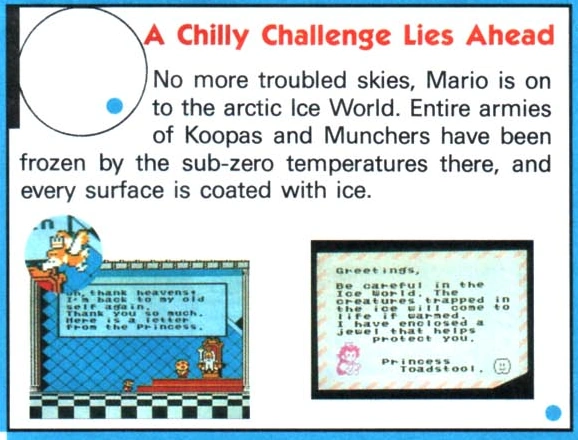
- Ice Manipulation (Can navigate through World 6, which was stated to be sub-zero and freeze Bowser's army. Can break free from being frozen)
- Reality Warping (Unaffected by King Olly folding the very fabric of reality)
- Empathic Manipulation (Can fight while sad, angry, unmotivated, or self-conscious, only hindering what cards he can use)
- Broadway Force (Can fight while being forced to dance)
- Fate Manipulation (Mario, along with the rest of the Heroes of Light, averted the Dark Prognosticus' dark prophecy. The Dark Prognosticus is a book the tells prophecies and the events of all worlds from start to end, always being correct about what it states. It's stated that no one can avert it, and was correct about Luigi being the one to join the Chaos Heart, which was the end of all. The Light Prognosticus is a book created to counter the dark prophecy, giving it a way to stop all worlds to end. It is said that if the man in green, Luigi, chooses the light or dark path, will determine which prophecy would be correct. Luigi chose dark. Despite this, The Four Heroes of Light were stated to avert the dark prophecy, and can determine their own fate)
- Telekinesis (Can jump off of The Player's grip)
- Information Analysis (F.L.U.D.D. cannot fully scan Mario)
- Acid Manipulation (Can survive touching acid)
- Sealing (Can walk around in Junior's goop without being sunken, unlike the Piantas), Matter Manipulation (Unaffected by Junior's paint, which reduces matter)
- Disease Manipulation (Remained unaffected by the viruses attacking him[25]).
- Transformation
- Shapeshifting: Mario turns into a ball of light to teleport.
- Resurrection
- Self-Resurrection
- Resurrection from Deceased: In multiplayer mode, Mario can come back from nothing.
- Self-Resurrection
With the Spin Jump, Mario can spin off of:
- Physical Attacks (Can spin off of spikes, chainsaws and other enemies that’d normally kill him)
- Fire Manipulation (Can spin off of fireballs, fire enemies that naturally live in lava, lava bubbles, and blue fire)
- Incorporeal Attacks (Can spin off of ghosts)
- Magic & Transmutation (Can spin off of transmutation spells)
- Acausality
- Irregular Causality: Bowser used the Star Rod to change the story itself. This caused the final battle between Mario and Bowser to lack the plot of those events from even happening, as the final pages to their entire story were ripped, meaning Bowser literally tore off the plot. Despite this, Mario and co. were able to fight Bowser regardless of a lack of plot.
- Summoning (Mario was given the power to summon the Star Spirits, which they will assist him at any time)
- Information Analysis (Mario can see symbols above enemies, telling him what kind of attacks and aliments an enemy can use)
- Battlefield Removal
- Forced Teleportation: Anytime Mario enters a battle, he will take others in a stage grouped with people. This is directly acknowledged to happen, as bosses can interact with the audience.
- Helper Call (If Mario enters a battle, an entire audience appears and assists him in battle by giving him items or throwing things at enemies)
With Guard or Superguard, he can guard/parry/negate (on a greater scale):
- Physical attacks
- Absorption (Parries Fuzzies, Swoopers, and the Shadow Queen from absorbing health and FP)
- Fire Manipulation (Parries fire from Fire Bro, Bowser, Ember, Lava Bubble, Phantom Ember, Hooktail, X-Nauts, Grodus, Vivian)
- Poison Manipulation (Parries poison attacks from Bowser, Poison Pokey, Putrid Piranha, Poison Puffs, Gloomtail, Beldam, and the Shadow Queen)
- Explosion Manipulation (Parries explosions from Bob-ombs and Bobbery)
- Ice Manipulation (Parries ice attacks from Frost Piranha, Ice Puffs, Bonetail, Grodus, Beldam)
- Sound Manipulation, Sleep Manipulation (Parries sleep inducement from Crazee Dayzees and Bonetail)
- Electricity Manipulation (Parries lightning attacks from Dark Puffs, Dark Wizzerd, Wizzerd, Elite Wizzerd, Grodus, Marilyn, Shadow Queen)
- Statistics Reduction, Paralysis Inducement, Size Manipulation (Parries attacks that shrink Mario from Bonetail, X-Nauts, Beldam)
- Time Stop & Time Manipulation (Parries attacks that slow and freeze time from Grodus and Beldam)
- Power Nullification (Parries Bowser's command removal, Shadow Queen and Beldam's status effect remover)
- Vibration Manipulation (Parries earthquakes from Gloomtail and Magnus)
- Fragrance Manipulation (Parries damage inducing breath from Gloomtail and the Shadow Queen)
- Mind Manipulation (Parries attacks that induce confusion from Bonetail)
- Darkness Manipulation (Parries the Shadow Queen's Dark Wave)
- Magic (Parries magic from a Magikoopa and Kammy)
- Status Effect Inducement
- Battlefield Removal
- Dimensional: Mario can leave others stuck in 2-D via contact when using Flip.
- Intangibility
- Spatial: Upon using Flip, Mario cannot be interacted with when in a different dimension.
- Supernatural Protection (Mario will be resurrected by Queen Jaydes if he were to die as a gift in return for saving her daughter Queen Jaydes has power over all life and death)
- Spatial Manipulation (Mario can flip/phase between the 2nd and 3rd dimensions to access different paths using Flip)
In Paper Mario Color Splash, the main point of the game is paint. Paint is a abstraction. As shown in the game, paint encompasses everything. Paint is shown to be all of land, liquid, life (Once bringing Toad back via paint, Huey states that paint gives life. Additionally, paint can return the blood, organs, and skin to an old fossil that's been dead years ago), mind (Paint can speak to ones mind by coloring ones thoughts. Paint was able to take over Bowser's body and freely act on their own. Big Paint Stars are also shown to be alive), memory (Toad couldn't remember anything with the loss of paint on his head. Returning paint gave his memories back), emotions, space (even simple holes require paint to function as holes) and souls. Removing any paint would stop making anything work. Thus anyone within Color Splash gets:
- Non-Standard Interaction
- Abstract Interaction: Paint makes up everything, with characters in Mario can remove paint from anyone with any attack. Paint is all of life, and removal of it can cause a person or object to have no life within, having their concept of life be removed.
- Metaphysical Interaction: Paint makes up the mind, as paint beings can directly speak to your mind by coloring your thoughts. Loss of paint can also remove your mind and memories. Paint makes up souls and ghosts. Removing it is the equivalent of destroying your soul. Paint makes up all emotions. Removing it would mean the removal of emotion.
- Spatial Interaction (3-D): Paint makes up all of space. Removing it makes space as if it was solid.
- Nullification
- Power Nullification: Paint makes up the ability to use powers. Removing it would mean the removal of using powers.
- Blood Manipulation (Paint makes up all of blood within someone, removing it is the same as removing their blood).
- Abstract Manipulation (Can survive attacks against other characters in Paper Mario: Color Splash, which removes paint from someone)
- Absorption, Mimicry, & Transmutation (Mario can whirl out and absorb paint from objects and people, which turns them into Battle Cards that he can use to create an exact copy of what he just absorbed).
- Resistance to
- Power Absorption (Mario can have his paint be removed and still be able to use his powers. Paint makes up the concept of abilities)
- Mind Manipulation & Possession (Did not suffer any side effects from the black paint, unlike Bowser, which took over his mind)
- Soul Manipulation (Resists the Shadow Queen's hands, which she can use to absorb the victims and their souls. Can survive having paint drained from his body, which makes up the soul. Escaped a black hole)
- Healing
- Statistics Amplification (With the Super Mushroom, which can not only be used to heal someone, but can also increase one's size, strength, and health. Coins can naturally heal you upon being picked up. The Starman increases your natural strength and speed)
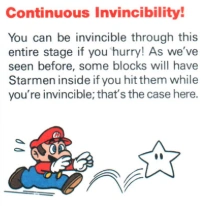
- Invulnerability (With the Starman, which makes the user invincible for a little over 30 seconds)
- Transmutation (The Starman can turn coins into Starmen)
- Power Bestowal (The Starman allows the user to share its ability through contact)
- Weapon Creation (Coins can be used to create various power-ups or Battle Cards with Battle Spin)
- Summoning (Upon collecting 100 coins, a Shine Sprite is summoned)
- Flight (With the Tanooki Leaf)
- Duplication (The Coin Rush Star can create several power-ups when hitting a block, and can create more coins)
- Size Manipulation
- Light Manipulation (The Starman can light up dark rooms upon use)
- Resurrection & Mortality Manipulation (Upon gaining 100 coins, Mario is rewarded with a 1-Up. If defeating 9 or more enemies with a Starman, Mario gains a 1-Up for every enemy he defeats after. The more enmies defeated, the larger quantity of 1-Ups gained per enemy)
With the Boost Star, Mario can directly summon The Player, who can do the following:
- Creation
- Telekinesis (Can freely move others around)
- Duplication (Creates duplicates in Copy Mode)
- Erasure
- Metaphysical Erasure: Erases anything via the Eraser, Undo Dog, or Reset Rocket.
- Extrasensory Perception (Reveals what's inside within an object)
- Invisibility (Can create Hidden Blocks)
- Time Stop (Shown here)
- Weather Manipulation & Reality Warping (Changes the layout and time of the game modes)
- Size Manipulation, Biological Manipulation, & Transmutation (Swaps around an enemy species on how they work. Can change around objects)
- Empathic Manipulation (Can anger a Wiggler).
Resistance to Memory Manipulation (Can resist the original memory wipe, requiring the church to do an even more potent memory wipe to erase the Player’s memory)
- Healing & Purification
- Curtain Fire
- Multi-Directional: Star Storm creates a storm that rains down stars to damage enemies.
- Statistics Reduction (Chill Out reduces enemy defense)
- Transmutation and Battlefield Removal (Up & Away turns enemies into stars and sends them flying to space)
- Power Nullification & Invulnerability Negation (Star Beam and Peach Beam can nullify the wishes made from the Star Rod, and bypass Bowser's invulnerability)
- Sleep Manipulation (Lullaby can be used to put enemies to sleep through singing)
- Time Manipulation
Through wishing with Wish Stars, Mario gains the following:
- Wish Granting (The Star Rod is used to grant wishes. Its power is claimed to be able to grant "all" wishes)
- Healing (Can heal damage)
- Transmutation (King Olly was going to reduce all Toads to blank pieces of paper, which Bowser says they can't even come back from)
- Erasure
- Conceptual Erasure: Before Bowser was interrupted, he wished to erase the Bros.
- Accelerated Development (Luigi wishes to be a great plumber like Mario. Toadofsky wished to be better at making melodies. Chef Torte wishes to be a world class baker. Some Dryite wishes to create a ripping tune)
- Creation (Bowser wished for a castle and can create enemies and ships. Creates food to heal)
- Statistics Amplification (Yoshi wishes to be faster. Bowser made wishes to become all-powerful. Stars get their power from ordinary people's wishes)
- Invulnerability
- Physical Invulnerability: Bowser wished to become invincible.
- Telekinesis (Seen here)
- Duplication (Can create multiple clones)
- Resurrection (Brought back Kersti to life after she sacraficed herself)
- Power Bestowal (Can grant both powers and resistances to Tubba Blubba, including his invulnerability)
- Reality Warping (Reversed all of the damage Olly caused to the world to its original self)
- Size Manipulation (Can increase the user's size several times)
- Mind Manipulation (Can force someone to love according to Bowser. Mallow was wishing to stop being a crybaby)
- Fate Manipulation (Mario wishes to always be able to save Peach. Nimbus Land King and Queen wish to be reunited with Mallow. Belome wishes for food to appear. Frogfucius wishes for crickets. Punchinello wishes to become famous. If the world was rid of wishes, Smithy thinks he could easily conquer it)
- Plot Manipulation
- Story Manipulation: The Star Rod was used by Bowser to change the story of Paper Mario.
- Abstract Manipulation (The Star Rod turns wishes into physical embodiments of said wishes in the form of Wish Stars)
- Light Manipulation (Can create a light based attack)
- Forcefield Manipulation (Bowser wished for a forcefield)
- Dimensional Travel & Portal Manipulation (Antasma wished to create dream portals).
- Resistance to
- Durability Negation (Can nullify piercing damage attacks, which bypasses durability)
- Status Effect Inducement
- Ice Manipulation, Time Stop, Poison Manipulation, Statistics Reduction, Sleep Manipulation, Size Manipulation (Can resist every attack and status effect Mario and his partners uses. This includes Frozen, Immobilized, Poison, POW-Down, Sleep, and Tiny)
- Transmutation (Unaffected by Up & Away)
- Explosion Manipulation (Unaffected by Bombette's explosions)
- Vibration Manipulation (Unaffected by Mario's Quake Hammer)
- Fire Manipulation (Unaffected by Kooper's Fire Shell)
- Fear Manipulation (Unaffected by the Fright Jar and Lady Bow's Spook)
- Electricity Manipulation (Unaffected by Watt's electrical attacks)
- Paralysis Inducement (Unaffected by Watt's Power Shock)
- Water Manipulation (Unaffected by Sushie's Squirt)
- Air Manipulation (Unaffected by Lakilester's Hurricane attack)
- Transformation
- Dimensional Travel (The Magic Potion can create doors to parallel universes)
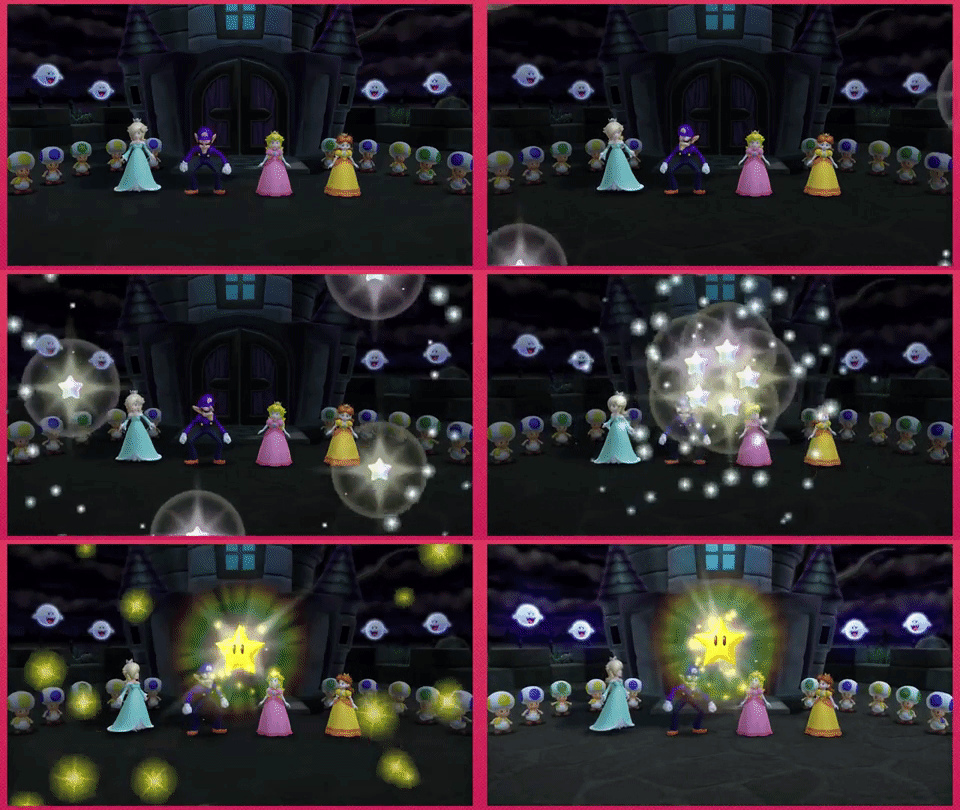
- Summoning (Eating 5 cherries gives Mario a Starman. Can summon a Chain Chomp, Porcupuffer, Thwomp, Ghost Shroom. With the Event Block, can summon Boo, Koopa Troopa or Bowser. With the Duel Glove, when used, the player using it will summon a Goomba. The player will then choose an opponent to duel in a duel minigame. After this, the player will have the option to choose how much is to be dueled for. With the Magic Lamp, when used, the player summons the Mushroom Genie. With the Boo Bell, it summons a boo who will steal a Power Star from another player. With the Lucky Lamp, when used, the Mushroom Jeanie will appear. She will then move the Star from its current location to somewhere else, essentially making it the counter-part of the Magic Lamp. With the Bowser Phone, when used, the player will call Bowser. Bowser will then ask who is calling him, the player chooses one of the players. Bowser will then perform his events to that player as if the player landed on a Bowser Space. With the Lucky Charm, when a player uses this item, they will summon Game Guy. Game Guy will then take all of the player's Coins, and a Game Guy minigame will be initiated. This can also be used to force another player to play a Game Guy minigame. If a Chomp Call is used, four small Chain Chomps appear, surround the host that holds the Star in the Star Space, and scare them away to another space. Afterwards, the location of the Star Space changes. When a Boo Crystal Ball is used, a Boo appears and either steals another player’s coins or steals a star. With Peepa Bell, summons a Peepa that steals one coin. With the Ally Phone, a player can summon Luigi, Princess Peach, Yoshi, Wario, Princess Daisy, Waluigi, Boo, Rosalina, Spike, Bowser, Donkey Kong, Goomba, Koopa Troopa, Monty Mole, Bowser Jr., Hammer Bro, Diddy Kong, Pom Pom, and Dry Bones. Can summon Yoshi with the Yoshi Cookie)
- Attack Reflection (With the Racoon Leaf, Reflect Shield)
- Flight (With the Magic Carpet, Rocket, Racoon Leaf, Tanooki Suit, P-Wing, Jugem Cloud, Carrot, Cape Feather, P-Balloon, Wing Cap, Power Flower, Bee Mushroom, Boo Mushroom, Red Star, Propeller Mushroom, Propeller Box, Super Acorn, P-Acorn, Dropchopper)
- Invulnerability (With the Tanooki Suit, Metal Cap, Mega Mushroom, Rainbow Star, Invincibility Leaf, Invincibility Bell, Lucky Bell, Block Meal, Mega Star. With the Metal Mushroom orb, the character is also immune to traps. The Red Essence makes the user invincible)
- Weapon Creation (With the Hammer Suit. The Magic Wand can create hoops and balls. The Superball Flower can shoot bouncy balls. The Boomerang Flower can create boomerangs. The Cannon Box shoots cannonballs. The Smash Egg contains an item once broken. The Mighty Meteor contains an item once broken)
- Battlefield Removal
- Application Based: With the Warp Whistle. When players use a Warp Pipe, a roulette that has the heads of the other characters appears. An arrow spins and players can stop the arrow. When the arrow stops on a character's head, the player swaps places with that character. The Warp Pipe orb switches places with an opponent.
- Magic (With the Magic Wand)
- Transmutation (The Magic Wand can turn people into animals. The P-Switch can turn enemies and objects into coins, and viceversa. The Gold Flower can turn others into coins. The Magic Ball turns people into a ball. The Paper Mushroom turns people into paper. The Pink Apple turns others into a peach. Lamb's Lure turns people into a sheep. Sheep Attack turns everyone into a sheep)
- Purification (The Magic Wand restores transmutation. The Energy Drink restores status effects. Any healing item in Super Paper Mario cures poison. The Black Apple cures permanent sleep. The Slimy Extract cures curses. The Refreshing Herb cures status effects. The Miracle Cure can cure diseases. The Music Keys can reverse Bowser's dead landscape. Able Juice cures status effects)
- Power Nullification (Can chase away a Boo that is after their coins and Stars with Gaddlight. With the Toady Orb, takes any orb from an opponent that comes into contact with it. With the Mr. Blizzard orb, opponent loses all of their orbs if they come into contact with it. With the Fly Guy ticket, calls a fly guy to steal an item from an opponent)
- Creation (The P-Switch can create coins and music notes. The Mega Mushroom can create 1-Ups. The Lucky Bell can create coins. The Super Hammer can create boxes. The Happy Flower can create coins. With the Hidden Block Card, creates a hidden block that can potentially give the user a Power Star)
- Duplication (The P-Switch can duplicate coins. The Double Cherry can create clones. The Pal Pills can create 8-bit clones. The Copy Flower can create a hoard of clones. The Yoo Who Cannon creates various clones)
- Invisibility & Intangibility (With the Vanish Cap, Boo Mushroom, Invisi-Mushroom, Boo Biscuit)
- Mimicry
- Physiology Mimicry: With the Luigi and Wario Caps, which gives Luigi their respective abilities. With the Bowser Suit, when used, the player using it will masquerade themselves as Bowser. With the Bowser Bomb, when a player obtains this item in an item minigame, Bowser will use it at the end of the current turn. When used, Koopa Kid will transform into Bowser.
- Surface Scaling (With Mini Mushroom, Super Bell)
- Healing (With the Life Mushroom, Life-Up Heart)
- Burrowing (With the Spin Drill)
- Fusionism (With the Dry Bones Shell)
- Homing Attack (With the Red Shell, Blue Shell, Interrupting Frame, Dizziness Virus, Driver Virus, Off-Key Speaker, Time Bomb, Laughing Bag, Scuttle Bug, Magic Ball, Gold Shell, Tub, Gold Tub, Soft Gummy)
- Power Absorption (With Boo, Magnet Mushroom. With the Plunder Chest, when this item is used, the player using it will steal the item from a randomly chosen opponent. With the Barter Box, when this rare item is used, the player who uses it will choose an opponent. What will then happen is that the player chosen and the player using the item will swap items. With the Kamek Orb, if an opponent comes into contact, one of their orbs placed on the board will turn into the players)
- Shapeshifting (With the Bullet Bill, Wild Top, Pie Kart)
- Telekinesis (With the Galaga Boss)
- Body Control (With the Soft Gummy)
- Statistics Amplification (With the Bone-In Cut, Courage Shell, Dayzee Syrup, Hot Sauce, HP Plus, Koopa Dumpling, Koopa Pilaf, Koopa Tea, Love Noodle Dish, Lovely Chocolate, Mighty Tonic, Power Plus, Sap Syrup, Spicy Dinner, Spicy Pasta Dish, Spit Roast, Turtley Leaf, Volcano Shroom, Beans, Chuckle Blend, Chuckoccino, Green Pepper, Hoohoo Blend, Hoolumbian, Red Pepper, Woohoo Blend, Teehee Blend, Teeheespreso, Blue Pepper, Bracer, Crystalline, Energizer, Flower Box, Flower Jar, Flower Tab, Power Blast, Yoshi-Ade), Sealing (With the Catch Card, Catch Card SP, Cobalt Star. Can seal people in the Paper World with the book to it)
- Accelerated Development (With the Gold Medal, Miracle Dinner, Roast Whacka Bump, Star Medal)
- Resurrection (With the Life Shroom, Pick Me Up)
- Paralysis Inducement (With the Love Noodle Dish)
- Curtain Fire (With the Meteor Meal, Shooting Star, Balloon Blast)
- Teleportation (With the Warp Block, changes the position of everyone on the board. With the Koopa Troopa Orb, switches places with any opponent who passes it. With Warp Box, warps close to a teammate)
- Power Modification (The Swap Card randomly chooses another player via roulette and the player who used it swaps items with the chosen player)
- Fire Manipulation (With the Fire Flower, Fireballs, Flame Pepper, Fire Burst, Mix Flower. With the Podoboo orb, burns an enemy causing them to lose 10 coins. With Fireball Orb, Mario is surrounded by an aura of fire that they will blast at an opponent, stealing their coins. With the Fire Bomb)
- Vibration Manipulation (With the POW Block, Mega Mushroom, Megaton Dinner, Snack Basket)
- Time Manipulation
- Time Stop (With the Stop Watch)
- Sleep Manipulation (With the Music Box, Sleepy Sheep, Weird Extract, Sleepy Bomb)
- Air Manipulation (With the Warp Whistle, Tornado. With the Tweester orb, which blows an opponent away to another space. With the Coinado, it creates a tornado that whirls across the opponent, stealing their coins)
- Energy Projection (With the Magic Wand. Has a mech that shoots out energy beams)
- Weather Manipulation (The Magic Wand can turn a storm into a sunny day)
- Plant Manipulation (The P-Switch can create a bridge of plants)
- Electricity Manipulation (With the P-Switch, Lightning, Thunder Cloud, Thunder Stick, Electro Pop, Lovely Chocolate, Thunder Rage, Volt Shroom. With the Zap Orb, it electrocutes them with each step they take, causing them to lose 5 coins each step)
- Size Manipulation (With the Mega Mushroom, Mini Mushroom, Big Mushroom, Lightning, Blue Apple, Red Apple, Mega Star. When players use a MiniMega Hammer, they may choose another player to be Mega or Mini by hitting them on the head with the hammer; but they can't inflict their own effect. Then, the opponent that player chooses is given the effects of a Mega Mushroom or a Mini Mushroom on the next turn. When players use a Sparky Sticker, they place it directly below where they are standing. If any player tries to pass it, any player currently on said space loses 10 coins plus the effects of a Mega Mushroom or a Mini Mushroom)
- Ice Manipulation (With the Ice Flower, Penguin Suit, Snow Cloud, Berry Snow Bunny, Fruit Parfait, Ice Storm, Mix Flower, Ice Bomb)
- Glyph Manipulation (With the Cloud Flower)
- Earth Manipulation (With the Rock Mushroom)
- Light Manipulation (With the Light Box, High Beam)
- Minor Law Manipulation (The SMB2 Mushroom changes how mechanics work)
- Illusion Manipulation (With the Fake Item)
- Explosion Manipulation (With the Bob-omb, Time Bomb, Gold Shell, Black Shell, Fire Cracker, Mouse Cracker, Dyllis Dynamite, Egg Bomb. With the Bob-omb orb, explodes and causes the opponent to halve their movement)
- Velocity Manipulation (With the Golden Mushroom. With the Mushroom, when used, this item allows the player to roll two Dice Blocks instead of one. The two digits that the player rolls are added up together, and the player will move that many spaces. With the Golden Mushroom, when used, the player using it will roll three Dice Blocks. The digits of all three rolls are added together, and the player will move equally much. With the Reverse Mushroom, when used, the player using it will choose a player to target (this can also be the player who uses the mushroom). The next time the selected player moves, that player will have to go backwards the amount of steps as shown on the Dice Block. With the Poison Mushroom, when used, the player using it will choose a player to target (can also be the player who uses the mushroom). The next time that the chosen player moves, that player's Dice Block will only be able to roll numbers from one to three. The Mega Mushroom causes players to be giant and roll two Dice Blocks. The Mini Mushroom causes players to be tiny. It also restricts the Dice Block; instead of rolling 1-10, it only rolls 1-5. A Super Mega Mushroom has generally the same effects as a Mega Mushroom except that players roll three Dice Blocks instead of two. A Super Mini Mushroom has generally the same effects as a Mini Mushroom except that players roll two 1-5 Dice Blocks instead of one)
- Ink Manipulation (With Blooper, Pump, Sticky Oil)
- Sound Manipulation (With the Super Horn, Super Mic, Gag Mic, Off-Key Speaker, Car Horn)
- Metal Manipulation (With the Heavy Mushroom)
- Forcefield Creation (With the Magnet Mushroom, Reflect Shield, Shield, Block Block)
- Disease Manipulation (With the Dizziness Virus)
- Status Effect Inducement (With the Dizziness Virus, Gag Mic, Laughing Bag, Mustache Rocket, Golden Banana, Flare Ball, Rabbit Ear, Heavy Meal, Shock Bomb. With the Boo Repellent, this item will activate itself when a player who is carrying it around is targeted by Boo. The effect it has is that it will fend off Boo)
- Technological Manipulation (With the Dash Propeller, Square Tire, Big-Small Tires, Whirling Wheel, Broken Wheel)
- Magnetism Manipulation (With the Magnet)
- Thread Manipulation (With the Scuttle Bug)
- Water Manipulation (With F.L.U.D.D., Rain Cloud)
- Smoke Manipulation (With the Smokescreen)
- Soul Manipulation (The Catch Card and Catch Card SP can seal souls)
- Time Manipulation (With the Slow Flower and Speed Flower. (With the Wacky Watch, when used, this rare item will set the game to such a time that there will be five turns left. Effectively, this can either increase or decrease the time a game is played)
- Time Travel (The Retry Clock will revert time to the start of battle after death. Earlier Times passively restarts the battle after losing)
- Empathic Manipulation (The Music Keys were able to make Bowser feel happy)
- Portal Manipulation (With the Magic Window)
- Vector Manipulation (The Bowser Suit makes the target unable to be pulled into quick sand)
- Vacuum Manipulation (Has a box that creates a vacuum that can pull characters into the box, shrinking them in size and sealing them within)
- Poison Manipulation (With Bad Mushroom)
- Fear Manipulation (With Fright Bomb)
- Holy Manipulation & Durability Negation (With Pure Water, which one-shots ghosts and spirits).
- Resistance to
- Status Effect Inducement, Poison Manipulation, Durability Negation, Elemental Manipulation, Water Manipulation, Earth Manipulation, Fire Manipulation, Ice Manipulation, Air Manipulation, Light Manipulation, Fear Manipulation, Power Nullification, Transmutation, Sleep Manipulation (The Safety Badge and other equipment makes the wearer resistant to the Instant Death, Fear, Scarecrow/Mushroom, Mute, Sleep, and Poison status effects. The Super Suit can make the wearer immune to fire, water, earth, ice, air, and light attacks)
- Magic (Power Stars are stated to have magic)
- Statistics Amplification (Mario gets more power and stronger, upon gaining a star. Fast-Foe Comets increases your speed)
- Healing (Power Stars can heal damages upon touch)
- Purification (Returning all Power Stars to the castle caused peace to return to the worlds)
- Flight (Grabbing the Jumbo Star grants the user flight, as well as normal Power Stars)
- Power Bestowal (Bowser states he was the one to give his troops their powers)
- Dimensional Travel (One collecting a Power Star allows them to leave the dimension within the paintings)
- Resurrection (Was revived by a Power Star given by Bowser. Bouldergeist was killed as a ghost, and came back with another body from a new Power Star)
- Sealing (Bowser used the Power Stars to trap everyone inside the walls of the castle)
- Power Nullification & Sealing Negation (Power Stars can override the seal Bowser placed on the doors)
- Teleportation (Can teleport around)
- Summoning (Can summon other beings)
- Erasure
- Physical Erasure: Power Stars are composed of Mini Stars, which are capable of erasing the physical bodies of opponents.
- Battlefield Removal
- Application Based: Speedy Comets gives one a time limit as to how long they can stay in a galaxy.
- Duplication (Cosmic and Clone Comets can create cosmic clones)
- Fusionism (Power Stars can fuse together)
- Mimicry
- Physiology Mimicry: Power Stars can create enemies with Mario, Luigi or Wario caps where the wearer that wears them becomes essentially another Mario, Luigi, or Wario.
- Mind Manipulation, Transmutation, Corruption, Empathic Manipulation (Wiggler states the star makes him feel strange, he’s extremely irritated, which after getting rid of the star he suddenly felt far better and more calm. Bowser was going to turn all of the residents from the painting world into monsters)
- Madness Manipulation (Stated by Toad that being locked up in the walls caused the Toads to slowly become brainwash and fall into madness)
- Spatial Manipulation (Bowser used the Power Stars to create an endlessly looping staircase and Power Stars can be alternatively used to override the endless staircase and turn it back into a normal staircase)
- Energy Manipulation (Toad states that the Castle is recovering its energy due to Mario collecting power stars)
- Causality Manipulation (Power Stars can revert parts of stages to re-do their missions and get transparent versions of them)
- Willpower Manipulation (The Power Stars gave Mario more courage from the castle)
- Creation, Reality Warping & Space-Time Manipulation (Bowser has created and shaped his own worlds inside of the paintings with the power of the Stars. Obtaining a Power Star can reverse any damage done and recreate what was destroyed)
- Black Hole Manipulation (Power Stars have been shown to be black holes)
- Matter Manipulation (A single Power Star is able to completely remodel the spaceship Lubba was on to work for Mario)
- Size Manipulation (Power Stars increase the size of various enemies)
- Forcefield Manipulation (Can create a barrier across an area)
- Fire Manipulation (Can shoot fireballs)
- Law Manipulation (Prankster Comets change the effects of galaxies they would normally have, manipulating the area and people within it)
- Statistics Reduction & Mortality Manipulation (Daredevil Comets reduces your health to one hit point, nullifies giving yourself extra health, and removes all ways to heal yourself. Toad said that life was returning to the castle thanks to the power of the stars).
- Resistance to
- Sealing & Power Nullification (Power Stars can override seals)
- Information Analysis (F.L.U.D.D. can scan people's general information and biology, along with scanning their past)
- Attack Reflection (Using Luma's Spin Jump reflects projectile thrown from enemies. Cappy can hit back projectiles)
- Telekinesis (The Spin Jump can pull in nearby objects)
- Homing Attack (Using the Spin Jump in combination with the ground pound homes in on an enemy)
- Possession (With Cappy, Mario can possess anyone and anything by throwing Cappy on their head)
- Memory Manipulation (When capturing someone with Cappy, Mario sees and gains the memories of the host)
- Dimensional Storage (Stuffwell can be used to store many of Mario's items. With Starlow, she can let Mario use the star menu, which carries his items and gives his current status)
- Enhanced Senses (Stuffwell has sensors installed detects nearby danger. His super-senors can also detect the current location)
- Time Travel (With the Warpulator, Stuffwell can take Mario back in time)
- Limited Power Bestowal, Statistics Reduction, Telekinesis, & Forcefield Negation (When Starlow is paired up with people like Peach, she can bestow them various abilities, such as weakening others or being able to use telekinesis. Her Supernova Sparkle mixed with Peach can bypass the forcefield created by the Dream Stone. Although it is likely she can use weaker variants due to always having star power, and being able to use some of her abilities such as her Supernova Sparkle in other instances without Peach)
- Flight (Starlow can be grabbed on for flying when against enemies)
- Healing & Restoration (Dreambert can fully restore both health and BP)
- Surface Scaling (Mini-Donkey Kong can climb walls and ceilings. Mini-Mario can run on walls)
- Water Manipulation (F.L.U.D.D. can be used to fire water out of her nozzle. Her nozzles can spurt water to clean or even damage enemies caught by it. The Hover Hozzle allows Mario to shoot water underneath him to hover for a bit in the air. The Turbo Nozzle shoots Mario behind Mario, allowing him to run faster. The Rocket Nozzle shoots water from below, allowing Mario to reach higher places)
- Limited Portal Manipulation (Dreambert is able to create portals to dream worlds, this ability seems to be limited to only Luigi)
- Fire Manipulation (Mini-Marios can use the Fire Flower to shoot fire balls), Consumption (Mini-Yoshi can eat small enemies)
- Battlefield Removal (Warp Pipe capsule has one switch places with their opponent. With the Duel Capsule, forces a player into a duel that takes them into another mini game that’s a separate dream)
- Power Nullification (When a player is affected by this capsule, the affected player will be forced to move ten spaces forward. During this, the player will lose all of their capsules and can not choose which direction to take at a junction. Mr. Blizzard capsule takes all of the opponents orbs. Ukiki Capsule causes a opponent chosen to lose all of their capsules. Lakitu Capsule steals a capsule from an opponent)
- Power Modification (With the Kamek capsule, summons Kamek who shuffles all the opponents item capsules)
- Summoning (With the Chain Chomp capsule, summons a chain chomp that can steal coins or stars from an opponent. Bowser capsule summons Bowser)
- Velocity Manipulation (Mushroom capsule allows the player to roll 2 dice blocks, Super Mushroom capsule allows 3 dice blocks, and cursed mushroom capsule only allows a 1 to 5 to be rolled on one dice block)
- Explosion Manipulation (With the Bob-omb capsule, will cause the opponent to lose 20 coins from its explosion)
- Miracle Manipulation (With the Miracle Capsule, when a player carries three Miracle Capsules, the three capsules will be activated automatically, giving all the Stars the player in first place has to the player in last place)
- Transformation & Power Bestowal (Candies transforms the characters into different shapes giving them new abilities, can turn into a stone version of their head with the Thwomp Candy that takes half of an opponent's coins upon contact)
- Shapeshifting (Can transform into an 8-bit version of themselves. Can shapeshift into a ball that steals coins upon contact)
- Acrobatics (Their feet turn into a spring allowing them to jump high enough to jump over to the opponent they choose)
- Flight (Gains wings around themself with the Vampire Candy and can steal coins, their legs can turn into a rocket that gives them 3 dice blocks, and can steal stars)
- Mimicry
- Duplication & Power Nullification (Can turn into 3 smaller versions of herself, who can steal an opponent's orbs by running into them)
- Aura & Electricity Manipulation (Gains an aura of electricity around themself that electrocutes opponents they choose, removing half of their coins)
- Air Manipulation & Battlefield Removal (Their feet turn into a tornado that blows enemies far away upon contact)
- Fire Manipulation (Gains a fire aura around themself, that gives them two dice blocks)
- Damage Boost (All or Nothing increases Mario's damage by 1 if an attack is preformed correctly. With Jump Charge, Mario can increase his jump attack power and charge it as much as he pleases. Super Jump Charge further increases the power he can charge. Hammer Charge charges Mario's hammer attack power. Super Hammer Charge further increases the power he can charge. Mega Rush raises Mario's attack by 4 once he's near death. Power Rush increases Mario's attack power by 2 once he's low on health)
- Damage Reduction (Last Stand halves the damage Mario takes when low on HP)
- Statistics Amplification (Damage Dodge increases Mario's durability by 1 when blocking an attack. Deep Focus lets Mario gain more Star Power when using Focus. Defend Plus raises Mario's defense by 1. Power Jump increases Mario's jump attack power. Mega Jump further increases Mario's jump attack power. Power Smash increases Mario's hammer attack power. Mega Smash further increases Mario's hammer attack power. Flower Saver reduces the cost of attacks using FP by 1. FP Plus gives Mario 5 extra FP. HP Plus gives Mario 5 extra HP. P-Down, D-Up decreases Mario's power, but increases his defense. P-Up, D-Down increases Mario's power, but decreases his defense. Power Plus increases Mario's attack power. Speedy Spin makes Mario's spin go farther and faster. Hammerman increases Mario's hammer attack, but nullifies his jump attacks. Jumpman increases Mario's jump attack, but nullifies his hammer attacks. Lucky Start has a chance to make Mario dodge attacks easier from the start)
- Durability Negation (Bump Attack one-shots enemies via contact if Mario can no longer gain strength from fighting them. D-Down Jump disables an enemy's defense with his jump, meaning Mario can always deal a set damage irregardless of durability. D-Down Pound gives Mario's hammer the same effect as the D-Down Jump Badge. Quake Hammer, Power Quake, and Mega Quake ignores defense. First Attack one-shots enemies with a single attack if Mario can no longer gain strength from fighting them. Spin Attack one-shots enemies with a spin if Mario can no longer gain strength from fighting them. Fire Drive ignores defense. Piercing Blow ignores an enemies' defense with a hammer attack)
- Status Effect Inducement (Dizzy Attack makes enemies dizzy if Mario spins at them. Dizzy Stomp dazes enemies once jumped on)
- Enhanced Fighter's Intuition (Dodge Master gives Mario an easier time to block attacks. Simplifier makes it easier for Mario to perform his attacks correctly)
- Healing & Restoration (Happy Flower restores FP overtime. Happy Heart restores HP overtime. HP Drain reduces Mario's attack, but gives him HP anytime he hits an enemy. FP Drain reduces Mario's attack, but gives FP anytime he hits an enemy. Lucky Start has a chance to make Mario recover HP or FP at the start of battle. Pity Flower can make Mario have a chance to recover FP anytime he's hit)
- Extrasensory Perception (I Spy makes a noise whenever Mario is near a Star Piece)
- Supernatural Luck (Close Call, Lucky Day, and Pretty Lucky causes enemies to miss attacks, including ones that cover the whole area. When stacked, it causes enemies to miss everytime)
- Duplication (Money Money doubles the amount of coins Mario wins in a battle)
- Information Analysis (Peekaboo lets Mario see how much health an enemy has)
- Creation (Refund gives Mario of given coins equal to 75% of the standard sale value from an item he uses)
- Damage Transferal (Return Postage makes an enemy deal half of their own damage to themselves when hitting Mario)
- Statistics Reduction (Shrink Stomp halves an enemies' defense once shrunken. Soft Stomp lowers an enemies' defense)
- Sound Manipulation (Attack FX A, Attack FX B, Attack FX C, Attack FX D, and Attack FX E change the sound effects Mario makes when using his jump or hammer attacks, and when hitting an enemy)
- Velocity Manipulation (Chill Out prevents Mario from being attacked first, thus he always gets the first attack in a battle. Double Dip allows Mario to use two items during his turn. Slow Go makes Mario unable to run. Triple Dip allows Mario to use three items during his turn)
- Sleep Manipulation (Sleep Stomp makes enemies fall asleep once jumped on)
- Size Manipulation & Statistics Reduction (Shrink Stomp shrinks an enemy and halves their attack power)
- Earth Manipulation (With Quake Hammer, Power Quake, and Mega Quake, which can create an earthquake)
- Ice Manipulation (Ice Power makes all of Mario's attacks be ice based. Ice Smash freezes enemies with Mario's hammer)
- Electricity Manipulation (Zap Tap passively surrounds Mario with electricity, shocking anyone who touches him. Lucky Start has a chance to electrify Mario at the start of battle, shocking anyone who touches him)
- Fire Manipulation (Fire Drive allows Mario to hit a fire ball that burns a stream of enemies)
- Air Manipulation (Tornado Jump allows Mario to create a tornado with a jump attack)
- Cloth Manipulation (The L Emblem makes Mario's clothing look like Luigi's. The W Emblem makes Mario's clothing look like Wario's. Both make Mario's clothing look like Waluigi's)
- Mind Manipulation (Head Rattle can be used to confuse an enemy).
- Resistance to
- Status Effect Inducement, Ice Manipulation, Time Stop, Poison Manipulation, Statistics Reduction, Power Nullification, Sleep Manipulation, Size Manipulation, Fire Manipulation, Mind Manipulation, Time Manipulation (Feeling Fine makes Mario immune to the Dizzy, Frozen, Immobilized, Poisoned, POW-Down, Prohibited Command, Sleep, Size, Allergic, Burn, Confused, DEF-Down, and Slow status effects. Fire Shield makes Mario take less damage from fire), Piercing (Spike Shield allows Mario to jump on enemies that are spiky)[26][27]
- Healing, Restoration & Purification (Sweet Treat and Sweet Feast heals Mario and restores FP, along with removing status effects)
- Statistics Amplification (Power Lift increases the users offense and defense)
- Durability Negation (Earth Tremor, Art Attack, Show Stopper, and Supernova all bypass defense with piercing damage, meaning any additional additions to durability are nullified)
- Resistance Negation & Invulnerability Negation (Removed the Shadow Queen's resistances to any status effect and attacks)
- Negation to Intangibility (Can harm Boos using double intangibility and enemies using Boo's Sheet, which can normally phase through any attacks)
- Limited Time Manipulation
- Vibration Manipulation & Size Manipulation (Earth Tremor can increase its size and cause earthquakes when hitting the ground)
- Sealing and Soul Manipulation (The Crystal Stars were used to seal the Shadow Queen).
- Resistance to
- Curse Manipulation, Sealing, Battlefield Removal, Corruption, and Soul Manipulation (Being in possession of the Crystal Stars nullifies the Shadow Queen's curse. The Shadow Queen's curse caused the souls of the previous four heroes to be sealed within a chest, causing them to become evil)
- Possession (Mario used the Ruby Star to get his body back from Doopliss. Unaffected by the Shadow Queen, who possessed Peach)
- Teleportation, Dimensional Travel, Information Analysis, Extrasensory Perception (Tippi and Tiptron can travel to different dimensions, tell off information on others, and sense/reveal invisible objects)
- Telekinesis (Thoreau can be used to grab objects)
- Flight (Carrie can be used as a platform to float or stand on hazards)
- Weapon Creation (Cudge allows Mario to create a hammer)
- Statistics Amplification (Dashell can be used to increase Mario's speed)
- Purification (Piccolo can be used to cure status effects with her music)
- Explosion Manipulation (Boomer is a reusable bomb to blow things up)
- Intangibility, Invisibility, Dimension Manipulation (Slim can be used to make Mario become a one dimensional being, making him both invisible and unable to be affected when standing still)
- Glyph Manipulation, Spatial Manipulation, & Extrasensory Perception (Fleep can be uses to reveal hidden objects from other dimensions)
- Size Manipulation (Dottie can be used to shrink Mario)
- Forcefield Manipulation
- Attack Reflection (Barry can create a forcefield that reflects projectiles and harm anyone who touches it)
- Statistics Amplification (Shiny, Flashy, Big, and Megaflash stickers further increase the attack power of a basic move. Kersti claims to make Mario 1000x stronger. A single Royal Sticker increases power)
- Duplication (With Flashy Clone Jump, Big Shiny Clone Jump, and Megaflash Clone Jump. Each sticker sends out four Marios to attack with. The Boombox doubles Mario's strength)
- Status Effect Inducement (The Slaphammmer, Flashlight, and Lightbulb can make enemies dizzy. The Stapler staples people. The Tape tapes people stuck)
- Attack Reflection (With the Tail, Shiny Tail)
- Healing (With the Mushroom, Shiny Mushroom, Flashy Mushroom, Big 1UP, Big Shiny 1UP, Cake, Royal Sticker)
- Instinctive Reaction (With the Leaf and Shiny Leaf, which makes Mario always preform his attacks and timing of blocks correct)
- Pseudo-Weapon Creation (With the Fishhook)
- Consumption & Summoning (With the Goat)
- Reality Warping & Sealing (When using Paperize, Mario can rip people out of reality, and contain them inside of his book)
- Flight (With Kersti)
- Fusionism (The Red Royal Sticker allowed Goombas to fuse)
- Wish Granting (The Royal Stickers allow Mario to make any wish he pleases)
- Corruption (Anyone wearing the Royal Sticker gets corrupted)[28])
- Size Manipulation (Mario can increase his size of his hammer with the Hurlhammer)
- Sleep Manipulation (With the Baahammer, Big Shiny Baahammer, Megaflash Baahammer, Bed, Luxurious Bed, Pillow)
- Fire Manipulation (With the Burnhammer, Big Shiny Burnhammer, Megaflash Burnhammer, Fire Flower, Shiny Fire Flower, Flashy Fire Flower, Lighter, Magnifying Glass, Matches)
- Ice Manipulation & Air Manipulation (With the Chillhammer, Big Shiny Chillhammer, Megaflash Chillhammer, Ice Flower, Shiny Ice Flower, Flashy Ice Flower, Air Conditioner, Refrigerator, Shaved Ice. The Blue Royal Sticker can control a snow monster)
- Pseudo-Forcefield Creation (With the Spike Helmet, Shiny Spike Helmet, Flashy Spike Helmet, Car Sponge, Powder Puff, Sponge)
- Vibration Manipulation (With the POW Block, Shiny POW Block, Flashy POW Block, Cell Phone, Jackhammer)
- Poison Manipulation (With the Poison Mushroom)
- Portal Manipulation (With the Secret Door)
- Explosion Manipulation (With the Bomb, Balloon)
- Air Manipulation & Heat Manipulation (With the Bellows, Fan, Hair Dryer, Oven, Paper Fan, Radiator)
- Electricity Manipulation (With the Car Battery, D-Cell Battery, Watch Battery)
- Water Manipulation (With the Faucet, Rubber Ducky, Soda, Squirt Gun, Teapot, Watering Can)
- Light Manipulation (With the Flashlight, Lightbulb, Searchlight)
- Sound Manipulation (With the Guitar, Trumpet, Violin)
- Vacuum Manipulation (With the Mini Vacuum, Upright Vacuum, Vacuum)
- Time Manipulation
- Time Stop (With the Pocekt Watch. With Paperize, Kersti can freeze time)
- Dimension Manipulation (Paperize turns the universe into a two dimensional image)
- Weather Manipulation (The Blue Royal Sticker made it snowy)
- Size Manipulation (The Royal Sticker grew Bowser to become giant)
Statistics Amplification (Big Battle Cards allow the user to deal stronger attacks than they would with smaller cards), Fire Manipulation (With the Blazehammer, Fire Flower, and Big Fire Flower. Fire Piranha Plant spits fireballs. Fire Bro shoots fireballs. The Charcoal Grill burns enemies), Ice Manipulation (With the Ice Flower and Big Ice Flower. Ice Bro shoots an ice ball) Vibration Manipulation (With the POW Block. Sledge Bro shakes the ground with a ground pound), Healing (With the Mushroom, Big Mushroom, Mega Mushroom), Regeneration (Mid-Godly; With the 1-Up Mushroom, which restores paint), Attack Reflection (With the Tail), Pseudo-Forcefield Creation (With the Spike Helmet), Summoning (With the Enemy Cards, Mario can summon the following: Red Shy Guy, Green Shy Guy, Blue Shy Guy, Yellow Shy Guy, Pink Shy Guy, Red Slurp Guy, Blue Slurp Guy, Yellow Slurp Guy, Red Spike Guy, Green Spike Guy, Blue Spike Guy, Yellow Spike Guy, Pink Spike Guy, Red Roller Guy, Green Roller Guy, Pink Roller Guy, Sombrero Guy, Shy Bandit, Goomba, Paragoomba, Bone Goomba, Koopa Troopa, Koopa Paratroopa, Swoop, Cheep Cheep, Blooper, Spike, Dry Bones, Boo, Scaredy Rat, Ninji, Fuzzy, Red Snifit, Green Snifit, Blue Snifit, Yellow Snifit, Pink Snifit, Red Slurp Snifit, Blue Slurp Snifit, Yellow Slurp Snifit, Red Spike Snifit, Green Spike Snifit, Blue Spike Snifit, Yellow Spike Snifit, Pink Spike Snifit, Spiny, Buzzy Beetle, Spike Top, Rocky Wrench, Pokey, Green Pokey, Bob-omb, Lava Bubble, Fire Piranha Plant, Ptooie, Dino Rhino, Hammer Bro, Boomerang Bro, Fire Bro, Ice Bro, Juggler Bro, Circus Bro, Sledge Bro, Kamek, Morton, Iggy, Ludwig, Wendy, Larry, Lemmy, Roy, and Black Bowser's Castle. With the Bone, Mario can summon Princess. With the Balloons, Mario can summon Birdo), Absorption (Red Slurp Guy, Blue Slurp Guy, Yellow Slurp Guy, Red Slurp Snifit, Blue Slurp Snifit, Yellow Slurp Snifit, and Shy Bandit all drain paint from others to heal themselves with), Transmutation (Shy Bandit can turn others into Battle Cards once draining all paint), Water Manipulation (Cheep Cheep and Blooper shoots a stream of water at an enemy. With the Fire Extinguisher, Lemon, Teapot, Washing Machine), Weapon Creation (Spike can spit out an iron ball to throw at enemies. Dry Bones can throw bones at enemies. Red Snifit, Green Snifit, Blue Snifit, Yellow Snifit, Pink Snifit, Red Slurp Snifit, Blue Slurp Snifit, Yellow Slurp Snifit, Red Spike Snifit, Green Spike Snifit, Blue Spike Snifit, Yellow Spike Snifit, and Pink Spike Snifit can fire bullets from their mouths. Rocky Wrench throws a wrench. Hammer Bro and Juggler Bro throws hammers. Boomerang Bro and Circus Bro throws boomerangs. Ptooie spits out an iron ball), Explosion Manipulation (Bob-ombs explode at enemies), Magma Manipulation (Lava Bubbles are naturally made up of lava), Magic (Kamek fires magic at enemies), Empathic Manipulation & Power Nullification (Roy can fire paint that changes your emotions and ability to use powers unless they're the same color as the applied paint), Air Manipulation (With the Fan, Flute), Explosion Manipulation (With the Piggy Bank), Battlefield Removal (With Balloons), Pseudo-Forcefield Creation (With the Instant Camera), Electricity Manipulation (With the Battery), Curtain Fire (With the Cork), Reality Warping (With the Washing Machine, which puts the world into a washing machine), Light Manipulation (With the Lightbulb), Status Effect Inducement (With the Salt and Pepper), Sound Manipulation (With the Megaphone), Heat Manipulation (With the Hair Dryer), Size Manipulation (With the Magnifying Glass), Limited Telekinesis (Mario can control the Claw Hammer), Broadway Force (With the Disco Ball), Higher-Dimensional Manipulation, Time Stop, Acausality (Irregular Causality, Unknown; With Huey's Cutout, Mario can transcend dimensions and the boundaries of time and space. This allows him to cut the background itself), Erasure (Conceptual Erasure; Cutout can be used to cut out the background, effectively erasing them), Absorption (Huey can be used to absorb paint)[29]
Velocity Manipulation (Gear such as the #1 Trouser allows the user being able to attack first. Snare Boots will sometimes not allow enemies to attack), Healing (Gear such as B. Brand Jeans passively heals. Bubbles Badge passively restores BP. School Emblem restores BP when counterattacking. Soulful Bros. restores BP when landing Excellent hits), Gravity Manipulation (Gear such as Random Slacks swap the gravity for Mario), Supernatural Luck (Gear such as Shroom Slacks can increase Mario's chances of getting a lucky hit. Popple Badge A increases luck the higher the speed is. Cobalt Necktie doubles luck), Instinctive Reaction (Gear such as Hard Pants passively guards attacks), Purification (Gear such as Heart Jeans allows Mushrooms to cute status effects), Statistics Amplification (Gear such as Plaid Trousers will lessen damage. Beanstar Pants will increase defense at the start. Queen B. Jeans will increase defense if hit with a status effect. Oho Jee Wear increases defense against slower enemies. Daredevil Pants will increase defense if no badge is equipped. Rescue Suit will reduce health in half to gain more power. Bwaha Badge increases power if more enemies get defeated. Rookie Emblem A increases power. Spike Badge will deal twice the amount of damage when jumping on spikey enemies. Get the Jump Badge increases damage at the start of the battle. High-End Badge will randomly increase power once. Counter Badge increases damage from counterattacks. Great Force doubles the damage given and takes. Gravity Shield lowers damage when in different gravity. Delicious Gloves doubles healing items), Transmutation (Gear such as Shroom Slacks can turn coins into Mushrooms), Rage Power (Gear such as Street Jeans will increase power if an ally is defeated), Damage Boost (Gear such as Piranha Suit will increase the chances of lucky hits. Mush Badge A increases damage the more Mushrooms are carried. Bowser Fist will increase damage and lucky hit chances if attacking first. Risky Excellence increases damage only for Excellent attacks. Critical Bat deals lucky hits when hitting someone with a status effect. Dynamic Badge can use two to four Bros items to make an attack stronger. Antiair Boots deals 150% more damage to flying enemies), Forcefield Creation (Gear such as Ancient Pants will create a forcefield to prevent damage being taken. Hit-POW Badge increases damage until the user it hit), Absorption (Gear such as Queen's Token will restore HP if attacking an enemy with a jump. Oho Jee Symbol restores HP when attacking with hand attacks. Piranha Swing restores HP when attacking with a hammer), Status Effect Inducement (Gear such as Mari-Lui Badge will cause enemies to burn when counterattacking. Dizzy Boots makes the foe dizzy when jumped on), Accelerated Development (Gear such as Bonus Ring will increase EXP gained if no damage is taking during the battle), Minor Flight (Gear such as Excite Spring will give the user a floaty jump), Extrasensory Perception (Gear such as the Secret Specs will allow the user to see invisible blocks), Power Modification (Gear such as Super Switch will swap power and speed), Weapon Creation and Unlimited Ammo (Gear such as Ulti-Free Badge will allow the user to have infinite Bros items. Gear such as Iron-Ball Boots will randomly drop iron balls on opponents. The Bottomless Gloves allows the user to create a never ending amount of Power-Ups), Resurrection (Passive. Gear such as Gumption Socks will resurrect the user. Hero Wear will have the same effect), One Hit KO (Gear such as Bye-Bye Gloves have a chance to KO someone with a hammer attack), Statistics Reduction (Gear such as Shroob Boots reduces the foe's power in half when jumped on. Soft Hammer lowers an enemies defense), Power Nullification/Damage Reduction (Gear such as Big Shell will make the first three hits deal no damage. Giant Shell makes it so any attack that deals less than 20% HP is nullified. KO Shell nullifies damage taken if the Super Strike move is activated. Barrier Wear negates the damage of certain attacks. Mushroom Amulet nullifies damage for a Mushroom), possibly the abilities of the Dark Star (Gear such as the D-Star Wear claims to infuse the user with the Dark Star's power), Creation (Gear such as the Medical Socks will give the user a Mushroom or Refreshing Herb), Damage Transferal (Gear such as Payback Wear will deal equal damage done to the user).
Resistance to Status Effect Inducement, Poison Manipulation (Gear such as Safety Slacks prevents poison), Fire Manipulation, Statistics Reduction, Power Nullification (Gear such as Wellness Wear will recover from the burn/charred, POW/DEF/SPD-Down, and Prohibited Command status effects), Gravity Manipulation (Gear such as the Jumping Boots is unaffected by gravity changes), Empathic Manipulation, Disease Manipulation (Gear such as No-touch Socks prevents the Fury and Sick status effects), Mind Manipulation (Gear such as the Balm Wear prevents the dizzy status effect), Size Manipulation (Gear such as the Healthy Ring prevents being shrunken)[30][31][32][33][34]
Healing (The Mushroom Badge restores health. The Bro Badge restores SP), Purification (The Mushroom Badge mixed with either Excellent badge cures status effects), Statistics Amplification (The Powerful Badge will increase the users power up to 4x. The Guard Badge mixed with the Bronze Badge increases defense), Duplication (The Coin Badge will duplicate coins rewarded), Resurrection (The Mush Badge with the Expert Badge revives fallen allies), Pain Manipulation (The Strike Badge inflicts damage to all enemies), Forcefield Creation (The Guard Badge will create a forcefield that blocks damage), Power Nullification (The Guard Badge will nullify damage. The Virus Badge nullifies status effects on enemies), Statistics Reduction (The Virus Badge mixed with the Bronze Badge lowers enemies' strength and defense), Status Effect Inducement (The Virus Badge makes enemies dizzy. The Bronze Badge gives a random status effect), Transmutation (The Virus Badge turns enemies into Mushrooms), Damage Boost (The Virus Badge increases the chances of lucky hits), Durability Negation (The Risk Badge has a 50% chance to make everyone's HP go to 0), Accelerated Development (The Miracle Badge gives extra EXP), Weapon Creation (The Miracle Badge can duplicate an item), Time Stop (The Miracle Badge can freeze time), Causality Manipulation (The Miracle Badge will revert the users status to before)[35]
Healing (Battle Cards can restore HP and BP, including damage that was just dealt), Resurrection (Battle Cards can resurrect fallen allies), Statistics Amplification (Battle Cards can raise power, defense, and speed. Battle Cards can reduce Piranha Plants, Koopalings, and Bowser's power), Damage Boost (Battle Cards can raise damage dealt), Statistics Reduction (Battle Cards can reduce power, defense, and speed), Transmutation (Battle Cards can turn enemies into a Goomba), Pain Manipulation (Battle Cards can inflict damage to all enemies), One Hit KO (Battle Cards can one-shot Goombas), Power Nullification (Battle Cards can nullify damage), Purification (Battle Cards can cure status effects), Damage Boost (Battle Cards increases chances of lucky hits), Weapon Creation (Battle Cards can create items), Pseudo-Power Absorption (Battle Cards can force an enemy to drop an item), Velocity Manipulation (Battle Cards can force an enemy to not move), Fire Manipulation (Battle Cards can inflict fire)[36]
All previous abilities are greatly enhanced, Self-Sustenance (Type 3), Portal Creation, Dimensional Travel (Creates Dimensional Doors), Negation to Forcefields (Broke Count Bleck's barrier), Power Nullification (Nullified Super Dimentio's invulnerability), Creation & Resurrection (Recreated any universe that's been erased from The Void, as well as bring back those who were erased), Reality Warping, Healing (Heals any wounds taken), Regeneration (Mid-Godly; Can bring back anyone erased from The Void), Reliance (On Love, Pure Hearts only; Can continue to exist as long as love is felt)
Hammer, Wrench, Super Mushroom, Starman, 1-Up Mushrooms, Coins, Power Star, Tanooki Leaf
Notable Techniques
- Fire: One of Mario's common abilities. He can shoot hoards of fire balls from varying sizes, from small to large.
- Bubble: Mario creates a bubble that allows him to float in the air, protecting him from any dangerous attack.
- Cursed Shapeshifting: Mario's "curses" allow him to reshape his body. He can become a boat for swimming, a plane for floating, or a tube for small spaces.
- Triple Jump: During a triple jump, Mario will be invincible while in the air.
- Superguard: Superguard is a move that allows Mario to parry an attack (dealing a bit of damage), or nullify it and its effects if timed correctly.
- Super Mario!: Mario becomes giant and invincible for a short time, crushing any enemy in front of him.
- Healing Orbs: When used, Mario's wounds will slightly heal.
- Flip: This move allows Mario to flip between the 2-D and 3-D dimensions. When in 2-D, any enemy in 3-D cannot see nor harm Mario. He can also forcefully take you to 2-D, and trap you.
- Hammer: Mario's main weapon of choice. His hammer can be grown in size, leave trails of fire, reflect projectiles, or leave an enemy stunned.
- Zone Speed: With a quick thought, Mario's view of time slows down, allowing him to react to things better than before. He can only do so for a limited time.
- Whirling: With great strength, Mario picks you up and whirls out any paint inside of you, absorbing it for himself during the progress.
- Mario Spin: Mario Spin allows for Mario's strength to be increased up to 4x.
- Coins: Coins have two main abilities. They can either be used to heal Mario, or be used to create a variety of power-ups, Battle Cards, or status effects.
- Dancing: With the power of music, Mario's dances have a variety of effects. He can force others to dance with him, turn others into music notes, create items, change matter, etcetera
The Star Spirits are a group of stars Mario can summon in battle, each one with a different ability.
- Refresh/Smooch: Mario will have his HP/FP restored, curing poison effects as well.
- Lullaby: Mamar will sing a lullaby, putting everyone to sleep.
- Star Storm: A ton of stars will rain from the sky, dealing damage to hoards of enemies. Can also bypass defense amps.
- Chill Out: Decreases an enemies strength, weakening them.
- Time Out: Freezes time, leaving everyone immobilized.
- Up & Away: Turns enemies into little stars and sends them flying into space.
- Star Beam/Peach Beam: Negates the abilities others place on themselves and removes them entirely.
- Star Rod: The Star Rod is used by the Star Spirits, allowing them to grant any wish they desire. Using it gives a variety of effects, most notably amplify the users defense.
The Crystal Stars are seven stars Mario uses to defeat the Shadow Queen. Each one having its own ability.
- Earth Tremor: The star grows large in size and slams the ground, creating an earthquake that sends enemies flying and hitting the ground.
- Clock Out: A bomb appears, once blowing up, anyone caught in the explosion will be frozen in time.
- Power Lift: Boosts the attack and defense for a short amount of time.
- Art Attack: Draws a circle around enemies, harming anyone caught in it.
- Sweet Feast: Heals Mario a large amount.
- Showstopper: When used, enemies will be defeated from a single attack.
- Supernova: Deals large amounts of damage to every enemy on screen.
Pixls are Mario's companion that were created long ago from the Tribe of the Ancients. They were awaiting the four heroes of light to assist Mario.
- Tippi/Tiptron: Timpani is Mario's first Pixl. Her main ability is tattle, letting Mario gain information on enemies, attacks, or the environment. She can also reveal anything invisible to the eye.
- Thoreau: Thoreau dashes forward and traps opponents, coming to Mario from him to lift.
- Boomer: As Boomer's name suggests, he is a bomb that used to blow up enemies.
- Slim: When using Slim, Mario becomes one dimensional if standing still, as well as invisible. This allows Mario to bypass any omnidirectional attack.
- Thudley: Thudley allows for Mario to do a stronger ground pound.
- Carrie: Carrie turns into a floating platform, letting Mario move on hazardous floors.
- Barry: Barry allows Mario to create a forcefield, reflecting any projectile or harming any enemy who comes in contact.
- Dottie: Shrinks Mario's size, letting him go into smaller spaces.
- Fleep: Fleep is used to reveal objects or enemies that are hidden.
- Cudge: Creates a hammer for Mario to use.
- Dashell: Dashell is used to increase Mario's speed, allowing him to run faster.
- Piccolo: By playing a song, any status effect is removed to Mario.
Kersti is a sticker that gives Mario several abilities when used. Along with claiming to Mario 1000x stronger, Kersti's most notable ability is Paperize.
- Paperize: Kersti will freeze time and allow Mario to view his world as just paper. Using this, Mario can rip people/objects from reality, allowing Mario to seal them within a book or leave them be. The person or object in mind cannot be interacted with, and is left like a purple void shaped like them.
Huey is a can of paint that can turn himself into a battle card. He can also provide paint for Mario. His most notable move is Cutout.
- Cutout: Huey transcends Mario's dimension to use Cutout. This move allows Mario to cut things from existence. He can either erase things, move Mario to another location, or paint things.
Badges give Mario many varying effects once equipped.
- Stat Boosts: Many badges give Mario extra HP, FP, attack power, or defense.
- Bump Attack: Any enemy who's in a one-shot gap will be defeated if touched by Mario.
- D-Down Jump/Hammer: These moves allow Mario to bypass an enemies defense stat and nullifies any defense stat increase.
- Close Call/Pretty Lucky/Lucky Day: Enemies will have a chance to miss an attack, even if Mario is completely still.
- Happy Heart/HP Drain: Happy Heart allows Mario to heal himself constantly. HP Drain heals Mario depending on how much damage he deals.
- Quake Hammer: Mario uses his hammer and hits the ground, creating a shockwave to harm enemies.
- Peekaboo: Allows Mario to see how much HP an enemy has.
- Shrink Stomp: Shrinks an opponent when jumped on, also decreasing their strength.
- Soft Jump: Lowers an enemies durability once jumped on.
- Sleep Stomp: Puts an enemy to sleep once jumped on.
- Zap Tap: Covers Mario's body with electricity, shocking anyone who makes contact with him.
- Fire Drive: Mario throws a fire ball and hits it with his hammer, leaving a fire trail. It also bypasses defense stats.
- Ice Power/Ice Smash: Ice Power allows Mario to make his jumps out of ice. Ice Smash does the same, but with his hammer.
- Pretty Lucky/Lucky Start: Gives Mario a random positive effect. It varies from healing, be dodgy, etcetera
- Tornado Jump: Mario jumps in the air and spins, creating a tornado that damages enemies.
- Return Postage: Anyone who harms Mario will be dealt that attack's damage in half.
Other
Standard Tactics: Mario's tactics varies depending on the role he's taking and the main gimmick of the game, for example in a game like Super Mario Odyssey, he mainly employs using Cappy for different possession based attacks and jumping around. This effectively makes him a wild card, however the main moves that are consistent to him is being able to run and jump at superhuman heights.
Weaknesses
- Power Up Weaknesses: Certain power-ups can be lost with enough damage, or have a time limit.
- Pure Heart Weaknesses: The Pure Hearts require a source of love to work, removing all forms of love can stop its power.
- Shadow Weaknesses: He cannot say his name in his shadow form.
- Unique Weaknesses: He has had bits of being brash into a battle.
Note
- For reasons as to why Mario and Paper Mario are treated as the same being, read here.
Trivia
- Following the commercial failure of Radar Scope in North America, Nintendo's then-president Hiroshi Yamauchi requested Shigeru Miyamoto's assistance in converting unsold Radar Scope cabinets into a more marketable game. Miyamoto initially conceived a concept based on a love triangle and planned to create a game featuring the Popeye characters, but this idea was abandoned due to technical constraints. He then decided to develop a new concept using original characters.
- For his arcade game Donkey Kong, Miyamoto created a player character known during development as Ossan (a Japanese term meaning "middle-aged man"), later referred to as Jumpman, as well as Mr. Video Game or Mr. Video. Interestingly, "Ossan" would later be used as the name for a Mario look-alike in the game Golf. The character was designed with red overalls and a blue shirt to make his arms more visible, and he was given a cap and a mustache because hair and a mouth could not be properly animated on the arcade hardware. The character was originally named Jumpman, but during the Western localization process, Nintendo of Japan asked Nintendo of America whether they would like to rename him. President Minoru Arakawa and employee Don James decided it would be humorous to name the character Mario, after their suspenders-wearing Italian American landlord, Mario Segale, who also owned the storage and company housing they used.
- Mario has made numerous cameo appearances both within his own series and in other Nintendo titles. He appears as a referee in Tennis and Punch-Out!! for the NES. In the Kirby series, Mario appears as one of the transformations for the Stone ability in Kirby Super Star and its remake, and is also visible in the crowd during Kirby's fights against King Dedede and the Megaton Punch Contest. He also appears in the credits of Revenge of the King and Milky Way Wishes as a golden statue in the former, and performing a peace sign in front of the Nintendo logo in the latter. Mario returns as a golden statue transformation for the Stone ability in Kirby: Planet Robobot.
- Mario, voiced by Charles Martinet, provides narration for Pac-Man Vs. He also appears in built-in Augmented Reality Games as a Character Card, a traceable image, and a stamp. Mario makes a cameo as a stamp in the Game Boy Camera peripheral, and can also be seen dancing on the title screen, with his nose and mustache appearing as separate stamps. In the Super Mario Mash-up for Minecraft, Mario is featured as a playable character in the game's style, alongside several of his alternate forms, including Dr. Mario, Tanooki Mario, Propeller Mario, Fire Mario, Mario with F.L.U.D.D., Boomerang Mario, and Cat Mario. In the NES version of Tetris, Mario, Luigi, and Princess Toadstool make cameo appearances in Game B upon completing certain heights, specifically height 5, where Mario and Luigi are seen performing the hopak.
- Mario has an extensive merchandising presence, ranging from a Japanese plush series by San-ei to a 2014 line of articulate action figures by Bandai Tamashii Nations SH Figuarts. He has also appeared on food packaging, including Campbell's soup and gummy candies, and is featured in a neon sign. T-shirts, toys, and similar merchandise have also been produced, and McDonald's released a toy line based on Super Mario Bros. 3.
- Mario is also featured in several non-video games that promote Nintendo, including Nintendo Monopoly, where he appears as the most expensive property, replacing Boardwalk with a value of $400. On the ? Block and Coin Block cards, he replaces Mr. Monopoly. He is also one of the four base characters in the Standard Edition of Monopoly Gamer, with a fifth in the Collector's Edition. Additionally, Mario appears in Super Mario-branded board games, including Super Mario Chess and Super Mario Checkers & Tic Tac Toe.
- Mario is widely regarded as the most famous video game character in history. A Q Score survey conducted in the early 1990s showed that Mario was even more popular than Mickey Mouse. He is the only video game character to have a wax statue, which is displayed at the Hollywood Wax Museum.
- The Mario series is the best-selling video game franchise of all time, with total sales of 528.534 million units, surpassing the second-best-selling franchise, Pokémon, which has sold 300 million units. As Nintendo's flagship series and mascot, Mario enjoys immense public visibility. According to the Guinness World Records 2008 edition, Mario has appeared in 116 separate games, more than any other video game character, and more recent sources, such as the Game On 2.0 traveling exhibit, place the number at over 200.
- In Yakuman DS, Mario appears as a default character and rival in this Japan-exclusive mahjong title. He is set at normal difficulty and employs a balanced playstyle.
- In NBA Street V3 in the GameCube version, Mario, Luigi, and Peach appear together as the "Nintendo All-Stars" team, and they come with a special basketball court.
- In Dance Dance Revolution: Mario Mix Mario must win dance battles to collect Music Keys and prevent Waluigi from hypnotizing everyone. He faces off against Waluigi and Bowser, ultimately retrieving all the keys and transforming Bowser's Castle into a paradise.
|
Songs: |
Battle Records
None.
None.
None.
None.
None.
None.
References
- ↑ Super Mario Baseball Opening Cinematic
- ↑ Mario Power Tennis - Opening Cinematic
- ↑ Mario + Rabbids Sparks of Hope - Gameplay Presentation - Nintendo Switch
- ↑ "If you're familiar with things like Popeye and some of the old comic characters, you would oftentimes see this cast of characters that takes on different roles depending on the comic or cartoon," Miyamoto said. "They might be businessman in one [cartoon] or a pirate in another. Depending on the story that was being told, they would change roles. So, to a certain degree, I look at our characters in a similar way and feel that they can take on different roles in different games."
- ↑ "If you're familiar with things like Popeye and some of the old comic characters, you would oftentimes see this cast of characters that takes on different roles depending on the comic or cartoon," Miyamoto said. "They might be businessman in one [cartoon] or a pirate in another. Depending on the story that was being told, they would change roles. So, to a certain degree, I look at our characters in a similar way and feel that they can take on different roles in different games."
- ↑ KC Mario Vol. 1: Super Mario Land
- ↑ KC Mario Vol. 6: Super Mario World
- ↑ Mario's Picross Manga, Page 2
- ↑ KC Mario Vol. 8: Super Mario World
- ↑ KC Mario Vol. 4: Super Mario Land
- ↑ KC Mario Vol. 5: Dr. Mario
- ↑ KC Mario Vol. 1: Super Mario Land
- ↑ Mario's Picross 2 Manga, Page 8
- ↑ Mario's Picross 2 Manga, Page 7
- ↑ KC Mario Vol. 2: Super Mario Land
- ↑ KC Mario Vol. 11: Super Mario World
- ↑ KC Mario Vol. 5: Dr. Mario
- ↑ KC Mario Vol. 5: Dr. Mario
- ↑ KC Mario Vol. 5: Dr. Mario
- ↑ KC Mario Vol. 5: Dr. Mario
- ↑ KC Mario Vol. 6: Super Mario World
- ↑ KC Mario Vol. 7: Super Mario World
- ↑ KC Mario Vol. 8: Super Mario World
- ↑ KC Mario Vol. 5: Dr. Mario
- ↑ KC Mario Vol. 5: Dr. Mario
- ↑ Mario Wiki Paper Mario Badge List
- ↑ Mario Wiki TTYD Badge List
- ↑ Mario Wiki Stickers
- ↑ Mario Wiki Color Splash Battle Cards
- ↑ Mario Wiki Superstar Saga Gear
- ↑ Mario Wiki Superstar Saga Remake Gear
- ↑ Mario Wiki PiT Gear
- ↑ Mario Wiki BiS Gear
- ↑ Mario Wiki Dream Team Gear
- ↑ Mario Wiki Badges
- ↑ Mario Wiki Battle Cards
Versus Threads
None.
None.
None.
- Pages using Tabber parser tag
- Profile under revisions
- Characters
- Male Characters
- European Characters
- European Male Characters
- Italian Characters
- Italian Male Characters
- Iconic Characters
- Video Game Characters
- Platforming Characters
- Playable Characters
- Nintendo Characters
- Ambidextrous Characters
- Adults
- Kids
- Plumbers
- Mascots
- Super Mario Bros.
- Nintendo
- Primary Protagonists
- Protagonists
- Heroes
- Acrobats
- Humans
- Variable Tier
- Varies-A
- RPG Characters
- Role-playing Characters
- Superhumans
- Parkour Users
- Acrobatics Users
- Surface Scaling Users
- Genius Intelligence Users
- Fighter's Intuition Users
- Martial Arts Users
- Homing Attack Users
- Stealth Mastery Users
- 4th Wall Aware Characters
- Breaking the Fourth Wall Users
- Vehicular Masters
- Adaptation Users
- Self-Sustenance Users
- Fire Users
- Hammer Users
- Sword Users
- Swordsmen
- Gun Users
- Weapon Masters
- Weapon Users
- Weapon Creation Users
- Energy Users
- Forcefield Users
- Body Control Users
- Invulnerability Users
- Afterimage Creation Users
- Reflection Users
- Attack Reflection Users
- Size Users
- Healers
- Explosion Users
- Time Travelers
- Acausal Characters
- Acausality Users
- Supernatural Bond Users
- Telepathy Users
- Non-Standard Interaction Users
- Battlefield Removal Users
- Intangibility Users
- Hammerspace Users
- Status Effect Users
- Regeneration Users
- Perception Users
- Erasure Users
- Cartoon Physics Users
- Enhanced Senses Users
- Extrasensory Perception Users
- Duplication Users
- Statistics Amplification Users
- Shapeshifting Users
- Teleportation Users
- Flight Users
- Transformation Users
- Supernatural Protection Users
- Supernatural Resilience Users
- Reliance Users
- Magic Users
- Bestowal Users
- Power Bestowal Users
- Broadway Force Users
- Sound Users
- Immersion Users
- Air Users
- Heat Users
- Temperature Users
- Cold Users
- Light Users
- Plant Users
- Transmutation Users
- Matter Users
- Technology Users
- Morality Users
- Ice Users
- Creation Users
- Fate Protection Users
- Summoning Users
- Purification Users
- Sleep Users
- Curtain Fire Users
- Statistics Reduction Users
- Time Stop Users
- Nullification Users
- Power Nullification Users
- Wish Granting Users
- Mimicry Users
- Poison Users
- Fear Users
- Animal Users
- Invisibility Users
- Metal Users
- Earth Users
- Cloud Users
- Vibration Users
- Sealing Users
- Time Users
- Save and Load Users
- Possession Users
- Water Users
- Weather Users
- Resurrection Users
- Negation Users
- Electricity Users
- Portal Users
- Instinctive Reaction Users
- Absorption Users
- Durability Negation Users
- Damage Transferal Users
- Resistance Users
- Resistance Negation Users
- Resistance Bypassing Users
- Dimensional Travel Users
- Information Analysis Users
- Fusionism Users
- Paralysis Users
- Higher-Dimensional Users
- Probability Users
- Supernatural Luck Users
- Corruption Users
- Madness Users
- Willpower Users
- Reality Warpers
- Space-Time Users
- Black Hole Users
- Law Users
- Causality Users
- Analytical Prediction Users
- Velocity Users
- Bomb Users
- Nothingness Users