For any inquires on backlink exchange or partnerships please contact thecodex@gmail.com
The Wiki Forums are up! Check them here!
There is an official chat room on the wiki! I'm always AFK here so pull by to say hi!
If you would like to join the discord, please read this page.
Soulsborne

|
"Mature Content" |
| This character or verse has mature themes and concepts, thus those of young age are ill-advised to look through these. |


| “ | Prepare to die. | „ |
| ~ Series' slogan |
Background
Soulsborne is an umbrella term used to describe a collection of action role-playing games developed by FromSoftware, primarily directed or overseen by Hidetaka Miyazaki. The series began with the release of Demon's Souls in 2009, laying the groundwork for the studio's distinct gameplay and worldbuilding approach. It was followed by the critically acclaimed Dark Souls trilogy, which expanded upon its predecessor’s mechanics and themes with a focus on interconnected worlds, cryptic lore, and punishing difficulty.
Following the success of Dark Souls, FromSoftware released Bloodborne in 2015, a spiritual successor that shifted the tone toward Gothic and cosmic horror. In 2019, Sekiro: Shadows Die Twice introduced a more focused, fast-paced combat system and a feudal Japanese setting. Elden Ring, released in 2022, marked the latest evolution of the formula—offering a massive open-world experience that retained the series’ trademark challenge and obscure storytelling, with worldbuilding contributions from author George R. R. Martin. With the most recent announced game being The Duskbloods, which appears to be a spiritual successor to Bloodborne.
Though each game is set in its own narrative universe, they share similar gameplay elements, such as third-person action, intricate level design, ambiguous lore, and thematic motifs centered around death, decay, and cycles of rebirth. Collectively, these titles are often grouped as the "Soulsborne" or "Soulsbornekiro" games due to their philosophical and mechanical lineage.
General Information
Official Date:
- Demon's Souls: February 5, 2009
- Dark Souls: September 22, 2011
- Dark Souls II: March 11, 2014
- Bloodborne: March 24, 2015
- Dark Souls III: March 24, 2016
- Sekiro: Shadows Die Twice: March 22, 2019
- Elden Ring: February 25, 2022
- The Duskbloods: 2026
Company: FromSoftware (with publishers including Sony Computer Entertainment, Bandai Namco Entertainment, Activision)
Creator: Hidetaka Miyazaki, FromSoftware
Genre
- Demon's Souls: Action role-playing
- Dark Souls: Action role-playing
- Bloodborne: Action role-playing, Cosmic Horror, Lovecraftian Horror
- Sekiro: Shadows Die Twice: Action-Adventure, Stealth
- Elden Ring: Action role-playing
Cosmology: Multiverse (Each game features its own setting with loosely comparable metaphysical frameworks. Dark Souls and Elden Ring depict cyclical universes governed by metaphysical forces (Fire, Elden Ring, etc.). Bloodborne explores layered dream realms and eldritch dimensions. Sekiro focuses more on divine resurrection and immortality within a grounded mythical setting. The series as a whole leans toward low-to-mid multiverse scaling depending on interpretation)
Number of Series: 6 (Demon's Souls, Dark Souls, Bloodborne, Sekiro: Shadows Die Twice, Elden Ring, The Duskbloods)
Number of Games
- Demon's Souls: 1 game
- Dark Souls: 3 games
- Bloodborne: 1 game
- Sekiro: Shadows Die Twice: 1 game
- Elden Ring: 1 game (with DLC)
- The Duskbloods: 1 game
Status: Ongoing (Their latest game is The Duskbloods)
Sales:
- Demon's Souls: Over 3 million (The original Demon Souls moved 1.7M copies on PS3 and the remaster sold over 1.4 million copies on PS5)
- Dark Souls Series: Over 37 million units combined (The Dark Souls series in a Bandai Namco Group "Fact Book 2024" noted that the series sold 37.33 million units[1]
- Bloodborne: Over 7 million (Noted to have sold over 7.46 million copies)
- Sekiro: Shadows Die Twice: Over 10 million (Noted to have sold over 10 million units globally[2])
- Elden Ring: Over 30 million (Elden Ring is noted to have sold over 30 million copies worldwide)
Reception: Universally praised for challenging gameplay, worldbuilding, and innovation. Dark Souls and Elden Ring are particularly acclaimed as genre-defining. Bloodborne is noted for its visual design and cosmic horror, while Sekiro was awarded Game of the Year in 2019.
Power of the Verse
The Soulsborne verse is home to a wide range of supernatural powers, as well as entities of immense strength and influence. Each game within the franchise, while often set in its own self-contained universe, presents superhuman levels of strength and have large monsters, dragons, and lovecraftian eldritch beings.
Key characters such as the Chosen Undead (Dark Souls), the Ashen One (Dark Souls III), the Hunter (Bloodborne), and the Tarnished (Elden Ring) possess immense physical and metaphysical abilities, including the power to come back from death, absorb souls, and challenge higher beings. These characters often engage with entities that transcend mortal understanding, such as gods, Great Ones, and eldritch beings, whose powers extend beyond the natural laws of time, space, and existence itself.
There are also beings like Wolf (Sekiro: Shadows Die Twice) an immortal that cannot be truly killed, with a blade capable of killing immortals along with fighting dragons of Eastern myth.
In addition, the power levels of adversaries in the series range from highly skilled warriors to colossal beasts and deities. The series' power scaling often emphasizes both physical prowess and mystical abilities.
Some example abilities are: Soul Manipulation, Blood Manipulation, Absorption, Immortality, Resurrection, Magic, Mortality Manipulation, Power Absorption, etcetera.
Profiles with Versus Threads Added
Characters
| ||
|---|---|---|

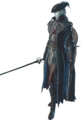
Hunters
| ||
|---|---|---|

Protagonists
-
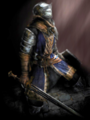 The Chosen Undead
Great Lords
-
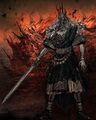 Lord Gwyn
 -
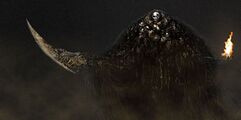 Gravelord Nito
 -
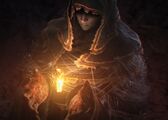 The Witch of Izalith
 -
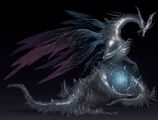 Seath the Scaleless
Undead
-
 Solaire of Astora
 -
 Lautrec of Carim
Tomb of the Giants
-
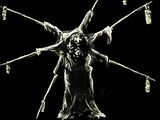 Pinwheel
Kilin of the First Flame
-
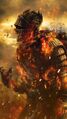 The Soul of Cinder
References
- ↑ "Fact Book 2024" (PDF). Bandai Namco Group. 2024. p. 3
- ↑ Webarchive link if twitter link dies

