For any inquires on backlink exchange or partnerships please contact thecodex@gmail.com
The Wiki Forums are up! Check them here!
There is an official chat room on the wiki! I'm always AFK here so pull by to say hi!
If you would like to join the discord, please read this page.
Renko Usami
Renko Usami (宇佐見 蓮子 Usami Renko) is one of the primary protagonists featured in the stories attached to ZUN's Music Collection. She attends university in Kyoto during the near future of the Outside World, where she co-founds the "Hifuu Club" alongside her close friend Maribel Hearn. Although she has no direct connection to Gensokyo, she knows of its existence through Maribel's accounts of visiting the land in her dreams.
| Renko Usami | |
|---|---|
  
          | |
| Origin | |
| Origin | Night Trip to Rendaino ~ Ghostly Field Club |
| Creator | ZUN |
| First Appearance | Night Trip to Rendaino ~ Ghostly Field Club |
| Actor | Fanmade Series: Eri Kitamura, Kaori Fukuhara, Akiko Nakagawa, Nanako Mori, Risae Matsuda, Yukari Kokubun, Ami Koshimizu |
| Characteristics | |
| Species | Human |
| Gender | Female |
| Pronouns | She/Her |
| Sexuality | Unknown |
| Age | At least 20 |
| Birthday | Unknown |
| Height | Unknown |
| Weight | Unknown |
| Ethnicity | Japanese |
| Status | Alive |
| Alignment | Neutral Good |
| Archetype | Researcher |
| Occupation | University Student |
| Time Period | Futuristic |
| Language | Japanese |
| Combat Style | Street Fighting |
| Homeworld | Earth |
| Relationships | |
| Affiliations | Maribel Hearn |
| Enemies | Youkai |
Background
| This dropdown contains the synopsis of Renko Usami’s story. Read at your own risk as you may be spoiled otherwise! |
|---|
|
Ghostly Field Club Changeability of Strange Dream Retrospective 53 minutes Magical Astronomy Trojan Green Asteroid Neo-traditionalism of Japan Maribel brings up the topic of Hell with Renko, though she withholds the fact that she physically traveled there during her isolation. Renko informs her that while she was away, news outlets reported the discovery of stone tools dating back over 25 million years, though these finds were dismissed as hoaxes. Maribel disagrees with that assessment and presents one such tool that she herself uncovered. She then shows Renko a vision of the underground realm where she found the object. Renko recognizes the Ame-no-Sakahoko within that realm. Maribel becomes reassured, no longer believing the place she saw to be Hell, but rather the world of the gods. The two decide to seek out more such "Izanagi Objects" scattered unrecognized across Japan. Dr. Latency's Freak Report Dateless Bar "Old Adam" Taboo Japan Disentanglement Renko is used to handling the research side of their club activities while Maribel does the field investigations. Finding materials about mysteries that she herself does not recognize feels strange and out of place. She decides to follow the clues in Maribel's notes and travels to Hitachi Province, to a location Maribel had identified as Tanabatazaka. The area is a quiet, rural landscape preserved as a natural culture sanctuary. Renko travels there alone by train. She carries Maribel's annotated version of her manuscript, which mostly consists of doubts and counterarguments. Though she feels unsettled by the situation, she is also somewhat glad to see that Maribel had engaged so closely with her ideas. According to Maribel's research, Tanabatazaka is tied to an old warning: do not pass through this place on the morning of July 7th before 10:00 AM, or something strange will occur. The date matches the time Maribel disappeared. Renko suspects that Maribel came here to find a door to another world and was spirited away. Walking along a mountain path lined with Jizo statues, Renko knocks one over. She knows disturbing cultural artifacts is forbidden, but she cannot think of another way to break through what she believes is a taboo. Behind the statue, she finds a crack with light seeping through. Without hesitation, she reaches her arm inside. She sees a golden land and many doors. Maribel appears within reach. Afterward, Maribel returns safely, though she is unaware that two weeks have passed. To her, it seemed like Renko appeared on the other side of the fog shortly after 10:00 AM on the same day. The two argue about the nature of reality. Renko explains that her theory does not deny the existence of other worlds, but instead argues that even ordinary matter does not truly exist in a classical sense—everything is the interference of waves. She suggests that the difference between living people and phantoms is not as clear as it seems. Maribel is not convinced, but she cannot come up with a good rebuttal. The story closes with the idea that taboos should not be forgotten, and that there is nowhere in the world without apparitions. |
Name Meaning
Her full name is Renko Usami (宇佐見 蓮子), with both her given name and surname being actual Japanese names. The kanji for Renko (蓮子) break down to "lotus" and "child", with -ko serving as a common suffix found in many female Japanese names.
Appearance
General Description: Renko is a figure with brown hair. She usually wears a black hat with a bow, a white blouse, and a brown dress. She often carries a book with her.
Facial Features: She has brown hair.
Clothing/Outfit:
- Standard Outfit: A black hat with a bow, a white blouse, and a brown dress.
- Magical Astronomy / Trojan Green Asteroid / Rainbow-Colored Septentrion: A black shawl is worn over her standard outfit.
Items:
- A book, which she often carries.
Alternate Forms/Disguises: This character does not have other widely recognized alternate forms.
Personality
- Confident and Adventurous: Renko is confident with an adventurous and daring personality. She usually arranges the club's activities, such as the trip to Rendaino and to the "Old Adam" bar.
- Objective: As a physics major, Renko tends to view things from an objective point of view. This allows her to help Maribel differentiate between reality and fantasy.
- Believes in Maribel: Renko believes in anything Maribel says, despite her objective nature.
Goals
- Uncover the secrets of the Otherworlds Maribel sees (Ongoing).
- Give a scientific explanation behind what Maribel finds (Ongoing).
Relationships
Renko is the only other member of Maribel's Hifuu Club and a fellow student at her university. The two are very close friends, working together to seek out other worlds. They travel by train to Renko's hometown, discuss going to the Moon together, and Maribel confides in Renko about her dreams of traveling to another world. No matter what Merry says, Renko will believe her entirely, saying that since it's Merry saying it, then it's certain that it's true[1]. Renko is described as Maribel's dear friend to where her going on a trip by herself makes her feel alone[2] along with Maribel being described as Renko's closest friend[3].
Sumireko Usami
Because Sumireko shares Renko's surname, bears a similar appearance, and is the founder of the Hifuu Club that Renko later joins, there is likely some sort of familial or otherwise significant relation between the two. However, the specifics of this connection remain unknown.
General Information
Name: Renko Usami[4]
Origin: Night Trip to Rendaino ~ Ghostly Field Club
Overall Series: Touhou Project
First Appearance: Night Trip to Rendaino ~ Ghostly Field Club
Latest Appearance: Mugen Noh of Tanabata Hill ~ Taboo Japan Disentanglement
Company: Team Shanghai Alice
Creator: ZUN
Actor: The following voice acted roles are all from fan-made series not apart of any canonical Touhou works.
- Japanese Voice Actors: Eri Kitamura (Hifuu Club Activity Record ~ The Sealed Esoteric History), Kaori Fukuhara (Touhou LostWord Renko Usami (Investigating a Makai God)), Akiko Nakagawa (Touhou LostWord Renko Usami (Investigating a Makai God)), Nanako Mori (Touhou LostWord Renko Usami (Investigating a Makai God)), Risae Matsuda (Touhou LostWord Renko Usami (Investigating a Disastrous Older Sister)), Yukari Kokubun (Touhou LostWord Renko Usami (Investigating a Disastrous Older Sister)), Ami Koshimizu (Touhou LostWord Renko Usami (Investigating a Disastrous Older Sister))
Gender: Female
Sexuality: Unknown
Pronouns: She/Her
Handedness: Right-Handed
Age: At least 20 (Renko and Maribel are old enough to drink alcohol[5], directly drinking sake during their vacation[6] where one needs to be at least 20 years old under Japanese law to drink, where Japanese law requires no underaged characters to be shown drinking. This is even acknowledged in the series itself with a note saying alcohol is only for those over 20 years old[7])
Birthday: Unknown
Time Period: Futuristic (In Retrospective in 53 minutes, it's noted how this takes place after the relocation of the capital in the Jinki era, which is an era that was named for the years 724-729, thus for the reptition of a Japanese era name to be used again means it's in the far future[8]. Mt. Fuji is also recognized as a World Heritage Site that they designated as exitinct rather than just dormant during their time period, while it is still active in modern time[5])
Timeline: Main Timeline
Homeworld: Earth
Residence: Kyoto, Japan
Story Role: Main Protagonist
Legacy: Local Legacy
Influence: Event Influence
Language: Japanese
Ethnicity: Japanese (Renko's hometown is Tokyo[9])
Religion: N/A
Classification: Member of the Hifuu Club[10]
Species: Human
State of Being: Regular
Physiology: Humanoid Physiology
In-Universe Creator: Unknown
Occupation: University Student
Ranking: Super Unified Physics Major[11]
Combat Style: Street Fighting
Affiliations: Maribel Hearn
Enemies: Youkai
Height: Unknown
Weight: Unknown
Status: Alive
Alignment: Neutral Good (Renko believes that one should separate dream from reality to achieve happiness[12])
- Type(s) of Potential: Growth Potential
- Level of Potential: Growth
- Description: Noted by Maribel that she believes Renko could surpass Stephen Hawkings in intelligence if she were to study further in physics[13].
- Limitations: Nothing notable.
Archetype: Researcher
Codex Statistics
Grade: C
Tier: 10-B
Cardinality: Finite
Dimensionality: 3-D
Attack Potency: Average Human level (Renko is an average adult woman)
Durability: Average Human level
Striking Strength: Average Human Class
Lifting Strength: Average Human Class
Travel Speed: Average Human Speed
Attack Speed: Average Human Speed
Reaction Speed: Average Human Reactions
Stamina: Average
Range: Standard Melee
Intelligence: Supergenius Intelligence (Renko's major is super-unified physics where she studies directly strings[11]. Noted by ZUN that Renko and Maribel seem to be just slightly smarter than most their age, referring to them as "smart girls"[14]. Noted that Renko truly is intelligent and a quick thinker, coming up with a plan to have Merry show all of the bar attendants the other side of the barrier through the mirror to find out who really made contact with the other world or not all on the spot[15]. Noted by Maribel that she believes Renko could surpass Stephen Hawkings in intelligence while Renko noted that she believes herself to be at least as smart as Max Planck[13]. Renko is able to tell what time it is by the light of the stars and her location by looking at the moon[16]. When Maribel was lost in a forest, she noted how she envied Renko's eyes as she would've known exactly where she was due to the stars in the sky and would never get lost[17])
Knowledge: At least Master level
- Information Analysis (Renko is able to tell what time it is by the light of the stars and her location by looking at the moon[16]. When Maribel was lost in a forest, she noted how she envied Renko's eyes as she would've known exactly where she was due to the stars in the sky and would never get lost[17])
- Genius Intelligence
- Breaking the Fourth Wall (Touhou characters constantly acknowledge being a stage boss[18])
- Physics Preservation (Renko and Maribel are a both able to look around and walk in the other worlds like Gensokyo, which are noted to be worlds dominated by other types of particles and physics[19]. When Renko specifically asked what would happen if one went to a brane dominated by particles with different properties[20], only real threat for both of them were that youkai will attack[21])
- Extrasensory Perception (Renko was able to notice the atmosphere being different when the train went under the scared mountain, denoting that it's likely they're in a different space-time[5])
- Psychometry (Through the use of spirit photography with a corpse, Renko is able to get photos of the Netherworld[22])
- Information Manipulation (Human's life information is the ultimate impurity, being apart of Earthly information[23], which is the information of all living things[24]. The reason why this is never shown is that the Asama Joue Mountain is a shrine that neutralizes human impurities[25], where if the human information cannot be processed it will throw the Lunar Capital into disarray[26])
- Link Manipulation (Strong Emotions can be contained in objects that can connect between the main world and the netherworld[27]).
- Resistance to
- Purification (Eirin noted that only humans could solve the incident with Junko as youkai being completely impure could not eevn see her[28], with it being noted that non-humans cannot get close to her[29], where Junko's powers of purification allows her to kill one unconditionally, removing all impurities from them[30], with impurity being the concept of life and death where to lose one's impurity is to lose both life and death[31], it was also shown a metallic spider's march of purification caused all the trees withering before one's eyes and not one blade of grass was left in the spider's tracks[32])
- Restoration (The ability is explained further that the power of purification is the power of the gods, that restores something to its godly nature where it didn't have a name[33])
- Nothingness Manipulation (A state of namelessness is a state of borderless purity as it is explained in Curiosities of Lotus Asia Chapter 15 that nothing in the world had a name and it was a world in which all things were mixed together in choas, though the gods of ancient times gave a name to every last thing and so the orderly world was born, naming somethign creates a new border that makes it recognizable to a thing effectively the power to name something is to produce the object from nothingness[34])
- Light Manipulation (Her purification created light that was pure madness itself according to Okina[35] with Okina noting that she could only see the pure danmaku as madness[36])
- Conceptual Manipulation (Junko notes to simplify nature, life, and emotions are no more than information[37])
- Life-Force Manipulation
- Life Manipulation & Death Manipulation
- Likely Madness Manipulation (Renko wished to witness the same events as Maribel Hearn, including the events of the eternal night and looked at the moon that made people go insane, implying she likely would have not been affected[12])
- Purification (Eirin noted that only humans could solve the incident with Junko as youkai being completely impure could not eevn see her[28], with it being noted that non-humans cannot get close to her[29], where Junko's powers of purification allows her to kill one unconditionally, removing all impurities from them[30], with impurity being the concept of life and death where to lose one's impurity is to lose both life and death[31], it was also shown a metallic spider's march of purification caused all the trees withering before one's eyes and not one blade of grass was left in the spider's tracks[32])
Notable Techniques
Telling Time by the Stars and Determining Location by the Moon
Renko can tell time by looking at the stars and determine location by looking at the Moon. This ability works even when viewing a snapshot of the stars and Moon. She once determined the location of a photo showing an entrance to the Netherworld simply by examining the Moon and stars pictured.
Her ability to tell time by the stars is limited to Japanese Standard Time. To know the time in another timezone, she would need to perform the necessary calculations.
Other
Standard Tactics: Renko does not actively engage against hostiles but insteads flees from them.
Weaknesses: Renko's eyes can only see Japanse Standard Time, Universal Coordinated Time is beyond her abilites[38].
Note
- While Cirno cannot freeze lasers[39]. nor fireballs from the fairies[40], it should be noted these are attacks made of magic, which magic exists outside of the Grand Unified Theory[41], and is above the first layer is where all things within the laws of physics presides, putting attacks with magic outside of the conventional laws of physics[42]. Thus Cirno being able to freeze pure energy[43], through the process of taking heat from the object[44], would fall under Absolute Zero, as to freeze energy to through th eprocess of stopping movement entirely through the process of absorbing heat would mean all thermal energy is removed and the potential contradictions comes from objects not bound by the laws of physics.
- Any translations from en.tohouwiki.net are considered fine to use as they all fall under Project Translations, a fan translation team that have translation guuidelines and rulesets, along with moderators that directly overlook and proofread English translations to check for machine translations.
- Yumemi's statements can be taken with credibility, not only do the science from her world surpass the main one by 500 years[45] where she notes the science of the main world is much more primitive then hers[46], but her world has already fully proven the existence of Grand Unified Theory and Yumemi herself notes that her theory was proven right by seeing magic.
- Despite Gensou Narratograph being directly noted to be an "unofficial Touhou tabletop RPG", ZUN has directly participated in the RPG and noted the way Reimu acts during his session is how canon Reimu would act[47], thus character actions done by him and mechanics are fine to use.
Special Notes
- Many spell card images and descriptions along with translations are heavily helped by the Touhou Wiki.
Explanations
Canoncity of Touhou Project
The Touhou Project franchise canoncity mainly falls under any media worked on by ZUN are official and canon to the overall lineup.
There are various aspects constantly debated about within the canon:
PC-98
Media like PC-98, has been noted by ZUN to be ignored as one can ignore derivative works[48]. He has also said that anything prior to Embodiment of Scarlet Devil can for the most part be ignored and one can think of Embodiment of Scarlet Devil as the starting from a clean slate and starting a new series[49], he's also referred to Highly Responsive to Prayers as a study product[50]. With this in mind, one would assume that PC-98 is thus non-canon to the Windows continuity of games.
However, ZUN has also directly stated PC-98 games are the same world as the Windows Games, stating that any contradictions that exist from PC-98 can be ignored from the retcon in Windows Era[51]. While one argues ZUN noting the works are derivative works to be ignored and Embodiment of the Scarlet Devil should be seen as the starting point, these statements are moreso telling a fan to not worry about having to play PC-98 games or learn more about their stories.
It's also been noted in Embodiment of Scarlet Devil's おまけ.txt that the game chronologically is not too far from the previous title, which would be Mystic Square, the PC-98 title[52]. ZUN has also directly brought back characters from PC-98 games, noting he wanted to bring back characters from before Embodiment of Scarlet Devil and notes any of the other older characters that don't appear have probably retired by now and are warmly watching over things from various places nowadays[53]. When asked where Mima from PC-98 has gone, ZUN notes that he doesn't bring them back due to making things complicated and having potentially angry fans ask where she has been the entire time, he has also noted that there's not much use for characters like Genji as Reimu can fly now and also notes he is not dead[54]. ZUN has also made mention to Genji probably living in the lake in the back of the shrine[55]. In Touhou Sangetsusei ~ Strange and Bright Nature Deity, Reimu and Marisa were talking about glowing moss with Reimu saying it would be nice to transfer it to the pond in the back of the Hakurei Shrine and Marisa saying that she could make it grow there on the turtles' back, referencing Genji[56].
In Touhou 07 Perfect Cherry Blossom, when Alice meets Reimu, she tells her long time no see, noting that they've met before calling her "old friend"[57]. In Yuuka's mode in Touhou Project - Phantasmagoria of Flower View, Reimu directly references defeating Yuuka back in PC-98[58]. If Yuuka defeats Marisa in the same game, she will note that Marisa has grown up quite a bit, when the last time she's seen her has been in PC-98[59].
Seeing as ZUN himself has directly said both PC-98 and Windows are in the same world and that characters directly acknowledged PC-98 events and reference characters from it, PC-98 is completely canon and any contradictions PC-98 have can be ignored.
Side Games Time Placements
Touhou 7.5 - Immaterial and Missing Power takes place between Perfect Cherry Blossom and Imperishable Night[60].
Multiple Playable Routes
In the series, there are multiple playable character routes, including some where the characters fight Reimu herself and defeat her, calling question into what route is canon. ZUN has elaborated that canonically, anytime Reimu and the gang are defeated, they challenge again however many times they want, but on the youkai side, they do not challenge again after being defeated and are not attached to the results of winning or losing[61].
In terms of how playable routes have went, some examples of canonically noted routes:
- In Reimu's profile on Perfect Memento in Strict Sense, it's noted that Reimu resolved the Scarlet Devil Mansion Incident alone[62].
- Reimu is also acknowledged to have resolved the Spring Snow Incident in Perfect Cherry Blossom, though it is not noted if she did this alone[63].
- Reimu claims she solved the Eternal Night incident, however if one asks her about the cause or the perpetrator, she'll only respond with ambiguous answers, it is also not noted if she did this alone[64].
With some of these examples, it is normally assumed that in some way Reimu has some part in resolving every incident and other routes are dubiously canon depending on what transpired.
Spell Card Rules
There are many cases of weaker humans beating stronger Yokai or vice versa within the Touhou series, this has been elaborated on in Reimu's profile on Perfect Memento in Strict Sense. Reimu introduced the spell card rules as the youkai had no way to defeat the Hakurei shrine maiden, making many youkai feel that their meaning to exist have dissapeared[65]. The rules incoporate the following:
- Spell cards are techniques specially-named by the individual, and they must be declared upon use.
- The number of each party's spell cards must be determined in advance of a duel.
- The first party to have all of their spell cards beaten must admit defeat.
- The victor is entitled only to what was agreed upon before the duel. If they're not interested in what their opponent has to offer, they can refuse a duel.
- Winners should generally allow losers a rematch.
- Always prepare for the unexpected.
The original draft held these rules[66]:
- Combatants will give names and meanings to the duel for the benefit of beauty.
- Combatants will declare the number of named duels before beginning.
- Combatants may not repeat attacks by relying on stamina.
- Combatants may not deliver attacks that do not have meaning. The meaning itself becomes the attack's power.
- In the case that a combatant loses a named duel, that combatant will admit defeat, even if he or she has strength remaining. No combatant may kill a human, even upon victory.
- Combatants will write the duel's name on paper in the format of a contract. By doing so, the above-mentioned rules become absolute. These papers will be called spell cards.
These rules allows for duels that feel almost like sport rather then a match, and have allowed for weaker fighters to challenge stronger ones, due to this though, it also has become possible for youkai to freely defeat Reimu without worrying about the consequences.
Due to them being written into cards and essentially affecting the ability and power of an attack, the spell cards are likely the thing binding attacks to specific properties.
Parallel Worlds
Parallel Worlds is a topic brought up at some points in the Touhou Project franchise, they are worlds called "Probability Worlds" by Yumemi, stating that those and parallel worlds are one and the same[67]. This essentially means that parallel worlds in Touhou are based on the concept of probability. Yumemi and Chiyuri use a "Probability Space Hypervessel" in order to travel to alternate worlds and time periods[68], further showcasing that probabiliy serves an importance.
Magical vs. Physical Strength
There[69] are[70] multiple[71] occasions[72] of[73]characters[74] commenting[75] on[76] humans like[77] Reimu[78] being strong[79]. Despite this Reimu showcases physical strength that isn't superhuman, such as the fact that she cannot cut a bamboo stick while Fujiwara direclty does in front of her.
This is due to the difference between magical and physical strength.
In works like Symposium of Post-mysticism, Yuugi Hoshiguma's profile has Suika directly state that Yuugi is weaker then her in magical powers, but stronger than her physically[80], lining a clear difference between magical and physical strength.
While one can be physically stronger then another, such as how Onis are physically the strongest, magic users are still able to keep up with them due to using a different form of attack.
An example can be found with Yuugi herself, when Reimu fights against her in Subterranean Animism[81], with her acknolwedging her strength[82], something Yuugi only does to those who are truly strong[80]. This establishes even with spellcard rules, Yuugi considers Reimu a strong fighter. Reimu herself is very clearly not at an oni's physical strength, as she cannot do the things they can, however, her magical strength allows her to keep up with them.
To defend against magical based properties requires Non-Standard Defenses as it is acknowledged as not being something of standard physicality.
The Three Layers of Reality
In Chapter 27 of Curiosities of Lotus Asia, Reimu proceeds to explain how reality works to Rinnosuke and Marisa, where she explains in-depth the three layers of reality.
This conversation started from discussing the mechanism of fortune, where Rinnosuke attempted to posit that the future is predetermined and that Reimu's luck was her being able to calculate in an instant the predetermined future, however Reimu had a different explanation requiring her to lecture on the mechanisms of probability[83], in her explanation, the world is made up of three layers: the physical layer that moves in accuracy with the laws of physics, the second layer that moves with the spirit, and the third layer of memory which is the recollection of events that lies within all things[42]. The memory layer rejects the loop of the physical and mental layers, the two layers the youkai conceive of the world which is why they believe history repeats itself and the future is predetermined. Since it's only possible to add to the memory layer, it's possible to completely recreate the past.
While the physical layer follows the laws of physics, the mental layer interprets the outcomes and the memory layer alters the probability, essentially creating the future, since it's impossible for memories to raech the same state as a point in the past, the future is not predetermined, thus when Reimu is able to predict how the dice will fall, she's not predicting the fall of the dice, the dice members the fact that she predicted how the dice would fall, thus due to this, Reimu entering the memory of the die-face greatly skews the results in Reimu's favor, where the results side with Reimu[84].
Thus the memory layer is essentially the most important layer that rejects the notion of loops from the previous two layers.
Dream vs. Reality
In the Touhou Project series, it is made very apparent that dream and reality are in truth one and the same.
In Changeability of Strange Dream, Maribel Hearn has a conversation with Renko Usami about how she is bringing objects out of her dreams[4], which Maribel posits that truth exists within subjectivity, if one can see the same sights over and over again then that's the kind of place it is as such dreams are nothing like the antonym of reality[11], where much longer ago people did not draw a distinction between dreams and reality[85], with Maribel reiterating that dreams and reality are the same[86].
In Legacy of Lunatic Kingdom it is shown that the Dream World is a separate plane[87], that in games like Antinomy of Common Flower are shown to have influence[88] on reality[89].
In the Urban Legends in Limbo finale, Sumireko notes that she is able to travel between the human world and Gensokyo whenver she sleeps, where her dream self enters Gensokyo[90] making her innately unable to be interacted with[91].
Trivia
- Renko's major, "super unified physics," is a fictional field of study that presumably deals with physics in a world where a theory of everything has been discovered. It appears that this goal has been successfully achieved through string theory, as Maribel mentions that Renko studies strings.
- Renko is one of the few characters known to live outside Gensokyo. As a result, she has never actually met any of the other characters except for Maribel Hearn, who also lives outside Gensokyo. Yuyuko Saigyouji once encountered the Hifuu Club while they were visiting a power spot in the Outside World, but Renko did not seem able to see her.
- Renko, Maribel, and the Five Magic Stones from Story of Eastern Wonderland are currently the only Touhou characters who have an associated music theme but no official title or spell cards.
Gallery
-
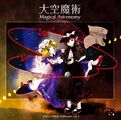 Renko in Celestial Wizardry ~ Magical Astronomy cover
 -
-
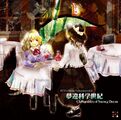
 Renko in Changing Dreams in the Age of Science ~ Changeability of Strange Dream cover
 -
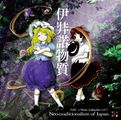 Renko in Izanagi Object ~ Neo-traditionalism of Japan cover
 -
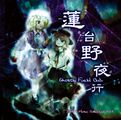 Renko in Night Trip to Rendaino ~ Ghostly Field Club cover
 -
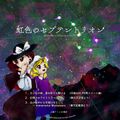 Renko in Rainbow-Colored Septentrion cover
 -
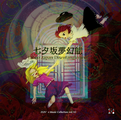 Renko in Mugen Noh of Tanabata Hill ~ Taboo Japan Disentanglement cover
 -
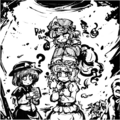 Maribel and Renko's cameo in Symposium of Post-mysticism
 -
 Renko in Old Testament Tavern ~ Dateless Bar "Old Adam" cover
 -
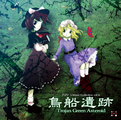 Renko in Ruins of Torifune ~ Trojan Green Asteroid cover
 -
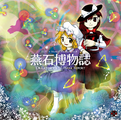 Renko in Swallowstone Naturalis Historia ~ Dr. Latency's Freak Report cover
 -
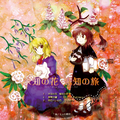 Renko in Unknown Flower, Mesmerizing Journey cover


Misconceptions
Characters Have Flown Through Outerspace
One example of this is believed to be in Touhou 02's Stage 3 Scarlet Dream ~ Scarlet Dream where it displays stars and a space-like effect in the background[92], however this is actually the World of Fantasies, the world that lies between Makai and the human world, with Genji confirming this is definetely not outerspace as Reimu can breathe just fine there[93].
All Characters are Children
This is an argument that spawns from how small the characters look in different works, though this is moreso due to the "moe" artstyle Touhou tries to capture, in many of the manga characters look far older.
Majority of characters in the series are outright shown to drink alcohol on a daily basis[94], where one needs to be at least 20 years old under Japanese law to drink, where Japanese law requires no underaged characters to be shown drinking. This is even acknowledged in the series itself with a note saying alcohol is only for those over 20 years old[95]. Thus if a character is ever seen drinking alcohol in the series, they are an adult.
The only direct non-adults in the series are Sumireko Usami, Chiyuri Kitashirakawa, and Hieda no Akyuu in her first appearance.
Youkai Control the world through both the mental and physical layer
This statement comes from a fan translation that says this in Curiosities of Lotus Asia[96].
While the statement seems clear cut, there is another translation used instead that makes more sense with the sentence.
It instead notes that most youkai concieve of the world through these two layers, which is why they believe the future is pre-determined and history repeats itself[97]. This falls in line with the earlier disucssion of Rinnosuke claiming that he believes the future to be predetermined and Reimu needing to explain to him why that's not the case[83].
|
Songs: |
 |
Battle Records
None.
None.
None.
References
| Expand here. |
|---|
|
Versus Threads
None.
None.
None.
- Pages using Tabber parser tag
- Templates
- Characters
- Female Characters
- European Characters
- European Female Characters
- Indie Characters
- Indie Book Characters
- Doujin Characters
- Doujinshi Characters
- Right-Handed Characters
- Human Characters
- Recurring Characters
- Good Characters
- Neutral Good Characters
- Alive Characters
- Mysterious Characters
- Scientist Characters
- Primary Protagonists
- Protagonists
- Humans
- Scientists
- Students
- Geniuses
- Researchers
- Team Shanghai Alice
- ZUN
- Touhou Project (Windows)
- Touhou Project
- Regular Tier
- Tier 10
- 10-B
- Genius Intelligence Users
- Breaking the Fourth Wall Users
- Physics Preservation Users
- Information Analysis Users
- Extrasensory Perception Users
- Psychometry Users
- Information Users
- Link Users

