For any inquires on backlink exchange or partnerships please contact thecodex@gmail.com
The Wiki Forums are up! Check them here!
There is an official chat room on the wiki! I'm always AFK here so pull by to say hi!
If you would like to join the discord, please read this page.
Touhou Project
Touhou Project is a Japanese doujin game series developed primarily by ZUN of Team Shanghai Alice. The series consists mainly of vertically-scrolling shoot 'em up games (danmaku), with additional print works and music CDs. It also includes seven danmaku action fighting game spinoffs co-developed with Twilight Frontier. The games are set in the sealed region of Gensokyo, a land where humans and youkai coexist under magical rules and regular incidents.
| Touhou Project | |
|---|---|


       | |
| General Information | |
| Official Date | 1996 |
| Company | Team Shanghai Alice, ZUN Soft |
| Creator/Developers | ZUN |
| Genre | Shoot 'em up, danmaku, danmaku action |
| Cosmology | Multiverse |
| Number of Series | 1 |
| Status | Ongoing |
| Reception | Generally Positive |
General Information
Official Date: 1996
Company: Team Shanghai Alice, ZUN Soft
Creator/Developers: ZUN
Genre: Shoot 'em up, danmaku, danmaku action
Cosmology: Multiverse (The human world and Gensokyo, a sealed land separated from the outside world by the Great Hakurei Barrier, creating a self-contained civilization with its own magical and social systems)
Number of Series: 1 main series
Number of Games: 33 main games
Status: Ongoing
Sales: A number of sales from Doujin Comiket sales, normally going over 1000 copies sold each comiket
Reception: Generally Positive (The Touhou Project series is influential in doujin culture, spawning dozens of fanmade series with use of the characters having their own entire officially published games not made by ZUN)
List of Misconceptions
Reimu is the 13th Hakurei Shrine Maiden
This misconception has been fully debunked by ZUN[1], essentially noting it were a lot of people that made additions to the original text causing confusion.
All Characters are Children
This is an argument that spawns from how small the characters look in different works, though this is moreso due to the "moe" artstyle Touhou tries to capture, in many of the manga characters look far older.
Majority of characters in the series are outright shown to drink alcohol on a daily basis[2], where one needs to be at least 20 years old under Japanese law to drink, where Japanese law requires no underaged characters to be shown drinking. This is even acknowledged in the series itself with a note saying alcohol is only for those over 20 years old[3]. Thus if a character is ever seen drinking alcohol in the series, they are an adult.
The only direct non-adults in the series are Sumireko Usami, Chiyuri Kitashirakawa, and Hieda no Akyuu in her first appearance.
Youkai Control the world through both the mental and physical layer
This statement comes from a fan translation that says this in Curiosities of Lotus Asia[4].
While the statement seems clear cut, there is another translation used instead that makes more sense with the sentence.
It instead notes that most youkai concieve of the world through these two layers, which is why they believe the future is pre-determined and history repeats itself[5]. This falls in line with the earlier disucssion of Rinnosuke claiming that he believes the future to be predetermined and Reimu needing to explain to him why that's not the case[6].
Power of the Verse
The series consists of various youkai with different sets of powers and characters capable of varying strength and speed into superhuman fields. One of the most defining traits is all characters usage of their bullet hell attacks covering the screen, making it very hard to dodge. The characters utilize a number of abilities such as: Magic, Energy Manipulation, Curtain Fire, Soul Manipulation, Mind Manipulation, Space-Time Manipulation, Boundary Manipulation, Ice Manipulation, Temperature Manipulation, etcetera.
Special Notes
- Many spell card images and descriptions along with translations are heavily helped by the Touhou Wiki.
Explanations
Canoncity of Touhou Project
The Touhou Project franchise canoncity mainly falls under any media worked on by ZUN are official and canon to the overall lineup.
There are various aspects constantly debated about within the canon:
PC-98
Media like PC-98, has been noted by ZUN to be ignored as one can ignore derivative works[7]. He has also said that anything prior to Embodiment of Scarlet Devil can for the most part be ignored and one can think of Embodiment of Scarlet Devil as the starting from a clean slate and starting a new series[8], he's also referred to Highly Responsive to Prayers as a study product[9]. With this in mind, one would assume that PC-98 is thus non-canon to the Windows continuity of games.
However, ZUN has also directly stated PC-98 games are the same world as the Windows Games, stating that any contradictions that exist from PC-98 can be ignored from the retcon in Windows Era[10]. While one argues ZUN noting the works are derivative works to be ignored and Embodiment of the Scarlet Devil should be seen as the starting point, these statements are moreso telling a fan to not worry about having to play PC-98 games or learn more about their stories.
It's also been noted in Embodiment of Scarlet Devil's おまけ.txt that the game chronologically is not too far from the previous title, which would be Mystic Square, the PC-98 title[11]. ZUN has also directly brought back characters from PC-98 games, noting he wanted to bring back characters from before Embodiment of Scarlet Devil and notes any of the other older characters that don't appear have probably retired by now and are warmly watching over things from various places nowadays[12]. When asked where Mima from PC-98 has gone, ZUN notes that he doesn't bring them back due to making things complicated and having potentially angry fans ask where she has been the entire time, he has also noted that there's not much use for characters like Genji as Reimu can fly now and also notes he is not dead[13]. ZUN has also made mention to Genji probably living in the lake in the back of the shrine[14]. In Touhou Sangetsusei ~ Strange and Bright Nature Deity, Reimu and Marisa were talking about glowing moss with Reimu saying it would be nice to transfer it to the pond in the back of the Hakurei Shrine and Marisa saying that she could make it grow there on the turtles' back, referencing Genji[15].
In Touhou 07 Perfect Cherry Blossom, when Alice meets Reimu, she tells her long time no see, noting that they've met before calling her "old friend"[16]. In Yuuka's mode in Touhou Project - Phantasmagoria of Flower View, Reimu directly references defeating Yuuka back in PC-98[17]. If Yuuka defeats Marisa in the same game, she will note that Marisa has grown up quite a bit, when the last time she's seen her has been in PC-98[18].
Seeing as ZUN himself has directly said both PC-98 and Windows are in the same world and that characters directly acknowledged PC-98 events and reference characters from it, PC-98 is completely canon and any contradictions PC-98 have can be ignored.
Side Games Time Placements
Touhou 7.5 - Immaterial and Missing Power takes place between Perfect Cherry Blossom and Imperishable Night[19].
Multiple Playable Routes
In the series, there are multiple playable character routes, including some where the characters fight Reimu herself and defeat her, calling question into what route is canon. ZUN has elaborated that canonically, anytime Reimu and the gang are defeated, they challenge again however many times they want, but on the youkai side, they do not challenge again after being defeated and are not attached to the results of winning or losing[20].
In terms of how playable routes have went, some examples of canonically noted routes:
- In Reimu's profile on Perfect Memento in Strict Sense, it's noted that Reimu resolved the Scarlet Devil Mansion Incident alone[21].
- Reimu is also acknowledged to have resolved the Spring Snow Incident in Perfect Cherry Blossom, though it is not noted if she did this alone[22].
- Reimu claims she solved the Eternal Night incident, however if one asks her about the cause or the perpetrator, she'll only respond with ambiguous answers, it is also not noted if she did this alone[23].
With some of these examples, it is normally assumed that in some way Reimu has some part in resolving every incident and other routes are dubiously canon depending on what transpired.
Spell Card Rules
There are many cases of weaker humans beating stronger Yokai or vice versa within the Touhou series, this has been elaborated on in Reimu's profile on Perfect Memento in Strict Sense. Reimu introduced the spell card rules as the youkai had no way to defeat the Hakurei shrine maiden, making many youkai feel that their meaning to exist have dissapeared[24]. The rules incoporate the following:
- Spell cards are techniques specially-named by the individual, and they must be declared upon use.
- The number of each party's spell cards must be determined in advance of a duel.
- The first party to have all of their spell cards beaten must admit defeat.
- The victor is entitled only to what was agreed upon before the duel. If they're not interested in what their opponent has to offer, they can refuse a duel.
- Winners should generally allow losers a rematch.
- Always prepare for the unexpected.
The original draft held these rules[25]:
- Combatants will give names and meanings to the duel for the benefit of beauty.
- Combatants will declare the number of named duels before beginning.
- Combatants may not repeat attacks by relying on stamina.
- Combatants may not deliver attacks that do not have meaning. The meaning itself becomes the attack's power.
- In the case that a combatant loses a named duel, that combatant will admit defeat, even if he or she has strength remaining. No combatant may kill a human, even upon victory.
- Combatants will write the duel's name on paper in the format of a contract. By doing so, the above-mentioned rules become absolute. These papers will be called spell cards.
These rules allows for duels that feel almost like sport rather then a match, and have allowed for weaker fighters to challenge stronger ones, due to this though, it also has become possible for youkai to freely defeat Reimu without worrying about the consequences.
Due to them being written into cards and essentially affecting the ability and power of an attack, the spell cards are likely the thing binding attacks to specific properties.
Parallel Worlds
Parallel Worlds is a topic brought up at some points in the Touhou Project franchise, they are worlds called "Probability Worlds" by Yumemi, stating that those and parallel worlds are one and the same[26]. This essentially means that parallel worlds in Touhou are based on the concept of probability. Yumemi and Chiyuri use a "Probability Space Hypervessel" in order to travel to alternate worlds and time periods[27], further showcasing that probabiliy serves an importance.
Magical vs. Physical Strength
There[28] are[29] multiple[30] occasions[31] of[32] characters[33] commenting[34] on[35] humans like[36] Reimu[37] being strong[38]. Despite this Reimu showcases physical strength that isn't superhuman, such as the fact that she cannot cut a bamboo stick while Fujiwara direclty does in front of her.
This is due to the difference between magical and physical strength.
In works like Symposium of Post-mysticism, Yuugi Hoshiguma's profile has Suika directly state that Yuugi is weaker then her in magical powers, but stronger than her physically[39], lining a clear difference between magical and physical strength.
While one can be physically stronger then another, such as how Onis are physically the strongest, magic users are still able to keep up with them due to using a different form of attack.
An example can be found with Yuugi herself, when Reimu fights against her in Subterranean Animism[40], with her acknolwedging her strength[41], something Yuugi only does to those who are truly strong[39]. This establishes even with spellcard rules, Yuugi considers Reimu a strong fighter. Reimu herself is very clearly not at an oni's physical strength, as she cannot do the things they can, however, her magical strength allows her to keep up with them.
To defend against magical based properties requires Non-Standard Defenses as it is acknowledged as not being something of standard physicality.
The Three Layers of Reality
In Chapter 27 of Curiosities of Lotus Asia, Reimu proceeds to explain how reality works to Rinnosuke and Marisa, where she explains in-depth the three layers of reality.
This conversation started from discussing the mechanism of fortune, where Rinnosuke attempted to posit that the future is predetermined and that Reimu's luck was her being able to calculate in an instant the predetermined future, however Reimu had a different explanation requiring her to lecture on the mechanisms of probability[6], in her explanation, the world is made up of three layers: the physical layer that moves in accuracy with the laws of physics, the second layer that moves with the spirit, and the third layer of memory which is the recollection of events that lies within all things[42]. The memory layer rejects the loop of the physical and mental layers, the two layers the youkai conceive of the world which is why they believe history repeats itself and the future is predetermined. Since it's only possible to add to the memory layer, it's possible to completely recreate the past.
While the physical layer follows the laws of physics, the mental layer interprets the outcomes and the memory layer alters the probability, essentially creating the future, since it's impossible for memories to raech the same state as a point in the past, the future is not predetermined, thus when Reimu is able to predict how the dice will fall, she's not predicting the fall of the dice, the dice members the fact that she predicted how the dice would fall, thus due to this, Reimu entering the memory of the die-face greatly skews the results in Reimu's favor, where the results side with Reimu[43].
Thus the memory layer is essentially the most important layer that rejects the notion of loops from the previous two layers.
Dream vs. Reality
In the Touhou Project series, it is made very apparent that dream and reality are in truth one and the same.
In Changeability of Strange Dream, Maribel Hearn has a conversation with Renko Usami about how she is bringing objects out of her dreams[44], which Maribel posits that truth exists within subjectivity, if one can see the same sights over and over again then that's the kind of place it is as such dreams are nothing like the antonym of reality[45], where much longer ago people did not draw a distinction between dreams and reality[46], with Maribel reiterating that dreams and reality are the same[47].
In Legacy of Lunatic Kingdom it is shown that the Dream World is a separate plane[48], that in games like Antinomy of Common Flower are shown to have influence[49] on reality[50].
In the Urban Legends in Limbo finale, Sumireko notes that she is able to travel between the human world and Gensokyo whenver she sleeps, where her dream self enters Gensokyo[51] making her innately unable to be interacted with[52].
Battle Records Explanation
Due to the lack of explanation over who canonically resolved an incident in every game, the regular assumption will be Reimu. However, every playable character for a game will also get bosses they've beaten in their battle records and bosses that lost to them will also get those losses in their battle records. If Reimu ever comes across another playable and loses to them in their story, that's also counted as ZUN has elaborated that canonically, anytime Reimu and the gang are defeated, they challenge again however many times they want, but on the youkai side, they do not challenge again after being defeated and are not attached to the results of winning or losing[20].
For fighting games, each character's story normally takes place during a certain time of the story thus they are all canon, the only exceptions are Marisa's story in Sunken Fossil World, which plays more as a what-if Marisa went to solve the incident instead of Reimu and Hong Meiling's story in Touhou Hisoutensoku as she was just having a dream[53].
Knowledgeable Members
Profiles with Versus Threads Added
Species
| Different Species in Touhou | ||
|---|---|---|
| ||
Characters
| Shrine Maidens | ||
|---|---|---|
| ||
| Humans from the Outside World | ||
|---|---|---|
| ||

| Humans from Gensokyo | ||
|---|---|---|
| ||




| Youkai | ||
|---|---|---|
Standard Youkai
Magician Youkai
Vampires
Ghost
| ||





| Beings from Makai | ||
|---|---|---|
|
Creator
Residents
| ||



| Beings from Hell | ||
|---|---|---|
| ||

| Others | ||
|---|---|---|
Miscellaneous
Beings from Mugenkan
Dream World Beings
| ||




| Humans in Gensokyo | ||
|---|---|---|
Humans
Shrine Maidens
| ||


| Residents of the Netherworld | ||
|---|---|---|
| ||
| Humans from the Outside World | ||
|---|---|---|
| ||


| Fairies in Gensokyo | ||
|---|---|---|
| ||



| Youkai | ||
|---|---|---|
Standard Youkai
Magicians
Beast Youkai
| ||





| Non-Humans Outside of Gensokyo | ||
|---|---|---|
Divine Spirits
Gods
| ||


| Scarlet Devil Mansion Residents | ||
|---|---|---|
| ||
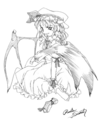
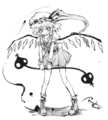

Fanworks
| Fan versions of Reimu Hakurei | ||
|---|---|---|
| ||
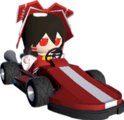
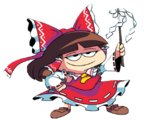
| Fan versions of Sakuya Izayoi | ||
|---|---|---|
| ||

References
| Expand here. |
|---|
|

