Medusa

|
"Mature Content" |
| This character or verse has mature themes and concepts, thus those of young age are ill-advised to look through these. |

| “ | A legendary monster whose gaze can turn people to stone. | „ |
| ~ Medusa's Lament of Innocence Description |


|-|Castlevania=

| “ | A legendary monster with hair made of snakes, she will slowly approach you to try and foil your counterattack. Use the Watch to stop her, then attack fiercely. | „ |
| ~ Medusa's Castlevania NES Description |


| “ | A monster who turns her victims to stone. One of three Gorgon sisters. | „ |
| ~ Medusa's Castlevania Portrait of Ruin Description |

| “ | Welcome. I haven't had any visitors in a while. With that body, you'll make an excellent statue. | „ |
| ~ Medusa to Leon Belmont |
Background
Medusa is a legendary creature recognized by her hair of living, venomous snakes and her cursed gaze, which has the power to petrify those who meet her eyes. On some occasions, she is referred to as Queen Medusa, a title that hints at dominion over all snakes. Additionally, Medusa is sometimes depicted as possessing knowledge of ancient and long-forgotten secrets.
Medusa has made recurring appearances throughout the Castlevania series, often portrayed with a serpent's tail replacing her lower body—a feature inspired by the Lamia, another mythical creature from Greek legend. She has also taken on the form of a massive, disembodied head in several games.
In addition to Medusa herself, the series frequently features floating Medusa Heads as common enemies. Many game descriptions suggest that these creatures were spawned from Medusa's own severed head, implying that they are extensions of her power.
Personality
General Information
Name: Medusa
Other Names: Queen Medusa, Big Medusa, Snake Man Sentinel, Wicked Mermaid
Origin: Castlevania
First Appearance: Castlevania NES (Release Order first appearance), Castlevania: Lament of Innocence (Chronological First Appearance)
Latest Appearance: Castlevania: Grimoire of Souls
Company: Konami
Creator: Hitoshi Akamatsu, Koji Igarashi
Actor
- Japanese Voice Actor: Haruko Kitahama
- English Voice Actor: Mary Elizabeth McGlynn
Gender: Female
Sexuality: Heterosexual
Pronouns: She/Her
Age: Unknown
Time Period: Irrelevant (As Medusa is an immortal, she has been through every time period in the Castlevania franchise after the 1000s)
Timeline: Main Timeline
Homeworld: Earth
Residence: Dracula's Castle (Serves as one of the four pillars that guards the castle[2])
Story Role: Enemy, Minor Antagonist, Recurring Boss
Legacy: Worldwide Legacy (Known mainly through folklore and myths)
Influence: Unknown Influence
Language: English
Classification: Castle Guardian, Child of the Night, Queen of Snakes, Gorgon Queen
Species: Gorgon
State of Being: Regular
Physiology: Gorgon Physiology
In-Universe Creator: Chaos
Occupation: One of the Four Pillars[3]
Affiliations: Children of the Night, Giant Bat, The Creature, Mummy Man, Dracula, Death
Enemies: Belmont Clan (Including: Trevor Belmont, Desmond Belmont, Simon Belmont, Juste Belmont, Richter Belmont, & Maria Renard), Belnades Clan (Including: Sypha Belnades), Grant Danasty, Alucard, Soma Cruz
Height: Unknown
Weight: Unknown
Status: Has been both Alive and Deceased (Medusa frequently is killed by one of the many protagonists of a Castlevania game though he will always return as a Creature of Chaos)
Dates of Death: 1094 (Castlevania: Lament of Innocence), 1476 (Castlevania III: Dracula's Curse), 1600s (Castlevania: Order of Shadows), 1692 (Castlevania), 1748 (Castlevania: Harmony of Dissonance), 1792 (Castlevania: Rondo of Blood), 1797 (Castlevania: Symphony of the Night), 1852 (Castlevania: Legacy of Darkness), 1944 (Castlevania: Portrait of Ruin)
Alignment: Chaotic Evil (Serves as one of the four pillars that guards the castle[4], being a natural follower of Chaos and servant of Dracula)
Protection Level: Metropolitan Protector (Serves as one of the four pillars that guards the castle[5])
Threat Level: Global Threat (The overall Creatures of Chaos intend to cause global wars[6])
Codex Statistics
Key: 1094 | 1476 | 1600s | 1692 | 1792 | 1797 | 1852 | 1944
Key Information
- 1094: This key covers the Medusa during the events of Castlevania: Lament of Innocence.
- 1476: This key covers the Medusa during the events of Castlevania III: Dracula's Curse.
- 1600s: This key covers the Medusa during the events of Castlevania: Order of Shadows.
- 1692: This key covers the Medusa during the events of Castlevania.
- 1792: This key covers the Medusa during the events of Castlevania: Rondo of Blood.
- 1797: This key covers the Medusa during the events of Castlevania: Symphony of the Night.
- 1852: This key covers the Medusa during the events of Castlevania: Legacy of Darkness.
- 1944: This key covers the Medusa during the events of Castlevania: Portrait of Ruin.
Grade: A | A | A | A | A | A | A | A | A
Tier: At least 8-C, likely Far Higher | At least 8-C, likely Far Higher | At least 8-C, likely Far Higher | At least 8-C, likely Far Higher | At least 8-C, likely Far Higher | At least 8-C, likely Far Higher | At least 8-C, likely Far Higher | At least 8-C, likely Far Higher
Cardinality: Finite
Power Source: Chaos (All monsters and creatures are Creatures of Chaos[7], where they are empowered by Chaos, always rebirthing from Chaos with each rebirth, the creatures takes a new form[8])
Dimensionality: 3-D
Attack Potency: At least Building level (Potency), likely Far Higher (Serves as one of the four pillars that guard the castle, being ranked by its prevailing magic powers[9], with such ranking putting it above the likes of Golem from Castlevania Judgement, as he died to a random unknown hunter after his return from the time rift[10]. Golem with his ultimate can shoot out a mouth blast that vaporizes everything it touches as far as the eye can see[11] . Monsters like Gergoth[12], can be fought by an era of hunter[13], where Gergoth's mere stomps breaks large portions of the castle apart causing them to crash through multiple floors due to its sheer weight and size[12]. . Monsters like Gergoth[12], can be fought by an era of hunter[13], where Gergoth's mere stomps breaks large portions of the castle apart causing them to crash through multiple floors due to its sheer weight and size[12]. Can fight and harm Leon Belmont[14]) | At least Building level (Potency), likely Far Higher (Can fight and harm Trevor Belmont, Sypha Belnades, Grant Danasty, & 1400s Alucard[15]) | At least Building level (Potency), likely Far Higher (Can fight and harm Desmond Belmont[16]) | At least Building level (Potency), likely Far Higher (Can fight and harm Simon Belmont[17]) | At least Building level (Potency), likely Far Higher (Can fight and harm Richter Belmont[18]) | At least Building level (Potency), likely Far Higher (Can fight and harm 1700s Alucard[19]) | At least Building level (Potency), likely Far Higher (Can fight and harm Carrie Fernandez[20]) | At least Building level (Potency), likely Far Higher (Can fight and harm Jonathan Morris & Charlotte Aulin[21])
Durability: At least Building level, likely Far Higher (Can take hits from Leon Belmont[22]) | At least Building level, likely Far Higher (Can take hits from Trevor Belmont, Sypha Belnades, Grant Danasty, & 1400s Alucard[23]) | At least Building level, likely Far Higher (Can take hits from Desmond Belmont[24]) | At least Building level, likely Far Higher (Can take hits from Simon Belmont[25]) | At least Building level, likely Far Higher (Can take hits from Richter Belmont[26]) | At least Building level, likely Far Higher (Can take hits from 1700s Alucard[27]) | At least Building level, likely Far Higher (Can take hits from Carrie Fernandez[28]) | At least Building level, likely Far Higher (Can take hits from Jonathan Morris & Charlotte Aulin[29]. Can tank a giant meteor strike[30])
Striking Strength: At least Room Class (Potency), likely Far Higher | At least Room Class (Potency), likely Far Higher | At least Room Class (Potency), likely Far Higher | At least Room Class (Potency), likely Far Higher | At least Room Class (Potency), likely Far Higher | At least Room Class (Potency), likely Far Higher | At least Room Class (Potency), likely Far Higher | At least Room Class (Potency), likely Far Higher
Lifting Strength: At least Class 10 (Should be comparable to Hector's Battle-Type innocent devils who can move entire tree logs that are blocking roads out of the way[31] where logs can weigh around 15 to 5 tons[32] and Hector's battle-type innocent devils can lift open large iron doors that "no man could force open"[33]) | At least Class 10 | At least Class 10 | At least Class 10 | At least Class 10 | At least Class 10 | At least Class 10 | At least Class 10
Travel Speed: At least Athletic Human (Should be as fast if not faster than a normal snake, where the fastest move at 18 mph[34]). At most Faster Than Light (Due to it serving as one of the four pillars that guard the castle, being ranked by its prevailing magic powers[35], it should be faster then enemies such as the Sky Fish who moves so fast that it appears as a beam of light and is only slowed down when time is stopped[36] and the White Demon, who can move at the speed of light at short distances[37]) | At least Athletic Human. At most Faster Than Light | At least Athletic Human. At most Faster Than Light | At least Athletic Human. At most Faster Than Light | At least Athletic Human. At most Faster Than Light | At least Athletic Human. At most Faster Than Light | At least Athletic Human. At most Faster Than Light | At least Athletic Human. At most Faster Than Light
Attack Speed: At most Faster Than Light| At most Faster Than Light | At most Faster Than Light | At most Faster Than Light | At most Faster Than Light | At most Faster Than Light | At most Faster Than Light | At most Faster Than Light
Reaction Speed: At most Faster Than Light | At most Faster Than Light | At most Faster Than Light | At most Faster Than Light | At most Faster Than Light | At most Faster Than Light | At most Faster Than Light | At most Faster Than Light | At most Faster Than Light
Stamina: Superhuman (As a guardian of the castle, Medusa is ever watchful and immediately attacks once anyone enters its area, showing no signs of tiring whatsoever after long fights. Has turned dozens of soldiers to stone without showing any signs of tiring[38])
Range: Standard Melee to Tens of Meters through sheer size (Some depictions of her size have her large enough that her body can spread across an entire room[39]). At least Tens of Meters with her abilities (Her abilities can cover an entire room[40])
Intelligence: Supergenius Intelligence (Medusa is a master magic user, where magic requires one to have a deep understanding of Quantum Physics to utilize it to its fullest, requiring understandings of theories such as "Curse Amplification"[41])
Knowledge: Grandmaster level (A warrior with over thousands of years of experience, seen as a pillar that guards the castle[42])
Is a Creature of the Night, which gives:
- Superhuman Physical Characteristics (Even the smallest creatures of the night can destroy a bridge[43], one of Dracula's bats easily destroyed a stone ground block[44])
- Intimidation (Creatures of the nights appearances can cause one to have their body's cells cry out in terror[45])
- Immortality
- Ageless: The biggest hindrance to humans when attempting to accomplish something is their limited lifespans, a limitation that cannot be overcome, however, dwellers of the darkness do not apply to the laws of the human world, ignoring such limitations[46].
- Immortal Metaphysical Aspect: Creatures of the Night can continue to exist even as a spirit and use their spirit form to form bodies out of inanimate material around them[47].
- Acausality (Causality Immunity; All immortal beings disrupt the flow of time according to Aeon[48], along with ignoring the very passage of time[49]. With their souls being completely free from time[50]. The biggest hindrance to humans when attempting to accomplish something is their limited lifespans, a limitation that cannot be overcome, however, dwellers of the darkness do not apply to the laws of the human world, ignoring such limitations[51])
- Free Will (Creatures of the Night do not follow the hand of God and instead choose of their own free will[52])
- Empowerment (Creatures of the night are empowered by the night[53], becoming stronger when it's night time[54])
- Evolution (Creatures of chaos can inherit evil natures[55] awakening into stronger enemies with new abilities and less weaknesses[56])
- Resurrection (Self-Resurrection; Creatures of chaos can be brought back to life from the power of hate[57]. This has also been shown with slain heads reviving as an angry wraith[58])
- Regeneration
- Type: Cyclical (Creatures of chaos are in a state of a "regeneration cycle"[59]).
- Source: Unholy Regeneration
- Capabilities: Even the castle from Castlevania is a Creature of Chaos[60], where they are always rebirth from Chaos with each rebirth, the creatures takes a new form[61]. Rebirth for creatures seem to their aspects, as the castle itself in every game essentially crumbles or fades away yet comes back in a new form[62].
- Invisibility (Creatures of Chaos possess a natural aura of darkness, which makes one unable to see those with an aura of darkness by the naked eye[63])
- Time Manipulation (1-T, Passive; All immortal beings disrupt the flow of time according to Aeon[64])
- Darkness Manipulation & Subjective Reality (Creatures of chaos very existence causes dark powers to flow beyond the control of the Elgos' grimoires, due to them collecting documented information on Dracula and his castle. Causing their power to materialize in the real world in the form of monsters[65]. With the real world and world of grimoires being considered the same or "equal"[66], compared to the like of Brauner's painting worlds that are quantum multi-layered spaces requiring understandings of theories such as "Curse Amplification"[67])
- Text Manipulation & Plot Manipulation (Passive; Creatures of the night's dark powers allowed them to rewrite the Grimoires to strengthen their dark powers greatly[68]. It is noted by Lucy that the "vital soul" of a monster is the cause of the grimoire chaos[69]. Their vital souls are causing the grimoires contents to be overwritten changing history to things such as Jonathan Morris is now at a disadvantage in battle[70], or Charlotte fading from existence due to them messing with the history of the Grimoires[71], Maria starting to fade because Richter's history is being rewritten[72], where if the contents of the book change the creatures magic will keep growing and eventually overflow into reality, causing the grimoire to fall into chaos and even more monsters materializing into the real world[73]. The text alterations also make the monsters stronger[74]. With the real world and world of grimoires being considered the same or "equal"[75], compared to the like of Brauner's painting worlds that are quantum multi-layered spaces requiring understandings of theories such as "Curse Amplification"[76])
- Law Manipulation (Creatures of Chaos can alter grimoires, which do not adhere to the laws of reality[77])
- Power Modification (Creatures of the night alterations of the Grimoire can greatly limit the powers of those far stronger than them, such as Jonathan Morris' power being limited due to the alterations[78]. The Chaos of the Grimoire destabilized the magic of the others[79]).
- Resistance to
- Ice Manipulation & Absolute Zero (All enemies in Castlevania III: Dracula's curse can eventually break out of being frozen from Sypha's ice magic[80]. Along with this to protect against ice attacks in series, one normally wears rings that help them resist against absolute zero[81])
- Time Manipulation (1-T; All immortal beings disrupt the flow of time according to Aeon[82], with their souls being completely free from time[83]. With time in Castlevania being so potent that not even eternity can withstand time[84], along with even artificial life being subject to the laws of time[85]. Some creatures of chaos are immune to time stop, normally being boss-level creatures[86])
- Fate Manipulation (Temporal Fate; All immortal beings disrupt the flow of time according to Aeon[87], with their souls being completely free from time[88], with fate being a truth wound by time[89])
- Magic (Through utilizing magic, one has to have a deep understanding of Quantum Physics to utilize it to its fullest, requiring understandings of theories such as "Curse Amplification"[90])
- Non-Standard Interaction (Extra-Planar Interaction; Magic is able to interact with beings such as Camilla Fernandez[93], Physical attacks are difficult to land as Camilla lives in the Astral plane, and her earthly body is completely ethereal[94])
- Limited Immersion & Dimensional Travel (3+1-D; Magic users can align their magic with the magic of another to enter into painting worlds[95])
- Summoning (Magic can be used in order to summon weapons and items inscribed in grimoires[96])
- Soul Manipulation (Yoko through the use of magic discovered a new ability to draw the monster souls out and use them[97])
- Weapon Mastery
- Bow Mastery: Medusa can use a bow and arrow in combat against her opponentets[98].
- Sword Mastery: Uses a sword against Alucard[99]. Uses a large sword against Desmond[100]. In the Castlevania Legends timeline, Medusa has shown to be skilled with a sword in combat[101].
- Shield Mastery: Uses her shield against Alucard to stop any attacks from in front of her[102].
- Acrobatics (Can leap extremely high into the air and far distances[103])
- Spin Dash (Can curl into a ball and roll around the battlefield[104])
- Body Control (Can use her own tail for tail swipes in combat[105])
- Transformation
- Transformative Arsenal: Can transform into a gigantic snake[106].
- Large Size
- At least Building Sized: Large enough that her body can spread across an entire room[107].
- Aura (Has a blue aura around herself as she curls into a ball and spins around[108])
- Multiple Organisms (Medusa has around eight snakes on her head, each having their own mind[109], which she can order to attack with)
- Fusionism (Medusa can be formed through multiple snakes merging into one[110])
- Flight & Irregular Physiology (Medusa can live as a giant floating head[111])
- Petrification (Medusa is the one responsible for all of the stone statues with Leon noting that Medusa is the legendary monster that turns people to stone, being capable of turning Leon to stone during her boss fight[112]. Can turn Trevor Belmont to stone[113]. Can turn Simon Belmont to stone[114]. Can turn Alucard to stone[115]. Can turn Carrie Fernandez to stone[116])
- Telekinesis (Can telekinetically control and throw several stone statues at the enemy when low on health[117])
- Summoning (Can summon Medusa Heads to attack with her[118])
- Energy Projection (Medusa can fire out energy projectiles in battle[119])
- Homing Attack (Can shoot out multiple projectiles that home in on the opponent[120])
- Light Manipulation (When attempting to turn her enemy to stone, she projects a flash of light from her eyes[121])
- Animal Manipulation (Can have snakes come out of her mouth to run and attack her enemies[122])
- Explosion Manipulation (Can throw out multiple projectiles that explode upon impact[123])
- Fire Manipulation (Elizabeth Bartley channeling the powers of Medusa, can shoot out a massive fire wave[124])
- Electricity Manipulation (Can shoot out electricity that homes in on a target[125]. Electricity is shown to naturally produce around her body[126])
Nothing notable.
Notable Techniques
Snake Punch
Commands the snakes on either side of her head to lunge forward, delivering a powerful strike. She can also attack with both snakes in quick succession for a one-two punch.
Poisonous Tears
Cries a stream of venomous blood, leaving behind a toxic trail to deter Leon from approaching.
Snake Rain
Rises into the air and releases numerous smaller snakes, which scatter and slither forward rapidly in a wide-spreading formation.
Petrifying Gaze
Projects beams from her eyes that can temporarily turn Leon to stone. If successful, she curls into a ball and rolls forward, bouncing off walls unpredictably and dealing heavy damage if she runs over Leon.
Stone Barrage
When weakened, she summons large stones to encircle her and hurls them at Leon one after another with great force.

Petrifying Beam

Medusa fires a short, laser-like beam from her eyes that momentarily petrifies the player character upon contact.
Tail Stab

Medusa pauses briefly before performing a high jump in place. As she descends, she lashes her tail downward in a stabbing motion at an angle.
Homing Snakes

Medusa releases three snakes from her hair, each curled in a circle resembling amphisbaenae. These snakes take high, middle, and low positions before floating forward in a semi-erratic pattern and homing in on the hero as they approach.
Shield Block
Medusa uses her shield to deflect incoming attacks, protecting herself from damage.
Sword Strike
Medusa strikes with her sword, aiming to stab Alucard in close-range combat.
Petrifying Beam
Medusa fires a beam that can turn Alucard to stone unless he has immunity. This move is particularly dangerous, as Medusa follows it with two high-damage projectiles that can strike Alucard before he escapes petrification.
Spoken Lines:
- "Stone!" when firing her beam.
- "Venom!" when launching follow-up projectiles.
- "I'm petrifying!" when defeated.
Snake Spawn
Throughout the battle, Medusa periodically releases a swarm of snakes from her hair, adding additional obstacles for Carrie to evade.
Tail Lash
Medusa approaches Carrie, curling her tail before lashing out with it in a swift strike intended to hit her target.
Shield of Serpents
Medusa pulls a snake from her hair, transforming it into a Greek shield that protects her from incoming attacks. While the shield can block direct strikes, it can be knocked away with repeated attacks. Additionally, Medusa remains vulnerable if Carrie targets unshielded parts of her body, such as her back.
Serpent Barrage
Gaining distance from Carrie, Medusa pulls another snake from her hair, which transforms into a bow. She fires a rapid barrage of snakes as arrows. If she is struck while preparing this attack, it will be interrupted, leaving her stunned momentarily.
Petrifying Gaze
Medusa unleashes her iconic petrifying gaze, covering a significant area of the room. If Carrie is hit, she will be paralyzed as large rock formations encase her. However, as with the serpent bow, attacking Medusa while she charges this move will cancel the attack and leave her stunned for a short time.
Enhanced Form
When her health is reduced to one-third, Medusa gains the ability to turn invisible, enhancing her attacks. Her tail lash gains extended range, and her petrifying gaze covers nearly half of the room. To evade the gaze, Carrie must jump over the beam twice instead of attempting to run from it.
Gold Medusa Swarm
Medusa retreats near the stage and covers her face with her hands, summoning a swarm of Gold Medusas from the snakes on her head. These Gold Medusas spread across the screen, causing petrification on contact, leaving the player immobilized with reduced defenses and vulnerable to further attacks. However, positioning directly below Medusa provides a safe spot where players can counterattack and deal moderate damage.
Snake Lunge
Medusa locks onto her target and stretches her left arm, which transforms into a lunging snake head attempting to bite the heroes. This attack is heavily telegraphed, making it easy to avoid by simply moving out of range.
Petrifying Glare
Medusa swiftly raises her torso and unleashes her signature petrifying gaze, covering almost the entire screen. Standing directly below her provides a safe zone, while turning away from her will also nullify the effect if the player cannot reach the safe spot in time.
Serpent Form Strike
Medusa again covers her face with her hands, this time transforming her torso into the head of a massive serpent that lunges forward with great speed and precision. This attack deals medium to heavy damage, but staying out of range or crouching near the bottom-left corner of the room can allow the player to evade it.
Tail Slam
If the player positions themselves below Medusa’s body, she will attack with her enormous serpent tail, breaking through sections of the floor and creating large coils that leave only small gaps to stand in. This attack creates an opportunity to counter, as Medusa becomes vulnerable for an extended period. Players can carefully maneuver between her coils to avoid damage and strike back with their strongest attacks. This tactic can be repeated, luring her into performing the move again.
Other
Standard Tactics
- Lament of Innocence:
- Medusa will lash out with her snakes in rapid strikes, performing quick attacks and following up with more in quick succession.
- She frequently summons smaller snakes to swarm the battlefield and may leave a trail of poison behind to keep her opponent at bay.
- Her petrifying gaze is used to immobilize the player, followed by quick, unpredictable movements that deal heavy damage.
- When weakened, she hurls large stones at the player.
- Castlevania III: Dracula's Curse:
- Medusa will transform from a group of snakes into her form. She attacks with a bow, firing stiffened snakes as arrows in an upward arc.
- She uses her petrifying gaze as a ripple shot to immobilize the player.
- Castlevania NES:
- Medusa attacks by summoning snakes from her hair that slither along the floor and attempt to bite the player.
- The head of her statue will detach and fly around the room, and she can be defeated by attacking with the Cross sub-weapon or Holy Water flasks.
- Rondo of Blood:
- Medusa will attempt to petrify the player with quick bursts from her eyes, temporarily turning them to stone.
- She will jump and strike downward with her tail, aiming to hit from above.
- Additionally, she releases snakes that track and home in on the player in an erratic pattern.
- Symphony of the Night:
- Medusa uses her shield to block incoming attacks, protecting herself while launching close-range sword strikes.
- Her petrifying beam is used to turn the player to stone, followed by high-damage projectiles that can strike the player while they're still petrified.
- Legacy of Darkness:
- Medusa periodically releases swarms of snakes that add additional obstacles to the battlefield.
- She will lash out with her tail in swift, powerful strikes and use a snake shield to block incoming attacks.
- Her petrifying gaze covers a large area, and if the player interrupts her while charging it, she becomes stunned.
- As her health decreases, she turns invisible, gains extended range with her tail lash, and her gaze becomes even more dangerous.
- Portrait of Ruin:
- Medusa summons swarms of Gold Medusas that petrify the player on contact, leaving them vulnerable to follow-up attacks.
- She will attempt to strike with a lunging snake attack and perform a wide-area petrifying glare.
- Occasionally, she transforms into a massive serpent form, lunging forward with precision.
- If the player is beneath her, she will use her tail to slam down, breaking the floor and creating hazardous terrain for the player to avoid.
Weaknesses
- Creature of the Night Weaknesses: Creatures of the night become weaker when exposed to the morning sun[127]. Garlic significantly weakens creatures of the night[128], and causes demons to die if its placed on the ground[129]. If a vital soul is defeated, the grimoire will revert back to its original content[130].
- Unique Weaknesses: When defeated, she is turned to stone[131].
Note
- Contrary to popular belief, holy attacks and the whips in Castlevania can affect and harm people that aren't apart of the creatures of the night. Leon's doppelganger can use holy water and holy attacks against him in this fight along with the alchemy whip despite Leon being a pure and noble warrior[132]. Simon's doppelganger can harm him with the vampire killer, despite Simon being a noble hero. Holy Water even works and harms enemies such as the "Holy Armor"[133], a knight who has natural holy powers[134]. Corrupted enemies such as Charlie Vincent, use holy water attacks on Carrie and Reinhardt[135]. Characters like Jonathan Morris wear armor like the Holy Mail, an armor that reduces damage from holy attacks[136].
- The Sky Fish feat moving so fast that it appears as a beam of light and only slows once time is stopped[137] is a natural indication of Faster Than Light travel as at the speed of light, time is zero from its perspective. Soma Cruz having a hard time catching up with it initially does not mess with his scaling either as we know it's an unquantifiable level into Faster than Light at the most.
Explanation
Usage of games like Castlevania Legends & Castlevania: Circle of the Moon
Castlevania Legends
The game was originally meant to be a prequel to all the other games in the Castlevania series, this can be seen with Sonia's boss fight against Dracula serving as the first time Dracula ever encountered a Belmont along with the ending of the game saying "this story marks the beginning of the Belmont family legend that has been passed on through many ages". Along with this, Sonia shared a relationship with Alucard, heavily implying that her child is between her and Alucard. The existence of Lament of Innocence already greatly messes with this. The game manual even mentions that Sonia was the first of the Belmont family to leave her name to posterity as a vampire hunter[138]. Despite Leon Belmont being the one to start the legend of the Belmont Hunters being vampire hunters. Along with this, Trevor is canonically the first Belmont to defeat Dracula. Iga has gone out of his way to note too that Castlevania Legends was intentionally redacted from the timeline so that it doesn't conflict with the timing used in other titles.
Castlevania: Circle of the Moon
Although it was in the original 2006 timeline, it was removed by Iga from the timeline, along with Castlevania (N64), Legacy of Darkness, and Legends.
Why abilities from them are still usable for main timeline
These games were at one point officially a part of the original timeline before ultimately being removed, making them hypotheticals that could be done. This is further supported by an interview in the History of Castlevania - Crescent of the Moon book, where executive producer of Castlevania Netflix Adi Shankar noted that even the "non-canon" games are parallel timelines in the overall multiverse, sharing the same spirit and lore[139]. While one could argue his statement shouldn't be used, it comes from a book titled, "History of Castlevania - Crescent of the Moon", where it wouldn't make much sense if his statement was wrong and there was no correction over it. The book even has asterisks to give further context, yet they never claim him wrong. Along with this, it's consistent with the fact that most of the Castlevania games that are "non-canon" now were originally a part of the timeline. Thus this statement is usable. Thus abilities and the likes from these games can carry over to the main timeline games.
Trivia
- Medusa's physical appearance in the Castlevania series seems to have been inspired by a particular scene from the 1981 film Clash of the Titans. Her appearance in that film was one of her first portrayals with the now iconic snake-tailed body (which until then was generally associated with the Lamia, another Greek mythological monster). Before that, most representations of Medusa in common media usually depicted her with a normal human body with green-colored skin and/or covered with reptile-like scales.
- It was also in this film the first time Medusa was seen fighting with a bow, a characteristic that has been reproduced in some of her incarnations in the games.
- Medusa wielding a bow and shooting stiffened snakes as arrows, as first seen in Dracula's Curse, may have been inspired by a particular scene from the 1982 film Conan the Barbarian, where the main antagonist, Thulsa Doom, commands a snake to become stiff and then shoots it with a longbow, fatally wounding one of the heroes.
- A Medusa character appears in the 1980s-1990s crossover TV animated series, Captain N: The Game Master, where Simon Belmont also appears in. However, this particular portrayal of the mythological character seems to be based on the main antagonist from Kid Icarus instead (Kid Icarus himself being one of the series' protagonists).
- Medusa belongs to a mythological Greek race of female creatures known as Gorgons. However, in the Castlevania series, a Gorgon is instead an ox-like mythological creature of Libyan origins.
- At some point during the development of the original Castlevania, Medusa was planned on being called the Gorgon.[140]
- In Castlevania Chronicles, in the second room of Block 4 (which is a remake of Block 2 of the original Castlevania), there is a giant statue of the Greek goddess Athena, which cries tears of blood that transform into Red Skeletons. Additionally, the statue of the Acropolitan guardian serpent, one of Athena's symbols, stands beside her. The boss of this level is Medusa, who has a close affinity to serpents. In one of the lesser known variants of Medusa's origin, it was Athena who transformed the then Athenian priestess Medusa into a monster for having desecrated her temple after being raped by Poseidon. In most versions of the story, however, it was Athena the one who commanded the hero, Perseus, to slay and bring her the head of Medusa. It would then make sense that Medusa's lair in the game features a cursed statue of the one who did her wrong and ordered her death.
- The Medusa Shield, originally introduced in Symphony of the Night, may be inspired by the part of Medusa's origin where the goddess Athena placed Medusa's severed head on her aegis.
- Medusa is referenced in the Boktai series (also by Konami) by the character Carmilla, where her true form shares some similarities with the Castlevania monster, including the snake tailed lower body and snakes for hair.
-
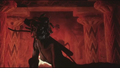 Medusa from Clash of the Titans (Metro-Goldwyn-Mayer, 1981).
 -
 Comparison between Medusa from Captain N: The Game Master and Medusa from Kid Icarus.
 -
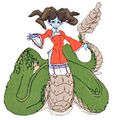 Carmilla's true form in Boktai.


Misconceptions
"Gaiden" means "Non-Canon" or "Alternate Timeline"
This stems from the belief that when Iga or a producer calls a Castlevania game a "Gaiden" it is therefore non-canon or an alternate timeline and can be dismissed. This, however, is not the case.
The term "Gaiden" merely just means a side story, spin-off, or a separate tale. The term "Gaiden" does not determine the canonicity of a work, it just lets you know if the game is a spin-off/side-story or if it's a main story. Take, for instance, the Kingdom Hearts series. Kingdom Hearts: Chain of Memories would be considered a gaiden, as it's a side-story and spin-off title that isn't a mainline numbered title, however, it is in all manners canon and important to play to understand Kingdom Hearts II.
The same can be applied to Castlevania itself, Castlevania Symphony of the Night is a gaiden game. Yet it is very obviously canon and pretty important to play to understand more of Alucard's backstory. The idea of a Gaiden game for the Castlevania series itself would be any game not dealing with one of Dracula's main 100-year-resurrections, which in this case, even Castlevania 2: Simon's Quest is in a way a gaiden, despite being completely canon.
This is all to say that Gaiden does not at all mean "non-canon" or "alternate timeline" and should never be treated as such, the term itself has nothing to do with the canonicity of a product.
IGA Statements Quoted by a Fan
Any statements Iga has made about Judgment that don't come from this IGN interview or a sourced and reputable article are not usable. This is, of course, referring to the popular statements used when discussing Judgment's Canoncity about a fan asking IGA about the game's Canoncity on Facebook, here are some of them below:
- Fan: You mentioned Legend of Cornell was an alternate continuity. However, Cornell appears in Castlevania Judgment, which I believe is not an alternate continuity. How does that work? is he from a different universe than the other characters? It is not really explained in the game itself so I was hoping you could give some clarification on the issue.
- IGA: Judgment is a work that surpasses space and time and brings them together.
- Fan: I get it. So, is the explanation I suggested in the previous reply possibly correct?
- IGA: I don't think it's exactly correct. Judgment is a work born of thinking it would be fun to remove all the hedges and bring characters that appeared throughout the series together. I think that you need to view it as an event from another world which does not consider things like timelines or parallel dimensions at all.
Now these seem like pretty clear-cut statements until you start to try to find where these come from.
They come from both a timeline archive discussion on the Castlevania Wiki back on January 15th, 2012 and from a forum post from the same user as the wiki article.
There is no way to find anything sourced or verifiably proven that this person spoke to Iga. Trying to look up the person didn't get any real results either.
Some other issues fall under the inconsistencies within these Iga talks, the person claims that Iga confirmed that Order of Shadows and the Arcade are non-canon because they were intended from the very beginning to be such, however, an officially sourced interview has the lead game designer of Order of Shadows state that Iga was actively involved with ensuring the game was consistent with the current canon, this would be a weird thing to do if he intended it to be non-canon from the very beginning.
He also claims that Iga said Super Castlevania IV was an alternate continuity, when the wiki also notes Iga saying that the games are all legitimate and the same scenario of defeating Dracula, however this quote is also unsourced, they just claim Iga says this with no link or anything.
There is another one not related to the user who spoke to Iga, but a user on reddit who claimed that a magazine claimed that Castlevania: Circle of the Moon was stated to be in a "different time axis". Attempting to get it translated got no wording that said anything like that, with it not even mentioning anything about canon, timeline, time axis, or any other wording of the sort in a machine-translated attempt. Do note however that this is a machine translation so it could potentially be that it is there, but until a reputable and verifiable translator can confirm or deny this translation, the jury is out with it and it will not be used for the canoncity of Circle of the Moon.
Thus all of these quotes are merely hearsay until shown or proven otherwise.
Remakes/Remasters Being Non-Canon
This comes from an Iga quote that says:
- "IGA: FC版とX68000版ですが、X68000版はFC版をベースにアレンジを加えたものになっています。ゲームのアレンジは、その時に応じて、色々と施されるものですので、正直どちらも正統であると思ってよいのではないかと思っています。結論として、ドラキュラと戦い勝つというシナリオで、中間部分の切り抜きが違うと考えてもよいのではないかと考えています。スーパーファミコン版も違いますし…。どうしてもと考えるのであれば、FC版を尊重すべきかと考えます。
- Translation: Regarding the Famicom version and the X68000 version, the X68000 version is an arrangement based on the Famicom version. The arrangement of a game is the kind of thing where you add a lot of different things as needed, so honestly speaking, it think they both should be considered legitimate. In conclusion, I think they should be considered as the same scenario of fighting to defeat Dracula, just with a different middle part. The Super Famicom version is different as well... If you simply must have a clear answer, the Famicom version must be given deference."
Now the quote itself doesn't state remakes or remasters are non-canon despite what people believe. It's moreso a quote of Iga stating that all of them are the same scenario, just with differences. However, an interesting point is that Iga says the NES version should be given "deference", as in to defer to the NES version.
Of course, though, this has the same issue as the Judgment quotes, everyone claims Iga said this, but there is no source of him saying this. In fact, in Castlevania Chronicles, there's a reward interview you receive from Iga himself where he talks about the game, Iga pretty much explains how the game came to be and never says anything about the game not being canon or to defer to the original[141], if anything he treats this as just an updated version of the original. Interestingly to note too, the original he's talking about is not Castlevania on NES but instead, he's talking about the computer version of Castlevania[142], though it borrows a lot of elements from Castlevania NES.
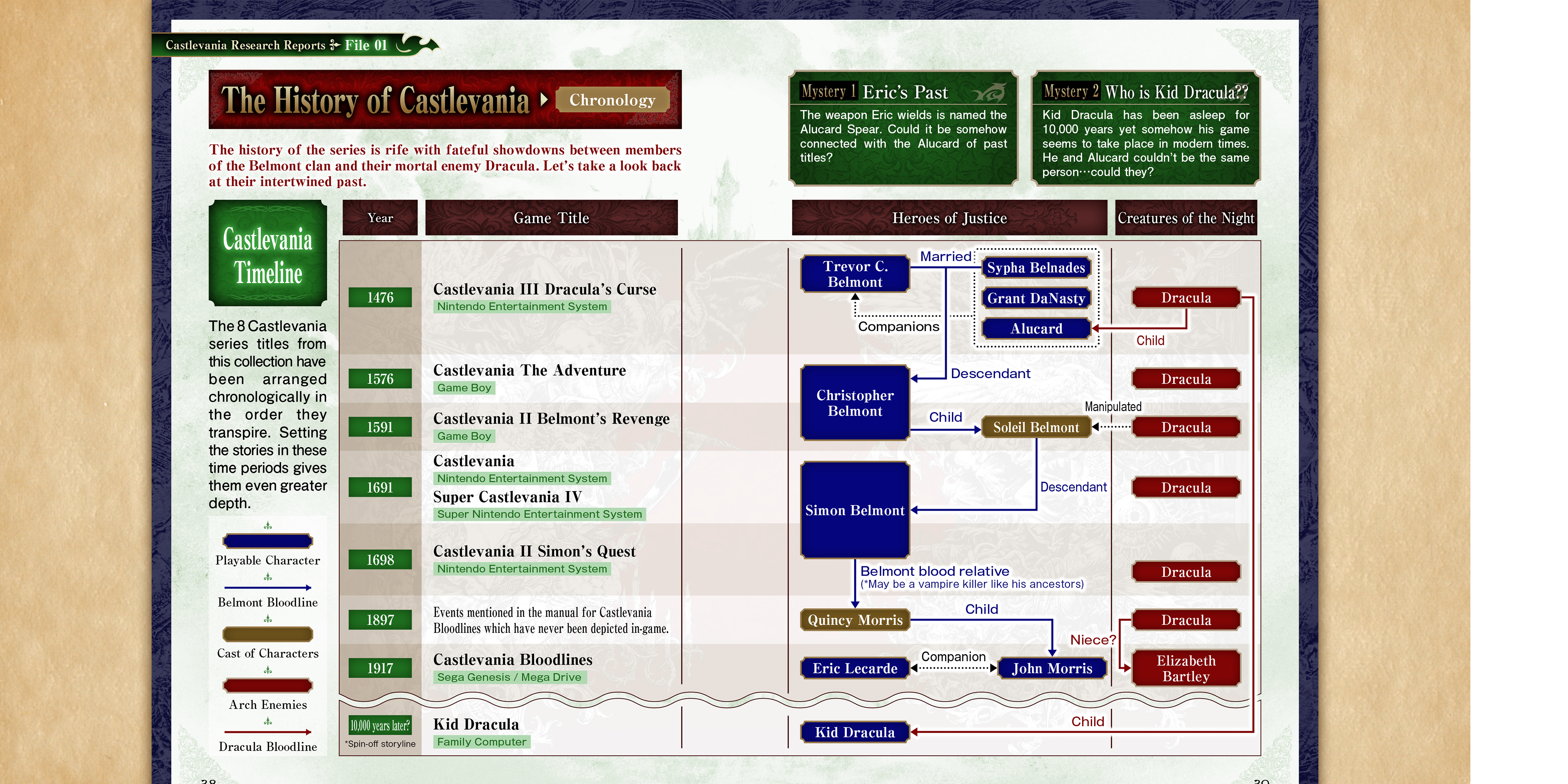
Overall due to the quote itself having no source, it is unusable. The way we will treat remakes, remasters, or ports here however is that they are all equally canon unless stated otherwise. Most of these tell the same story with the only real differences being extra background information added, such as Haunted Castle having it be Dracula stole Simon's wife, though the same overall story still applies even here. Iga himself has already expressed that the original Castlevania's story is pretty simple[143] and Simon having a wife does not affect anything in the overall narrative. Super Castlevania IV notes that Simon is a vampire, though this was due to a novel writer making him a vampire in their novel. The novel was originally supposed to be an adaptation of Super Castlevania IV but was then dropped and made its own thing. Super Castlevania IV itself is still canon, but the subplot of Simon being a vampire is not. The most recent timeline even acknowledges it as canon[144].
Iga Only Allows Stuff He Works on To Be Canon
There is a weirdly believed idea in the fandom that Iga only considers works he worked on canon, however, an officially sourced interview has the lead game designer of Order of Shadows state that Iga was actively involved with ensuring the game was consistent with the current canon, along with this Iga did not work on a lot of Castlevania games considered canon, such as the NES trilogy and the Gameboy games. In fact, he has only made 12 Castlevania games, out of the 30 Castlevania games in total, and most of them from the older console eras are still a part of the canon. Thus Iga does not only allow stuff he works on to be canon.
Iga is a Producer of Castlevania: Circle of the Moon
A Nintendo Power magazine calls Iga the producer of Circle of the Moon, with Iga talking like he worked on the game in that interview. However Iga can be found nowhere in the credits of the game. Making this Nintendo Power issue questionable as to if they were talking to Iga or if the game was mixed up. Though we have direct in-game proof that Iga was not a producer of Circle of the Moon.
Elements and Statements can be used from Lords of Shadows for the main continuity
This argument comes from Adi Shankar saying that even "non-canon" games are parallel timelines in the overall multiverse, sharing the same spirit and lore[145]. However, the Lord of Shadow games are directly noted in an interview with the lead developer, that the game has nothing to do with the canon, sharing none of the lore or original stuff for the characters. This directly conflicts with Adi Shankar's statement and it was very likely he was not even thinking of Lords of Shadows when making this statement but moreso games like Castlevania Legends. On top of this, Adi Shankar has no actual position within Konami, and being an executive producer for the Castlevania anime, thus he does not have any true say in terms of how Castlevania canon works and can only be used at most as a supporting piece of evidence.
Codex Statistics Questions
Q: Shouldn't the characters be around Tier 2 for defeating the Time Reaper who would've destroyed the very fabric of time[146], attempted to destroy the specific era of time[147], cause all beings everywhere to disappear, forever[148] and that the age was on the verge of collapse[149]?
A: We actually never get a direct outright method of Time Reaper's plan for doing this, from what Aeon mentions to Golem, if the Time Rift is not erased, all beings everywhere will disappear, forever[150], implying that it's the Time Rift causing this, this is further backed up by the fact that in Time Reaper's boss fight, there is a vortex in the background consuming everything[151], meaning this is an overtime feat that scales to no one physically.
Q: Shouldn't they get tier 2 for Dracula's influence destabilizing the flow of time[152]?
A: This is a potent ability but has nothing to do with Attack Potency, there is no quantification for "destabilizing the flow of time", along with this, even if it was taken as physically, then it would be overtime as the effects are not noticeable throughout most of Curse of Darkness. Thus this is merely potent Time Manipulation.
Q: Shouldn't Dracula and by proxy anyone that scales to him get tier 2 for him being able to sustain his castle?
A: This goes under our Stabilization Feats standards, which treats sustaining feats are non-combat applicable Attack Potency normally, though in Dracula's case the Castle is speficially powered by the existence of a Dark Lord, and doesn't necessarily need their strength to rise. In the Castlevania novel, the castle rose without a Dark Lord as an example. Along with this, no one scales to the collapse of the castle, in Curse of Darkness Hector would've died to the collapse of the castle if[153] Julia didn't come save him, and Isaac died within the castle[154]. In other cases the Castle does not collapse[155], but instead slowly fades away[156]. At the end of Dawn of Sorrow Soma Cruz and Genya Arikado (aka Alucard) must escape the collapsing abyss.
Q: Shouldn't Castlevania characters that scale to Death have Infinite speed due to Death being able to kill distance itself with his attacks?
A: Killing distance to attack is not a speed feat, it's a method of Spatial Manipulation by circumventing and ignoring distance, while one can say the attack spawns on you instantly, this is not really something quantifiable. Along with this, it would only scale to characters comparable to Death during post-Dawn of Sorrow, as Soma notes Death is far faster than he remembered from his fight with him in Dawn of Sorrow[157].
Battle Records
Main Timeline
1 - 8 - 0
Castlevania Legends Timeline
0 - 1 - 0
None.
- Leon Belmont - Fight[159]
- Conditions: None.
- Location: Garden Forgotten By Time
- Trevor Belmont, Sypha Belnades, Grant Danasty, & Alucard - Fight[160]
- Conditions: None.
- Location: Ghost Ship
- Desmond Belmont - Fight[161]
- Conditions: None.
- Location: The Cavern[162]
- Simon Belmont - Fight[163]
- Conditions: None.
- Location: Stage 06 of Castlevania
- Richter Belmont & Maria Renard - Fight[164]
- Conditions: None.
- Location: Hidden Docks, Marble Gallery
- Carrie Fernandez - Fight[166]
- Conditions: None.
- Location: Underground Waterway
- Henry Oldrey - Fight[167]
- Conditions: None.
- Location: Forest
- Jonathan Morris & Charlotte Aulin - Fight[168]
- Conditions: None.
- Location: Burnt Paradise
None.
References
| Expand here. |
|---|
|
Versus Threads
None.
None.
None.